









Understanding B Corp Certification and Its Requirements for Socially Responsible Companies

In a global context wherecorporate social responsibility (CSR) and sustainable development are emerging as strategic priorities, B Corp certification is establishing itself as a leading international standard.More than just an accolade, this certification embodies a genuine global movement of companiesseeking to balance economic performance with positive social and environmental impact. In France and elsewhere, many B Corp-certified companies—includingNespresso,Patagonia, andNature & Découvertes—demonstrate that it is possible to combine profit with tangible social impact.
Based on rigorousstandards and certifications, B Corp (or B Corporation) certification evaluates companies through a comprehensive assessment process known as the B Impact Assessment (BIA). The BIA measures social, environmental, and ethical performance across several standards: governance, working conditions, customer relationships, environmental footprint, and community engagement. B-Corp-certified companies are thus committed to adhering to a demanding code of conduct and to a culture of continuous improvement, in line with international standards of corporate social responsibility and the Sustainable Development Goals (SDGs).
In France,the B Corp movement is gaining momentum, with a growing number of certified companies joining this committed community. The B Corp certification process, led by B Lab, is based on transparent evaluation criteria and on supporting companies as they work to better account for their social, environmental, and economic impact. It is not only a globally recognized certification but also a tool for internal transformation that drives every B Corp-certified company to rethink its business model according to rigorous standards and certifications that are both people-centered and sustainable.
Thus, understanding the requirements of B Corp certification means grasping the foundations of a new vision of business, where value created is no longer measured solely in terms of revenue, but also in terms of positive impact on society and the planet. This model, which strikes a balance between economic innovation and social commitment, embodies the emergence of a global movement toward a more responsible and inclusive world.
Contents
Understanding the Philosophy and Foundations of the B Corp Approach
The Origins and Vision of the B Corp Initiative: A New Way of Doing Business
The B Corp movement began in the United States in 2006 with an innovative idea: to redefine the very concept of success in the business world. Instead of focusing solely on profitability, it emphasizes organizations’ responsibility and positive contribution to society and the environment.
This approach aims to reconcile profit with the common good. It encourages leaders to adopt a broader view of value creation, in which growth is no longer measured solely by revenue, but also by the positive impact on employees, customers, suppliers, and the community.
Today, thousands of organizations around the world embrace this philosophy. In Europe, the B Corp network brings together both major international brands and local organizations, all united by a common goal: to demonstrate that a responsible business model can go hand in hand with innovation and sustainable success.
Core Values: Combining Performance and Responsibility
The B Corp approach is based on a balanced view of success. It encourages organizations to reflect on their practices and improve them in several key areas:

These pillars form the foundation of the B Corp assessment. Every company that wishes to join this initiative must analyze its practices, identify areas for improvement, and demonstrate alignment between its values and its actions.
More than just a recognition, B Corp is a long-term commitment. It encourages organizations to adopt a mindset of continuous improvement, measure their progress, and strengthen their positive impact over time.
A comprehensive and demanding framework for engagement
What sets B Corp apart from other existing standards is its cross-cutting scope. It is not limited to a single aspect—such as quality or environmental management—butencompasses all aspects of a company’s operations. The assessment takes into account governance, internal culture, strategy, the supply chain, and relationships with stakeholders.
This framework emphasizes consistency between stated commitments and concrete actions. It values initiatives that integrate social and environmental goals into the core of the business model, rather than treating them as secondary.
Organizations that receive this recognitionbecome part of a collective movement focused on transparency and accountability. They are contributing to a profound transformation in the way we think about growth: growth that respects human and natural balances, where economic prosperity becomes a driver of collective progress.
The Path to B Corp Certification: Key Steps and Analysis Tools
Understanding How the Application Process Works
Earning B Corp certification involves a specific, transparent, and rigorous process. It all begins with a thorough assessment using an online questionnaire designed by the organization that founded the movement. This tool measures an organization’s overall alignment across five key areas: governance, team management, partner relationships, environmental responsibility, and customer relationships.
Each company answers several hundred detailed questions regarding its internal policies, social commitments, transparency, and local presence. Based on this information, a quantitative analysis assigns an overall score out of 200 points. To be recognized, a company must achieve a minimum of80 points—evidence of a genuine and measurable commitment.
Once this first step is complete, the data is verified by the organization responsible for the program, which checks the consistency of the responses and the reliability of the evidence provided. This meticulous work ensures the authenticity of the process and the credibility of the entire procedure.
Analysis Criteria and the Logic of Progression
The assessment system is based oninternational standardsthat make it possible to evaluate a company’s overall responsibility. These standards are organized around five major areas:

The evaluation is tailored to the size, industry, and purpose of each organization. A small craft business will not be judged by the same criteria as a large international corporation. This flexibility makes the process accessible while maintaining high standards.
The example of Schmidt Groupe fully illustrates this dynamic. By joining the internationalB Corp™ communityin November 2023, this French family-owned business demonstrates that it is possible to combineeconomic growth,social responsibility, andenvironmental commitment. CSR has always been a cornerstone of its strategy: beyond financial considerations, Schmidt Groupe places people and the planet at the heart of its development.
AchievingB Corp™ certification, with ascore of 84.3 points, recognizes years of concrete initiatives implemented across its entire value chain: continuous improvement in governance, employee engagement, reduction of environmental impacts, and active contribution to the collective well-being. This recognition reaffirms the group’s commitment to being a better company for the world—not merely a successful one in the world.
But for Schmidt Groupe, this distinction is not an end in itself; on the contrary, it marks the beginningof anew cycle of measurable progress. The company has committed to renewing its certification in three years by demonstrating new, tangible progress in terms of positive impact. Through this commitment, it shows that a business model based on sustainability, equity, and responsibility can become a true driver of innovation and inspiration for the entire economy.
Validation, Monitoring, and Continuous Improvement
Once certification is granted, the organization joins the international B Corp network and may display this designation on its official materials. This certification is not permanent: every three years, a new audit is conducted to ensure that the initial commitments are being upheld—or even strengthened.
This requirement for follow-up encourages organizations to make progress and ensure their commitments are sustained over the long term. It also promotes transparency with stakeholders: customers, employees, investors, and partners can view detailed results on the official platform.
En France, ce système est de plus en plus adopté, notamment par des acteurs de différents secteurs : commerce, finance, agroalimentaire ou services. Les entreprises y trouvent un moyen structuré de rendre leurs engagements tangibles, tout en s’inscrivant dans une démarche de confiance et de responsabilité.
Strategic and Human Benefits
Joining the B Corp initiative offers numerous benefits, both internal and external. Internally, it helps strengthen cohesion around a shared vision and align strategic decisions with values of responsibility and equity. Teams feel more engaged in a meaningful project, which boosts motivation and retention.
Externally, this recognitionserves as a mark of credibility. Consumers and business partners view it as a strong sign of commitment and transparency. In a context where social expectations are changing rapidly, companies that follow this path gain trust, legitimacy, and appeal.
In summary, the B Corp approachserves as a practical tool for strengthening an organization’s strategic coherence and demonstrating that economic success can go hand in hand with genuine social and environmental responsibility.
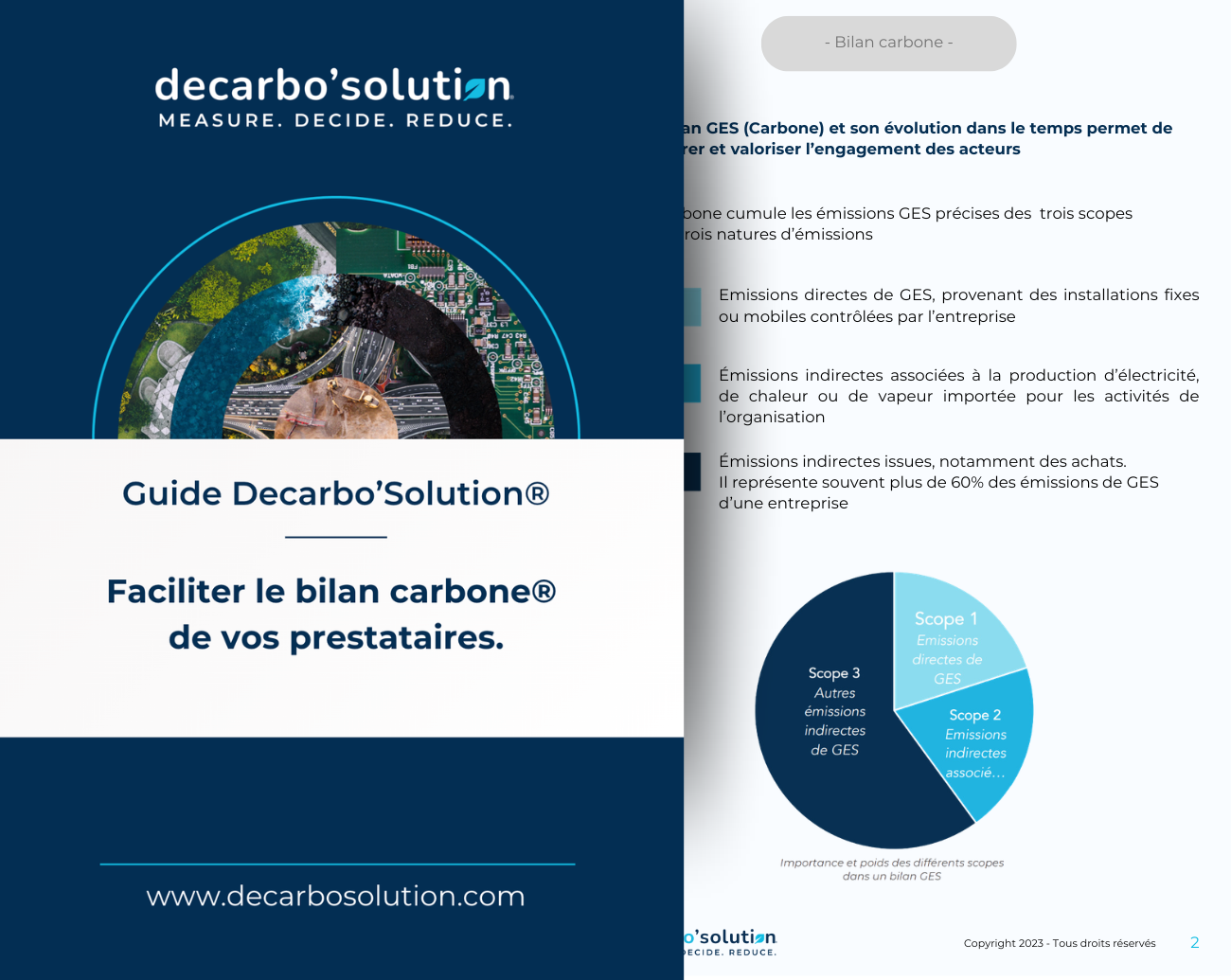
Simplify the GHG assessment for your service providers
The Prospects and Challenges of the B Corp Initiative for Committed Stakeholders
Meaningful recognition in a changing economic landscape
The B Corp approach has become a benchmark for those who want to do business differently. In an economic environment characterized by a drive for transparency and ethics, it offers a clear framework for balancing success with responsibility.
This approach is based on the idea that an organization’s value is not measured solely by its financial results, but also by its contribution to the common good. Organizations that embrace this approach place governance, people, and the planet at the heart of their priorities.
The example of Nespresso is a prime example of this trend. By rethinking its coffee production chain—from cultivation to the recycling of capsules—the brand demonstrates that it is possible to combine profitability with respect for producers, while reducing negative environmental impacts. This type of commitment is inspiring a growing number of businesses eager to redefine their mission.
A Source of Trust and Credibility
One of B-Corp’s main strengths lies in the clarity of its analytical framework. Each certified organization publicly discloses information about its operations, commitments, and results. This transparency fosters trust among customers, partners, and the general public.
This recognition also helps strengthen internal cohesion. By giving everyone a clear picture of the goals and the progress made, it fosters a sense of belonging and collective engagement. Employees gain a better understanding of the meaning of their work and the purpose behind the decisions made.
In a market where skepticism toward “green” rhetoric remains strong, B Corp stands out for the rigor of its approach. This demonstration of commitment attracts top talent, builds customer loyalty, and strengthens the reputation of organizations dedicated to this cause.
A Scalable Framework for a Responsible Economy
One of the most interesting aspects of this approach is its adaptability. The recognition criteria are not set in stone: they evolve to keep pace with environmental advances, regulatory changes, and societal expectations. This flexibility ensures consistent alignment with contemporary issues.
Recognized organizations must, in fact, renew their commitment at regular intervals. This monitoring promotes continuous improvement and prevents stagnation. It is therefore not a matter of obtaining a one-time distinction, but rather of committing to measurable progress over time.
Sharing experiences among committed organizations also contributes to this momentum. Workshops and discussions help spread practical ideas and encourage other stakeholders to get involved in similar initiatives, thereby strengthening the collective impact.
A Vision for a Different Approach to Entrepreneurship
Beyond mere recognition, B Corp embodies a true management philosophy. It seeks to realign economic goals with the common good, placing equal importance on people, the planet, and prosperity.
This approach calls for a rethinking of the role of organizations in society: no longer merely as entities that generate wealth, but as key players in the ecological and human transition. Organizations that commit to this approach are helping to foster the emergence of a more respectful, equitable, and transparent economy.
In short, B Corp is more than just an assessment method or a symbolic distinction. It is a way to act with purpose, inspire trust, and build a future where economic success goes hand in hand with collective responsibility.

The B Corp approach is closely aligned with several major methodological frameworks, such as ISO 14001,QSE(Quality, Safety, Environment), andGLEC(Global Logistics Emissions Council Framework). Together, these approaches form a solid foundation for rethinking responsible management and strengthening the credibility of organizations committed to more ethical and measurable practices.
ISO 14001 provides a structured framework for managing environmental impacts and promoting more efficient use of resources. The QSEstandard, for its part, integrates three essential dimensions—quality, safety, and the environment—into a coherent system, ensuring rigorous management of operations. Finally, the GLEC stands out for its ability to standardize the tracking of emissions related to logistics and transportation, two key drivers for managing the carbon footprint.
The strength of the B Corp approach lies in how it complements these tools. While ISO 14001 and QSE provide structure and methodology, B Corp introduces a human and ethical dimension based on transparency and accountability. By also integrating the GLEC framework—for example, through the TK’Blue SaaS solution—organizations gain a coherent set of tools that enables them to measure, reduce, and communicate their commitments in a concrete and verifiable manner.
In short, combining these three frameworks with the B Corp philosophy amounts to adopting a comprehensive approach: structured by method, guided by purpose, and grounded in tangible results. This convergence paves the way for a more balanced management approach, where quality, safety, and environmental responsibility work in tandem toward a common goal: creating a future that is more mindful and aligned with collective expectations.