









Definition and Objectives of the QSE Approach

Faced with economic, social, and environmental challenges, companies must reevaluate their organizational structures to remain competitive and responsible. In this context, the QSE (Quality, Safety, Environment) approach has emerged as a key management framework. It enables companies to balance economic performance, risk reduction, and compliance with standards, while strengthening the trust of customers, partners, and employees.
QSE is not limited to a set of procedures; it is a true strategic approach that transforms the way an organization anticipates risks, protects its employees, and reduces its environmental impact.
Contents
Definition of QSE: Quality, Safety, and Environment
The Quality Aspect: Customer Satisfaction and Continuous Improvement
The quality aims to ensure that products and services meet customer expectations and regulatory requirements. It is based on well-managed processes, rigorous controls, and a culture ofcontinuous improvement. Main objectives:- Enhance customer satisfaction and loyalty.
- Reduce nonconformities and the associated costs.
- Encourage innovation and operational efficiency.
The Safety Aspect: Risk Prevention and Worker Protection
Workplace safety is a top priority. The QSE approach emphasizes the prevention of workplace accidents and occupational diseases.
This involves:
- Risk Identification and Assessment.
- The implementation of appropriate prevention plans.
- Employee awareness and ongoing training.
Effective safety management not only improves employee health but also reduces costs associated with absenteeism and boosts team motivation.
The Environmental Dimension: Reducing the Ecological Impact of Businesses
The environmental aspect of QSE requires companies to reduce their carbon footprint and adopt sustainable practices.
This includes:
- Waste management and reducing energy consumption.
- Controlling greenhouse gas emissions.
- The adoption of technologies and processes that are more environmentally friendly.
To take this a step further, some organizations rely on recognized sector-specific frameworks, such as the GLEC (Global Logistics Emissions Council), which provides a harmonized methodology for measuring and reducing emissions associated with transportation and logistics activities.

How to ensure the long-term viability and growth of your business through a successful low-carbon strategy.
Why do companies adopt a QSE approach?
Risk Mitigation and Regulatory Compliance
QSE helps anticipate and manage risks, whether they relate to product quality, workplace safety, or environmental impact. It also ensures compliance with applicable laws and regulations.
Improving Organizational Performance
By implementing QSE, companies optimize their processes, reduce costs, and improve productivity. This leads to better overall performance.
Contribution to CSR Commitments
QSE is part of a broader framework of corporate social responsibility (CSR). It promotes sustainable development and helps strengthen the company’s credibility and image among its stakeholders.
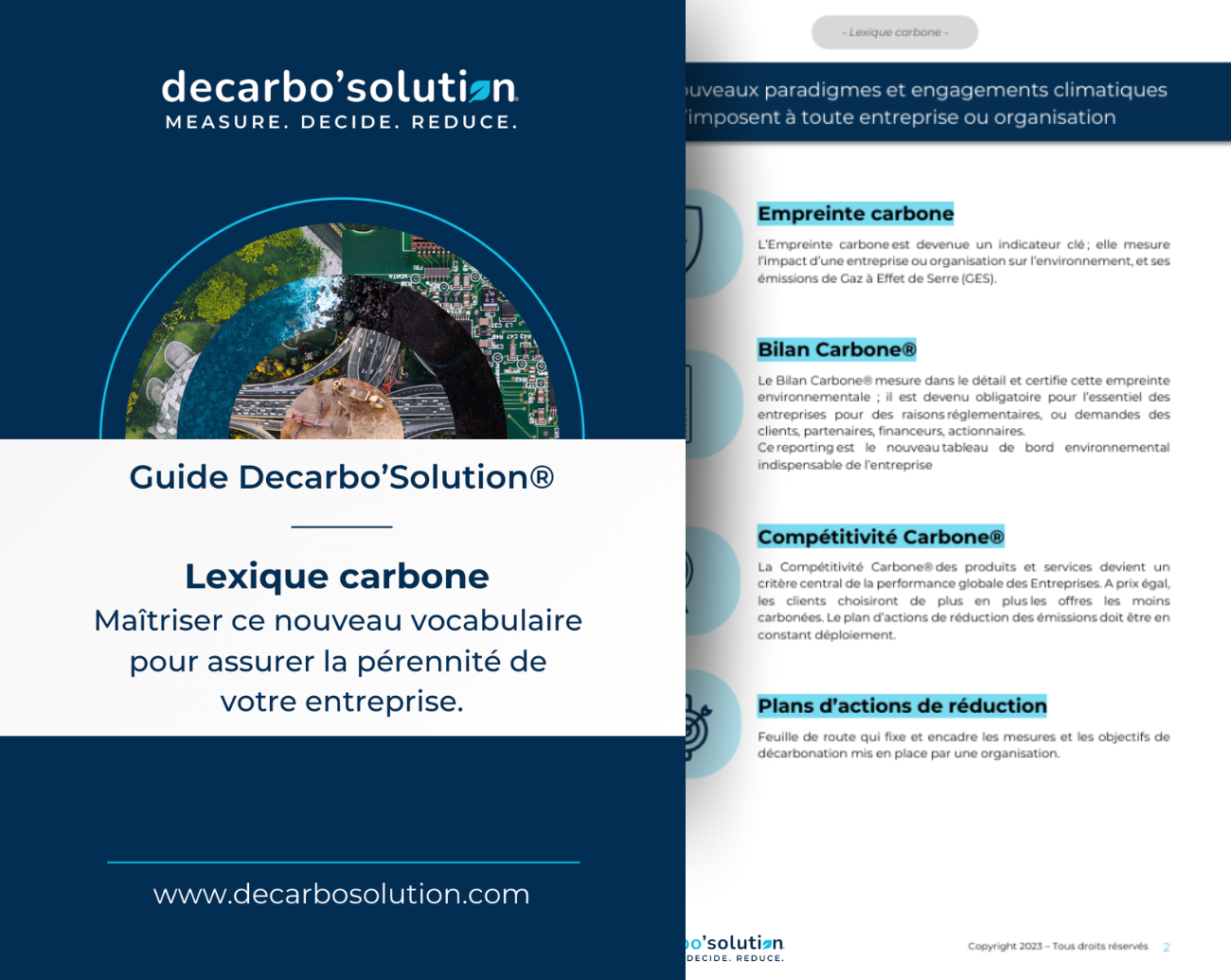
Master new vocabulary to ensure the long-term success of your business.
QSE-Related Standards and Certifications
ISO 9001 for Quality
ISO 9001, the global standard for quality management, sets out the criteria for improving customer satisfaction and ensuring reliable products and services.
ISO 14001 for the Environment
The standard ISO 14001 provides a framework for minimizing the environmental impact of a company’s operations. It encourages the implementation of effective environmental management systems.
ISO 45001 for Occupational Health and Safety
ISO 45001 is designed to prevent risks related to employee health and safety. It aims to reduce accidents and improve working conditions.
Implementing a QSE approach within the organization
Key Steps: Assessment, Action Plan, Audit, and Continuous Improvement
Implementing a QSE approach involves several steps:
- Conduct an initial assessment to identify strengths and areas for improvement.
- Develop a structured action plan.
- Train and engage all employees.
- Conduct regular audits to measure progress and adjust actions.
The Role of the QSE Manager
The QSE Manager coordinates the strategy and monitors its implementation. He ensures compliance with standards, leads training sessions, and conducts internal audits.
The Importance of Team Training
Without employee involvement, the QSE initiative cannot succeed. Ongoing training helps foster a culture of prevention, quality, and sustainability.

QSE Audit: A Tool for Progress
Objectives and Process of a QSE Audit
The QSE audit assesses whether practices comply with standards (ISO, regulations). It helps identify nonconformities, propose corrective actions, and improve overall performance.
From Internal Auditing to Certification
Internal audits serve as preparation for external audits, which, if successful, lead to certification. This official recognition enhances the company’s credibility.
The Tangible Benefits of a QSE Approach for Businesses
Economic Performance and Competitiveness
A well-structured and compliant organization reduces its costs associated with errors, accidents, and waste. It also improves its position in competitive markets.
Improved Workplace Safety
Prevention and awareness-raising improve employee safety, thereby reducing absenteeism and boosting morale.
Improving the Organization's Image and Stakeholder Trust
A QSE initiative demonstrates a company’s commitment to its customers, employees, and society. It becomes a differentiating factor and a communication asset.
The QSE Approach and the Low-Carbon Transition
Incorporating the environmental dimension into the overall strategy
QSE goes beyond simply complying with standards: it encourages companies to rethink their business models by incorporating efforts to combat climate change.
Synergy Between QSE and CSR
QSE directly contributes to CSR objectives by strengthening the company’s sustainability, transparency, and social commitment.
Decarbo’Solution® and the Decarbo’Solution®: An Innovative Tool for Quality, Safety, and the Environment (QSE)
QSE truly comes into its own when it is integrated with practical tools that help reduce the carbon footprint and drive the energy transition. With this in mind, Decarbo’Solution® (Decarbo’Solution®) has developed Decarbo’Solution®, a unique platform that supports companies in their low-carbon strategies.
Reducing Your Carbon Footprint Across the Three Scopes
Decarbo’Solution® helps companies measure and reduce their Scope 1, 2, and 3 emissions by engaging their suppliers in a process of continuous improvement.
Optimizing Economic Performance and Carbon Costs
Through an accurate assessment ofthe Carbon Tax Base®, companies can reduce their ETS allowance-related costs by up to 30 percent.
Engaging Suppliers in a Low-Carbon Quality, Safety, and Environment (QSE) Initiative
With the Decarbo’Supply® and Decarbo’Tender® modules, procurement and competitive bidding become true strategic tools for promoting the lowest-carbon offerings.
Monitoring and Management Through a Collaborative Platform
The Decarbo’Target® module allows you to develop a realistic action plan, track progress in real time, and measure the return on investment for each action.

The QSE approach is much more than a regulatory requirement: it is a strategic choice that balances performance, safety, and environmental responsibility. Combined with innovative solutions such as Decarbo’Solution®, it becomes a true catalyst for sustainable transformation, benefiting the company, its employees, and the planet.