







MACF, ETS, Default Values: Carbon Is Becoming a Major Financial Risk
Carbon is no longer just a matter of environmental compliance or corporate image—it is now a direct cost line item on your income statement.
With the expansion of the ETS system (applied to maritime transport and soon to road transport) and the entry into force of the CBAM (Carbon Border Adjustment Mechanism), the rules of the game are changing. Today, companies that use simple “default values” to calculate their emissions automatically face the highest possible tax rates.
During this webinar, our experts Philippe Mangeard, President and founder of Decarbo’Solution®, and Victor Véron, Head of Consulting and Sales, will break down these new regulations. They will be joined by Fabio Petrilli, CEO of the small and medium-sized enterprise GEDIMAT Sefor, who will share his teams’ experiences.
Carbon: From Climate Challenge to Monetary Risk
Since 2024, European regulations have been accelerating. With the expansion of the ETS to new sectors and the introduction of the MACF—which taxes imported products (steel, aluminum, cement, etc.) in proportion to their emissions—carbon emissions are having a direct impact on economic performance. Companies that do not accurately measure the carbon cost of their transportation operations or imports risk seeing their margins shrink significantly.
The Urgency of Moving to Primary Data
The key to avoiding these additional costs lies in the calculation method. Simply relying on the “default values” mandated by the European Union amounts to accepting the highest possible tax rate. To reduce this tax base, it is essential to collect primary data from your suppliers in order to calculate the true carbon footprint of your products (PCF). Traceability solutions often yield results that are 20 to 30 percent lower than average values, thereby generating substantial savings.
Carbon Criteria at the Heart of Public Procurement
The issue goes beyond customs duties. Starting August 21, 2026, under the Climate and Resilience Act, environmental criteria will become mandatory and transparent in all public procurement bids (accounting for 10 to 30 percent of the final score). Presenting an accurate and auditable carbon footprint will become a major competitive advantage for gaining market share—an outcome that our Decarbo’Tender® approach ensures.
The GEDIMAT Sefor Case Study: Autonomy in Action
The transition is accessible to all organizations, including small and medium-sized businesses. During this webinar, Fabio Petrilli shares GEDIMAT Sefor’s (40 employees) commitment to the transition. Following an initial “Diag Décarbon’Action” GHG assessment, the company identified that the bulk of its emissions stemmed from its procurement activities. Today, thanks to the Decarbo’Solution® tools, the teams at GEDIMAT Sefor are now 100% self-sufficient in managing their carbon trajectory through 2030.
Don't let average metrics hold your competitiveness back. Watch our webinar to learn how to turn these regulatory constraints into a real driver of economic performance!

Check out more webinars
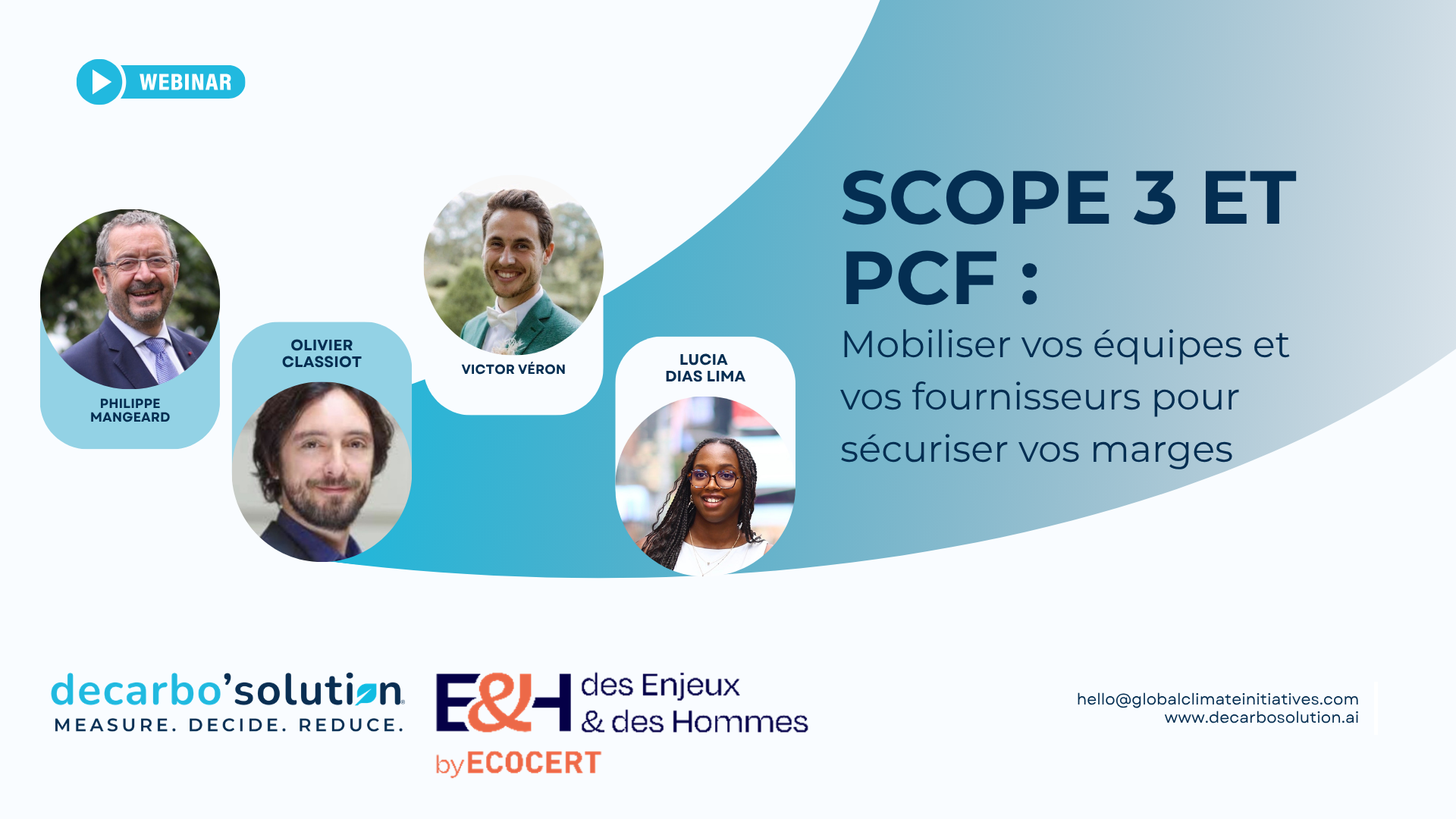
Scope 3 & PCF: Engage Your Teams and Suppliers to Secure Your Margins
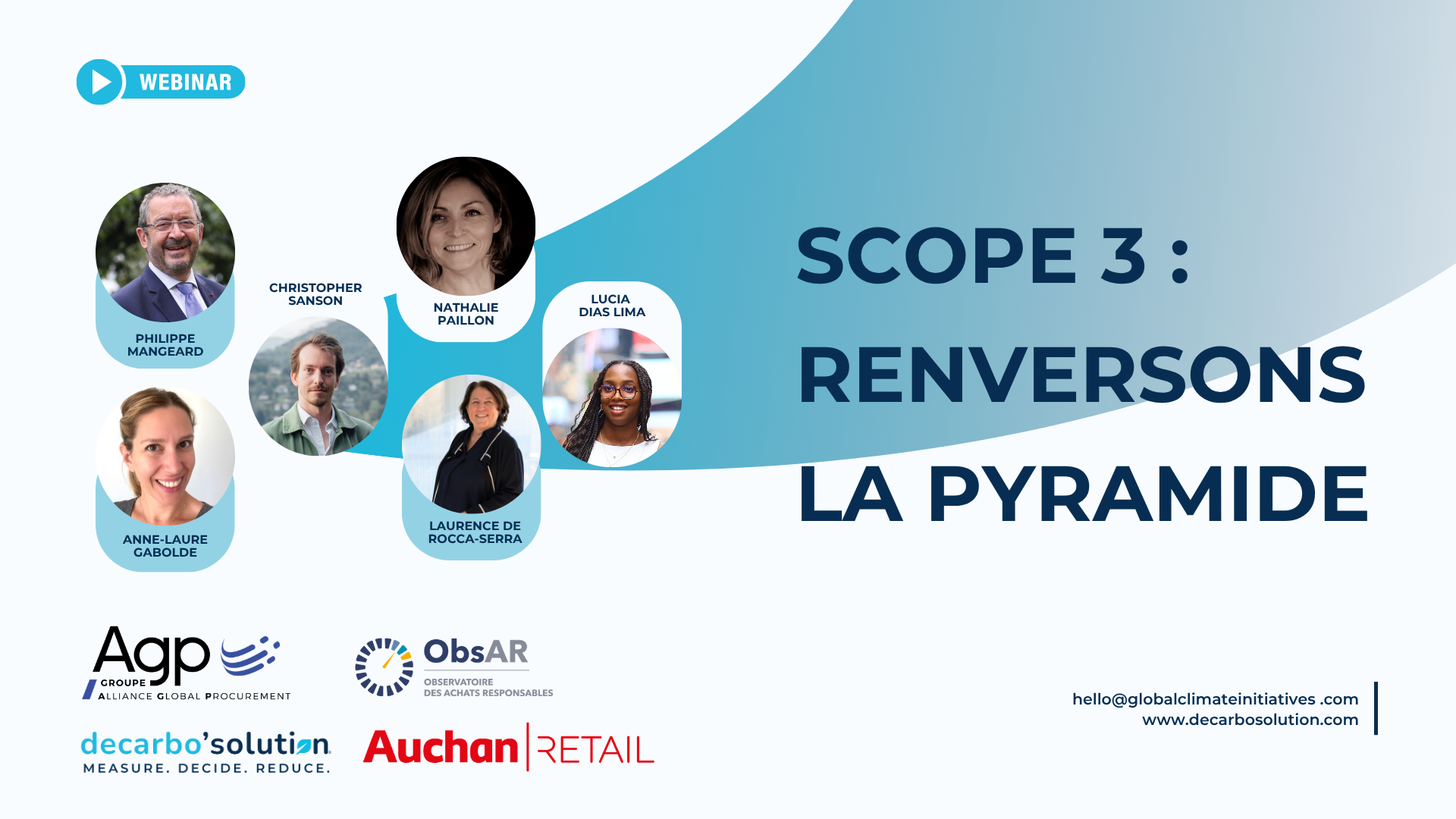
Scope 3: Let’s Turn the Pyramid Upside Down — From the PCF to a Low-Carbon Pathway
Public Procurement: How to Draft a Legally Sound Carbon Criterion?

Manufacturing and Retail in the Face of ETS1 and ETS2: How to Manage Transportation’s Carbon Costs

Decarbonization: Discover practical solutions to reduce your Scope 3 emissions starting in 2026

Diag Décarbon’Action + Decarbo’Solution®: A Winning Combination for Taking Action

GCI x ObsAR Webinar – How to use the Product Carbon Footprint (PCF) in the bidding phase?

KIOSK X GCI Webinar – Performance and Interoperability: Multiply the Power of a Climate Platform with That of a Reporting Platform

ObsAR x GCI Webinar – From Bilan Carbone® to Action: Successfully Decarbonizing Procurement with the PCF
