








A Practical Guide to Calculating a Product’s Carbon Footprint Using LCA

Just like calculating a company’s carbon footprint®, a product’s life cycle assessment (LCA) is an essential tool for companies that want to sustainably reduce their carbon footprint while remaining competitive in the market throughthe circular economy.
In fact, from its design through its end of life, a product generates a significant amount of greenhouse gas emissions, and the company must make the most of the opportunities to reduce those emissions.
Below, we will examine how the LCA will help us accurately assess this potential and identify the steps needed to produce in a more environmentally responsible manner.
1. What is a Life Cycle Assessment (LCA)?
1.1 The Different Categories of Environmental Impacts Considered in the LCA
1.2 What is the purpose of a life cycle assessment (LCA)?
2.2 Key Steps in a Life Cycle Assessment (LCA)
2.3 The Role of Emission Factors in LCA Calculations
What is a Life Cycle Assessment (LCA)?
Life Cycle Assessment (LCA) is considered the most advanced and rigorous tool for conducting a comprehensive, multi-criteria evaluation of the overall impacts of producing a good or service, as well as its environmental impacts throughout its entire life cycle, from the extraction of raw materials to the end of its life (“cradle to grave”).
It examines the various stages—such as manufacturing, distribution, use, and disposal—to measure the consumption of natural resources, GHG emissions, and air, water, and soil pollution, as well as other associated environmental impacts.
By using LCA, companies and organizations can better understand the environmental impacts of producing their goods and make more informed decisions regarding sustainability and reducing their ecological footprint.
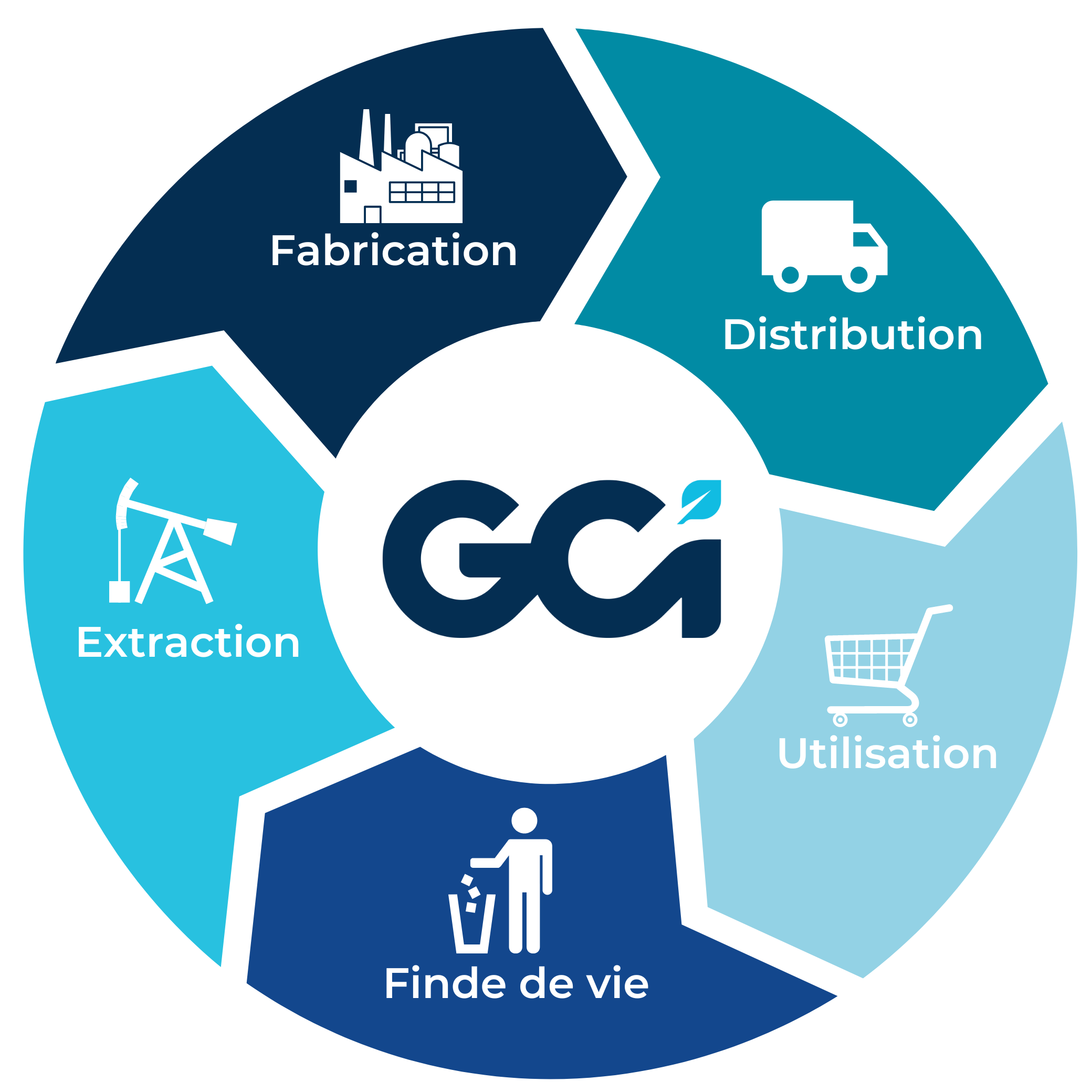
There are 5 key stages to consider in a product's life cycle:
⚒️ Raw Material Extraction: This stage involves the extraction of the natural resources needed to manufacture the product, such as mining, agriculture, forestry, etc.
🏭 Manufacturing: During this stage, raw materials are transformed into finished products. This includes processes such as industrial production, assembly, component manufacturing, etc.
🚚 Distribution: Once a product has been manufactured, it is distributed to consumers or retail outlets. This includes activities such as transportation, storage, logistics, and marketing.
🛒 Use: This stage pertains to consumers’ actual use of the product. This may include its operation, energy consumption, maintenance, and daily use.
🗑️ End of Life: At the end of its useful life, the product reaches the end of its life. This stage includes the collection, recycling, reuse, repair, disposal, and waste management associated with the product.
It is important to note that the entire process may vary depending on the specific property and industry. Some steps may be more complex or involve additional sub-steps.
Product Life Cycle
🌿The different categories of environmental impacts considered in the LCA
In an LCA, several categories of impacts are generally considered to assess the complete environmental footprint of a product. Here are the main categories:
⚫ Greenhouse Gas Emissions: This category is often the most studied in LCA, and the carbon footprint is a key aspect of it. The GHGs emitted primarily include carbon dioxide (CO2), methane (CH4), and nitrous oxide (N2O). Assessing the carbon footprint allows for the quantification of CO2-equivalent emissions throughout the product’s entire life cycle, including direct and indirect emissions associated with manufacturing, use, and disposal.
💡 Energy Consumption: This category measures the amount of energy consumed throughout the product’s life cycle. It includes the energy required for the extraction of raw materials, manufacturing, transportation, use, and disposal of the product. Energy consumption is often linked to greenhouse gases, as energy production and use are frequently associated with the combustion of fossil fuels, which emit CO2.
🌿 Natural Resource Consumption: This category assesses the use of natural resources throughout the product’s entire life cycle, including non-renewable resources (such as minerals, metals, and oil) and renewable resources (such as water and wood). The depletion of natural resources can lead to significant environmental consequences, such as the destruction of ecosystems and the degradation of natural habitats.
💧 Water Pollution: This category examines the impacts of water pollution resulting from activities related to the entire product lifecycle, such as the discharge of toxic substances, chemicals, or pollutants into rivers, lakes, or oceans. Water pollution can harm aquatic biodiversity and ecosystems, as well as the quality of drinking water.
☁️Air Pollution: This category assesses air emissions resulting from the product’s entire life cycle, such as emissions of air pollutants (e.g., nitrogen oxides, volatile organic compounds, fine particulate matter) and emissions of toxic substances. These pollutants can have impacts on air quality, human health, and ecosystems.
♻️ Waste and Waste Management: This category examines the quantity and nature of waste generated throughout the product’s entire life cycle, as well as related waste management practices (e.g., recycling, incineration, landfilling). Inadequate waste management can lead to environmental pollution, soil degradation, and health problems.
♻️ What is the purpose of a life cycle assessment (LCA)?
LCA is therefore particularly useful for making decisions regarding the entire manufacturing process of a product. The results obtained make it possible, for example, to identify which stages of the full life cycle have the greatest environmental impact, in order to pinpoint areas for improvement aimed at reducing that impact. This makes it easier to find solutions to reduce the product’s ecological footprint. LCA also helps address many of the challenges we face today.
🎯 Issues Related to Life Cycle Assessment (LCA)
🌿 Environmental Issues
In light of the climate emergency, reducing greenhouse gas emissions associated with the production of goods is a key challenge. LCA provides valuable information for making informed decisions regarding product design, material selection, manufacturing processes, modes of transportation, and more. It enables the comparison of different options and the identification of best environmental practices.
🔍 Transparency Issues
LCA also provides credible and verifiable information on the environmental performance of products. This information can be shared with consumers, stakeholders, regulators, and other actors involved in the value chain. This promotes greater transparency and enables consumers to make more sustainable choices.
📄 Regulatory Issues
LCA is used as a basis for developing environmental standards and regulations. It contributes to the harmonization of assessment methodologies and facilitates the comparability of results across different goods or services.

How to ensure the long-term viability and growth of your business through a successful low-carbon strategy.
How is the LCA calculated?
To conduct a life cycle assessment in a rigorous manner, it is necessary to follow established methodologies and adhere to certain key steps.
📚 The methods used
The LCA method is considered standardized, which means it is governed by the international standards ISO 14040 and ISO 14044. These standards provide detailed guidelines on how to conduct an LCA in a rigorous and reliable manner. They are part of the ISO 14000 family of standards, which govern environmental management in organizations.
💡 Key Steps in a Life Cycle Assessment (LCA)
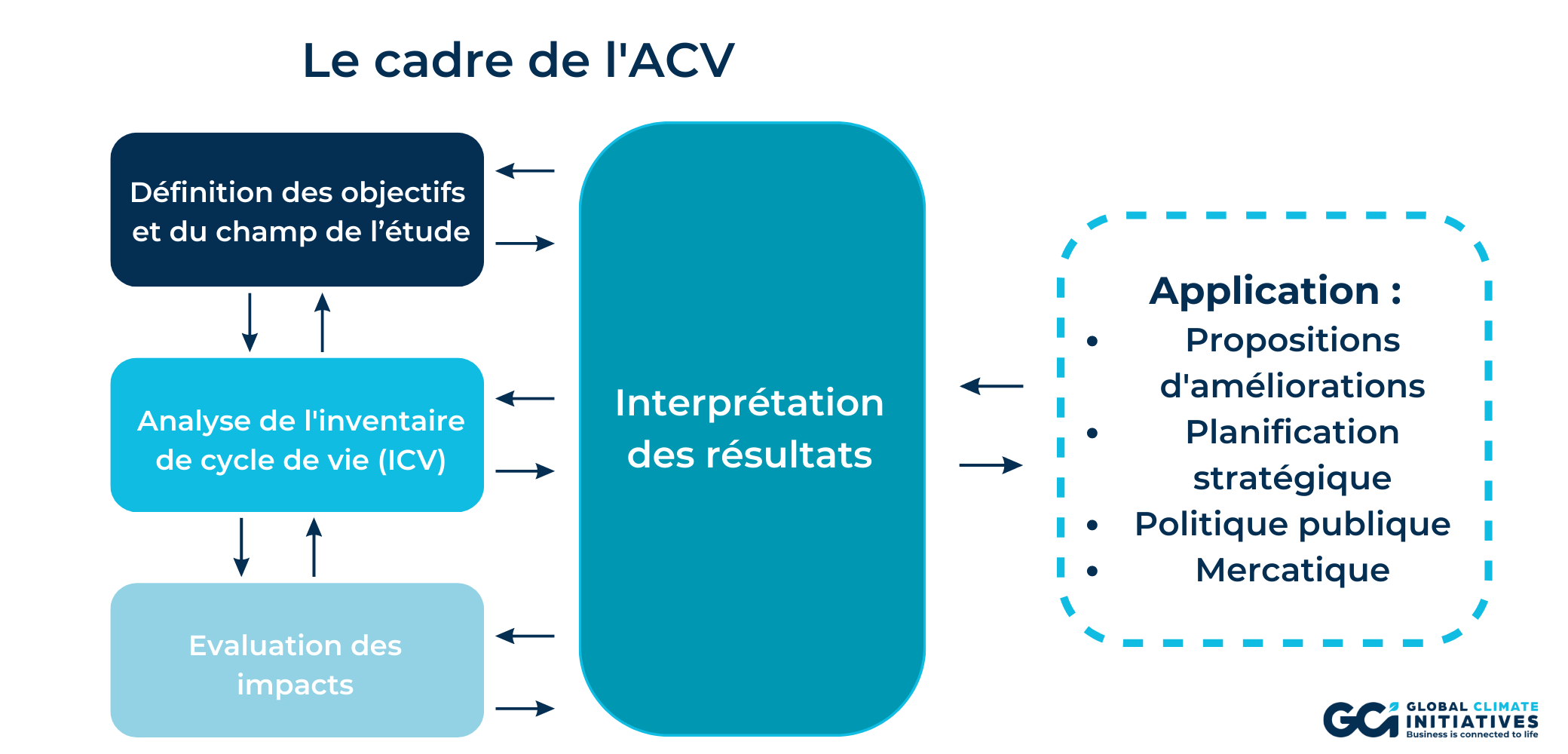
1️⃣ Defining the Objective and Scope: First, it is important to clearly define the objective of the LCA—that is, what you want to assess. To do this, you need to determine:
The objectives of this evaluation:
- The application (comparison of different products, eco-design, etc.);
- The target audience or intended recipients of the study;
- The “boundaries” of the system under evaluation (i.e., the processes that must be included in the system model);
The functional unit is based on three criteria:
- the product's lifespan;
- the amount and frequency of use;
- performance.
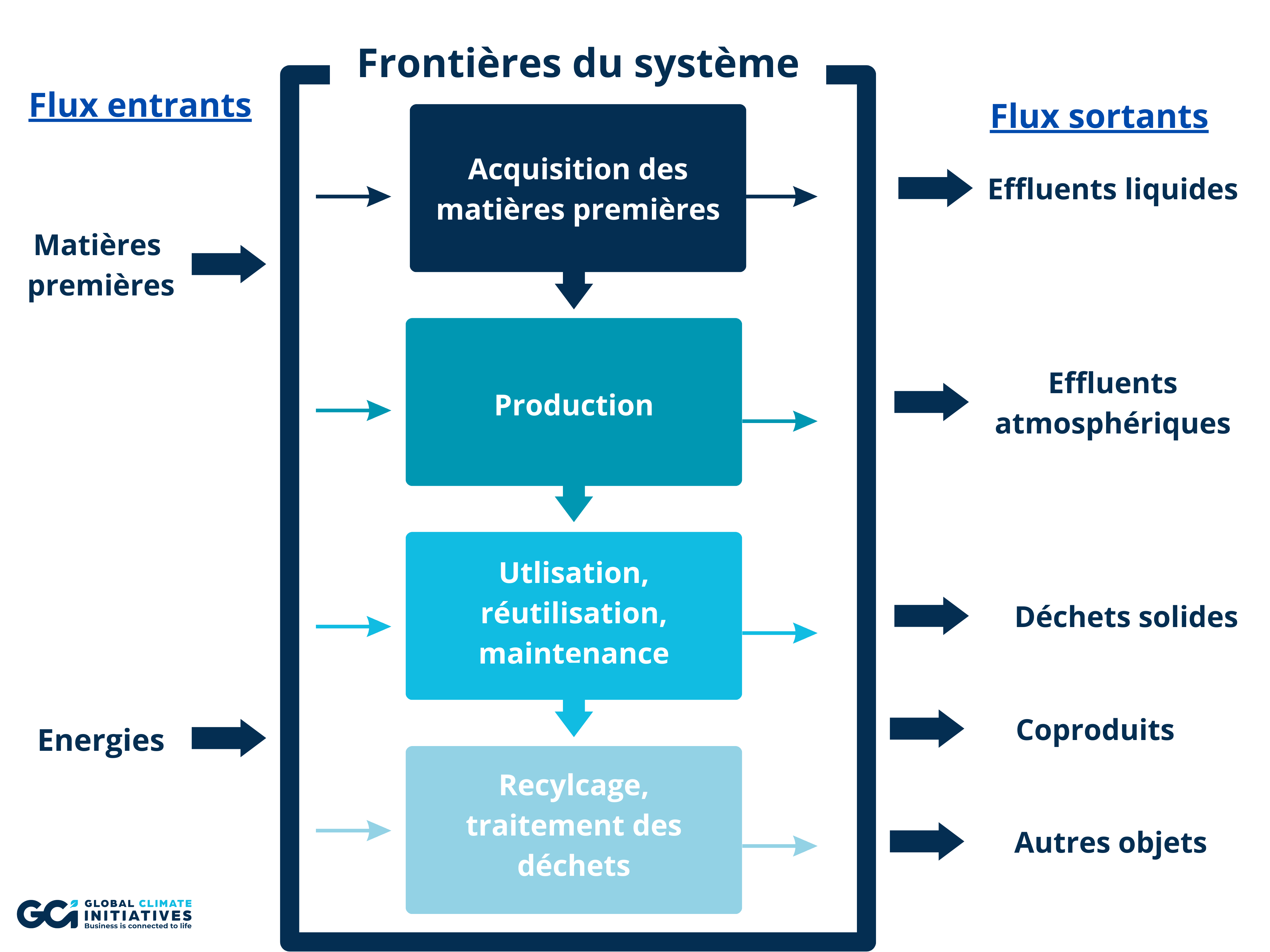
2️⃣ Life Cycle Assessment (LCA): This step involves collecting and quantifying the flows of raw materials, energy, and waste associated with each stage of a product’s entire life cycle, from the extraction of raw materials to the product’s disposal.
In an LCA, the data collected are generally grouped into two categories: activity factors and emission factors (EFs). Activity factors are quantitative measures such as kilometers traveled, metric tons transported, energy consumption, etc. They are used to quantify the resources used and the activities carried out at each stage of a product’s entire life cycle.
As for the FE values, they represent the quantities of specific substances or pollutants emitted during the various stages of the entire cycle. For example, this may include nitrogen oxide (NOx) emissions into the air or orthophosphate (PO4) discharges into water. These FE values are used to assess the environmental impact of each stage.
3️⃣ Impact Assessment: The data collected in the inventory is then converted into potential environmental impacts. These impacts are then divided into two categories: the midpoint method and the endpoint method.
➡️ The Midpoint Method
The Midpoint method aims to quantify the overall effects of substances emitted or consumed throughout the entire life cycle of a good or service. It focuses on potential issues such as impacts on human health, ecosystems, natural resources, and so on.
For example, when assessing the environmental impact of soil acidification, the Midpoint methods can measure this impact using SO2 (sulfur dioxide) equivalents. This makes it possible to quantify emissions of other substances that contribute to soil acidification by converting them into a common unit, thereby facilitating the comparison and assessment of impacts.
➡️ The Endpoint Method
Endpoint methods in LCA focus on assessing the final environmental damages that may result from the use of a good or service. They concentrate on the direct and observable impacts at the end of the causal chain.
These methods assess the potential harm caused by the consumption or emissions of certain substances. They focus specifically on impacts considered “final,” such as effects on human health, ecosystems, biodiversity, and so on. For example, rather than simply assessing GHG emissions, endpoint methods can evaluate the more direct consequences of climate change, such as sea-level rise or ecosystem disruption.
4️⃣ Interpretation of Results: The results of the LCA are interpreted and used to identify the life cycle stages that contribute most to environmental impacts. This helps identify opportunities for improvement and optimization.
The 4 Steps of a Life Cycle Assessment (LCA) According to ISO 14040 and 14044 Standards
🔍 The Role of Emission Factors (EFs) in LCA Calculations
CO2 emission factors play a crucial role in LCA calculations. They are used to quantify emissions of specific substances or pollutants associated with the various stages of a good or service’s entire life cycle. These emissions may be related to raw material extraction, production, use, transportation, waste management, and so on.
FE values are data specific to each substance or pollutant, generally expressed in units of mass per functional unit (for example, kilogram per kilogram of product). They are based on scientific and technical information, often compiled in specialized databases.
When calculating the LCA, the FE values are applied to the quantities of raw materials, energy, or other inputs used at each stage of the entire life cycle. This makes it possible to estimate the specific emissions associated with these activities.
Life cycle assessments (LCAs) can vary depending on several factors, such as the technologies used, energy sources, industrial practices, and so on. They are constantly updated and refined based on new scientific knowledge and technological advances.
By using the appropriate life cycle data in LCA calculations, it is possible to estimate environmental impacts—such as GHG emissions, acidification, eutrophication, and water consumption—more accurately. This makes it possible to compare the environmental performance of different goods or services and identify areas where improvements can be made to reduce negative impacts.
There are four types of emission factors:
➡️ Monetary emission factors: These factors are provided by ADEME and other international reference databases and apply to Scope 3 emissions. They significantly simplify the process of compiling a GHG inventory but have numerous drawbacks. Indeed, when using these factors, a company must disclose financial information to prepare its regulatory GHG inventory. These factors are also not very meaningful because the emissions calculated using them depend on the prices at which the company negotiated its energy, goods, and services. Thus, inflation actually inflates companies’ carbon footprints ! ADEME estimates an 80% uncertainty for these factors and recommends using them only as a last resort.
➡️ Emission factors by type of product and service: These factors are also provided by ADEME and other international reference databases. However, they are only average values. For example, a T-shirt, for which only one emissions factor is listed in the database, may be produced in Asia or Europe using different processes, materials, and energy sources, which can cause the associated GHG emissions to vary considerably. Furthermore, not all goods and services are covered by these factors (there are only 7,000 factors in ADEME’s Base Carbone®, compared to hundreds of millions of products and services on the market…). They can be used to prepare an initial GHG emissions inventory, but should be replaced as soon as possible—and to the greatest extent possible—with the more realistic emission factors described below.
➡️ Les Facteurs d’émissions composites®, (Product Carbon Footprint, PCF, calculés suivant l’ISO 14 067) : ces facteurs sont élaborés à partir de la composition détaillée d’un produit ou service, et permettent de prendre en compte les émissions de GES associées à chacune des étapes de son cycle de vie (extraction et transport des matières premières, procédés de fabrication, distribution en sortie d’usine, utilisation et fin de vie du produit).
➡️ Emissions Factors per Unit of Output (EFUO): These factors are calculated based on the overall carbon footprint of an organization or a portion of its operations by allocating its GHG emissions across its production units. They allow for the precise consideration of the various stages of the life cycle.
⚠️ By taking into account a product’s entire life cycle, the Emission Factors per Unit of Work (FEUO) and the PCF are the factors that provide the most comprehensive and representative view of a product’s actual carbon impact. They also play a very important role in calculating the Bilan Carbone®.
How can you calculate and reduce the carbon footprint of a product or service using Decarbo’Solution®?
💪 Get your suppliers involved!
To encourage its service providers to report their “carbon footprint,” each one has access to two specific services:
✅ The “Dissemination” Module: This module enables the company to automatically send each of its service providers a request for specific information regarding their greenhouse gas emission factors (EFs) and to access a monitoring dashboard.
✅ The “Carbon” Analysis Tool for Proposals: This tool enables the company to analyze the carbon impact associated with the goods or services offered by suppliers. This allows the company to prioritize those with a lower “carbon footprint,” thereby promoting more sustainable choices.
The Decarbo’Solution® platform is therefore the ideal tool for organizations looking to embark on an effective low-carbon trajectory, since more than 90% of their GHG emission reduction potential lies with their suppliers!
The Decarbo’Solution® platform allows users to calculate the customized emission factors for their goods and services themselves, free of charge, in accordance with ISO 14 067:2018 and the GHG Protocol – Product Life Cycle Accounting and Reporting Standard.
First, the use of GCI has led to a significant reduction in the uncertainty of the GHG inventory—particularly for Scope 3—from 50% to 5%. The group therefore has data that is 95% accurate.
Using supplier data collected and analyzed by the GCI tool, in-depth analyses were conducted internally on the impact of 35,000 products, grouping suppliers into 170 categories. This represents more than 80% of purchases by volume and value.
Take it to the next level with Decarbo’Solution®—tailored support for an effective decarbonization strategy
Recognizing that Carbon Competitiveness® is a key asset for businesses, Decarbo’Solution® has developed a collaborative platform that facilitates communication with suppliers, featuring a service that allows any business—from micro-enterprises to large corporations— to calculate the Composite Emission Factor® of their products and services online, free of charge, in full compliance with ISO 14 067 (PCF, Product Carbon Footprint).
Thus, “carbon-positive®” procurement becomes possible and makes it possible to drastically reduce thecarbon footprint of its operations, thereby complying with the Paris Agreement.
To learn more, check out the costs of a carbon footprint assessment and how to use carbon credits effectively.
Our carbon experts are available to provide a free of our platform with no obligation. 🚀