









Why conduct a carbon assessment?
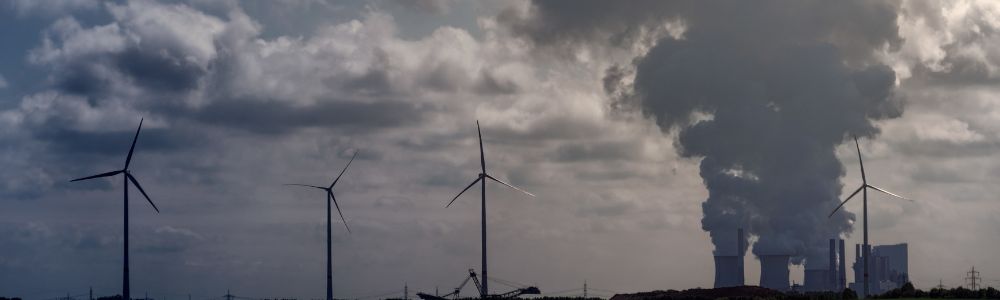
In 2015, governments around the world decided to set a goal of achieving carbon neutrality by 2050. This goal is necessary if we are to combat global warming and its associated impacts.
The goal is to limit our impact on the environment, biodiversity, and ecosystems that are vulnerable to the rise in temperature we have been observing for several years. Although this goal is not set to be achieved until 2050, we must take action now if we want to reach it. It is therefore important for everyone to do their part, each at their own level and within their own means.
Following this international agreement, the SNBC published a roadmap to help French public and private organizations participate in this collective effort.
To combat global warming, we must therefore reduce our greenhouse gas emissions. But before we can reduce them, we must account for them—and do so accurately and completely.
A carbon footprint assessment is a tool that quantifiesthe carbon footprint of an organization (public or private). It quantifies all greenhouse gas (GHG) emissions generated directly or indirectly by an organization. Following an analysis of emission sources, it enables the implementation of an action plan and a carbon strategy to minimize these emissions. Finally, it offers solutions for offsetting emissions that are unavoidably produced.
1. Adopt an eco-friendly approach
1.1. Being a socially responsible company
2. Develop an action plan to reduce GHG emissions
2.1. Reducing the Impact of an Organization's Activities

Commit to an eco-friendly approach
💪Being a socially responsible company
The number of so-called “green” companies is growing, and there is a growing desire to work with or for environmentally responsible companies or products. That is why we are seeing an increase in demand from companies to conduct a greenhouse gas inventory to assess their environmental impact and take action to help combat climate change.
Calculating an organization’s carbon footprint—its environmental impact—often begins with a desire to operate in an environmentally responsible manner. Business leaders who want to “do their part” in the fight against climate change will choose to conduct a carbon assessment simply to understand how to reduce their impact on the environment.
The environmental aspect may not resonate with everyone’s aspirations and priorities; however, conductinga carbon assessment offers much more than that! It can be done for economic reasons or used as a sales pitch.
⚖️Regulations
The Carbon Footprint® assessment is required for:
- companies with more than 50 employees in France that are eligible for the economic stimulus package (2021 Finance Act, Art. 244),
- for those with more than 500 employees, or 250 employees in the overseas departments
- for municipalities with more than 50,000 residents (Grenelle II Act, July 12, 2010).
However, it remains a strong business and environmentally responsible argument for all other organizations. More and more companies are deciding on their own to conduct carbon assessments as part of a CSR strategy for a variety of reasons, beyond the regulatory GHG reporting requirements.
🧠Source and methodology
The method for accounting for GHG emissions must comply with ISO standards, specifically ISO 14064. The data required for this calculation comes from various sources, such as energy bills, transportation data, etc.
The scope of emissions must be clearly defined, including both direct emissions (Scope 1) and indirect emissions (Scopes 2 and 3). The transition to effective carbon accounting often involves partnering with specialized organizations such as ADEME. This requires an accurate measurement of the carbon footprint across all aspects of the organization’s operations.
The transition to carbon neutrality requires a rigorous methodology to achieve the goals set for combating climate change.

Develop an Action Plan to Reduce GHG Emissions
📉Reduce the impact of an organization's activities
An action plan aimed at reducing the impact of the company’s activities across all three scopes—by reducing its energy consumption, for example—will inevitably result in substantial savings far exceeding the cost of the assessment.
From a communications perspective, producing such a report and sharing it internally within the company or externally with its customers, partners, or even regulatory authorities demonstrates a shift toward greater environmental responsibility on the part of the company. This will also help raise awareness among the company’s employees and make them full participants in the sustainability transition the company has embarked upon.
As a strong selling point, this change in approach can be highlighted during the bidding process, for example.
🧑⚖️Spotlight on a Future Carbon Tax
Finally, a key factor is the implementation of the future carbon tax in France. The carbon tax is an environmental tax on carbon dioxide emissions. The tax is levied directly and is proportional to the amount emitted, meaning that the higher the emissions, the higher the tax. Although it is not yet in effect, it will take effect soon and will apply to all sectors.
Once this tax takes effect, all stakeholders will have to calculate their emissions in order to pay it. So yes, one might think that we’ll calculate our emissions once the tax takes effect. However, if we think about it, to minimize the cost, we need to reduce our emissions as much as possible before the tax goes into effect.
Conducting an initial carbon assessment early on will make it possible to implement reduction measures and thus prepare for this future tax. Although conducting a carbon assessment involves a cost, it offers a clear benefit to a company, organization, or local government.
It offers an economically and commercially attractive solution, but above all, it helps advance the goal of carbon neutrality by 2050.
A greenhouse gas inventory is used to quantify an organization’s emissions; once this quantification is complete, an analysis must be conducted. This analysis highlights the areas responsible for the highest greenhouse gas emissions and thus identifies the areas where the organization needs to take action.
This analysis therefore enables the development of an action plan to reduce emissions. This plan also helps define the low-carbon strategy the company intends to follow in order to meet the government’s goal of carbon neutrality by 2050.

How do you calculate your GHG emissions online?
Once you’ve decided to conduct a GHG assessment, the next question is how to go about it and who to work with. While these assessments are typically conducted using an Excel spreadsheet, platforms have been developed to simplify the process of conducting a carbon assessment. Decarbo’Solution® is one such platform.
Decarbo’Solution® offers a platform tailored to each user’s needs and adapted to the company’s industry, enabling quick and easy assessment. In addition to conducting assessments, the platform allows users to define action plans and helps companies combat global warming by developing increasingly advanced tools to meet user expectations. This will allow you to track, reduce, and offset your emissions simply and effectively.
With the Decarbo’Solution® platform, you can conduct your carbon footprint assessment by industry sector on your own or with the help of a carbon footprint expert. So, are you ready to conduct your carbon footprint assessment?