









Data Center Pollution: Understanding and Reducing the Digital Sector’s Carbon Footprint
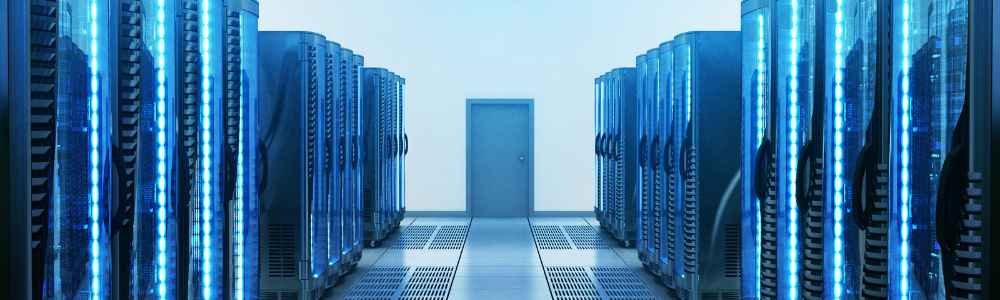
Every click, every email, and every online video seems intangible. Yet, behind these digital activitieslies a very real physical infrastructure: data centers. These massive storage facilities, the true “hearts of the web,” operate around the clock to host data from around the world.
But their technological power comes at a cost. These facilities consume enormous amountsof energy, generating pollution that is becoming an increasingly serious concern.
According to the IEA (International Energy Agency), data centers account for nearly 1.5% of global electricity consumption and more than 2% of carbon emissions —a figure that continues to rise as cloud computing and artificial intelligence grow. In France, demand for data storage and processing continues to rise, raising significant questions aboutenvironmental impact.
Far from being an isolated problem in the technology sector, data center pollution now affects all businesses: every email, every file transfer, and every hosted application contributes to this invisible footprint. The digital sector’s carbon footprint is therefore becoming a strategic lever in ESG policies and in the pursuit of more coherent sustainable development.
In light of these challenges, digital frugality is no longer an option. Digital industry players, as well as end-user companies, must learn to measure, understand, and reduce the carbon footprint of their infrastructure.
With this in mind, solutions such as Decarbo’Solution®, developed by Decarbo’Solution® (Decarbo’Solution®), offer a systematic and measurable approach to managing the impact of data centers and moving toward a more sustainable digital future.
Contents
Data Centers: Understanding Their Role and Their Actual Impacts
Infrastructure Essential to the Functioning of the Digital World
Data centers are the technical foundation of the connected economy.
They host, store, and process all the data exchanged over the Internet: files, applications, videos, emails, and cloud services.
Every click, every online transaction, and every request sent passes through one of these massive data centers.
In practical terms, a data center houses thousands of computer servers, storage and security systems, as well as climate control systems to maintain a stable temperature.
Without these facilities, digital services such as social media, collaboration tools, and e-commerce would instantly cease to function.
Their role is therefore vital: they ensure the continuity of the global digital infrastructure, guaranteeing the reliability and speed of information exchange.
But this widespread dependence comes with an increasingly visible environmental impact.
Rapidly Rising Energy Demand
A data center requires a continuous power supply to keep the servers running day and night.
The proliferation of digital content—videos, online services, artificial intelligence—has led to a steady increase in electricity demand.
Selon l’Agence internationale de l’énergie (AIE), ces sites absorbent aujourd’hui environ 1,5 % de l’électricité mondiale, un chiffre susceptible d’atteindre 3 % d’ici 2030 si rien n’est fait pour améliorer leur efficacité.
En France, leur demande équivaut déjà à celle d’une grande ville comme Lyon. Une pression sur le réseau électrique que des dispositifs comme Ecowatt cherchent justement à anticiper.

This development reflects a fundamental trend: the more digital technology advances, the more the infrastructure required for its operation becomes strategic and resource-intensive.
Behind the apparent intangibility of digital technology lies an industrial reality, consisting of machines, maintenance, and ongoing logistics.
Controlling this consumption is therefore a top priority, for both environmental and economic reasons.
It determines the sector’s ability to continue its development while limiting its environmental impact.
Multiple and often invisible ecological impacts
The environmental impact of a data center is not limited to its electricity consumption.
It encompasses its entire life cycle: construction, component manufacturing, logistics, maintenance, and decommissioning.
The construction phase requires a particularly large amount of materials—steel, concrete, copper, aluminum— whose production contributes to increased greenhouse gas emissions.
In addition, these facilities require large amounts of land, sometimes located near already densely populated urban areas.
Water also plays a key role.
Many cooling systems use hydraulic circuits to dissipate heat, which can put additional strain on local resources.
Operators are now seeking to limit these water withdrawals through air-cooling, heat recovery , orliquid immersion technologies .
Finally, the end-of-life management of servers and electronic equipment poses another challenge.
Recycling of these items remains incomplete: some components are reused, while others end up in low-efficiency treatment processes.
This contributes to the generation of electronic waste, the management of which remains a complex issue on a global scale.
A Strategic Challenge for Businesses
Companies rely directly on this infrastructure to store and secure their data.
But this reliance also requires them to better understand their overallcarbon footprint.
More and more businesses are now measuring thecarbon footprint associated with digital hosting in order to incorporate this factor into their ESG initiatives and sustainable development policies.
Managing this impact is becoming a key factor in competitiveness:
Companies that are able to optimize their digital workflows and choose partners committed to reducing emissions enjoy a more credible image and greater resilience in the face of future regulatory constraints.
Thus, data centers represent both a technical feat and an environmental challenge.
Understanding them is the first step toward developing a more sustainable model—which we will explore in the next section: why environmental pressure is intensifying and how stakeholders are adapting.
Why Environmental Pressure Is Increasing
Exponential growth that is putting a strain on the model
Every day, billions of digital actions take place: emails exchanged, videos watched, professional activities, connected apps…
Behind these everyday actions, a colossal amount of information circulates and accumulates within data centers.
In less than a decade, the volume of global data has increased tenfold—a pace that few sectors can keep up with.
This trend can be attributed to the rise of artificial intelligence, connected devices, and streaming, as well as the widespread adoption of remote work.
These services require ever-increasing amounts of servers, storage space, and maintenance, placing growing pressure on hosting providers.
For a long time, the industry’s priority has been performance: greater speed, greater capacity, and greater safety.
But this model, based on constant growth, is now showing its limitations.
Increasing the number of processing centers requires more resources, more built-up area, and greater logistical needs.
In some areas, the establishment of new sites even puts a strain on electricity and water networks or creates competition with other industrial uses.
In light of this, several countries, including France, have begun exploring ways to regulate the construction and management of these facilities.
Authorities now require energy-efficient designs and better local integration of these projects.
This approach encourages digital industry players to design more energy-efficient facilities, pool their resources, and rethink the location of their sites to limit regional imbalances.
In short, the exponential growth of digital technology is no longer simply a sign of progress; it is becoming a challenge in terms of organization and collective responsibility.
Businesses, local governments, and service providers must now strike a balance between innovation, reliability, and respect for resources.
Local and societal tensions
The presence of a large data center is no small matter for a region.
It requires specialized power grids, powerful cooling systems, and a skilled workforce.
Some areas view the establishment of these facilities as a source of jobs, while others see them as an additional strain on their resources.
The public debate is heating up: How can we accommodate these activities without disrupting the local ecosystem?
In France, several local governments now require operators to submit detailed impact studies before setting up operations.
These studies assess heat discharge, land use, water management, and compatibility with land-use plans.
Beyond the technical aspects, these discussions raise the issue of shared responsibility: that of service providers, but also of thecompanies that use their services, whose storage needs contribute to this growth.
First, the use of GCI has led to a significant reduction in the uncertainty of the GHG inventory—particularly for Scope 3—from 50% to 5%. The group therefore has data that is 95% accurate.
Using supplier data collected and analyzed by the GCI tool, in-depth analyses were conducted internally on the impact of 35,000 products, grouping suppliers into 170 categories. This represents more than 80% of purchases by volume and value.
Toward More Energy-Efficient Data Centers: Strategies, Innovations, and Support
Innovating to Reduce Our Overall Impact
Digital industry players are no longer content with simply improving the performance of their facilities; they are now seeking to limit their environmental impact.
Initiatives are multiplying around the world to design more efficient data centers capable of combining technical reliability with environmental responsibility.
Among the most promising approaches is the design of more compact sites that are better insulated and integrated into their local environment.
The goal is to minimize heat loss, recycle heat flows, and take advantage of the site’s natural conditions to stabilize indoor temperatures.
In some Nordic countries, for example, proximity to sources of cold air makes it possible to reduce energy consumption without relying on complex technology.
Other innovations focus on recovering the heat generated: this heat is reused to heat neighboring buildings or public facilities.
These practices contribute to a circular economy, in which one system’s surplus benefits another, thereby preventing unnecessary waste.
Measurement: The First Step Toward Mastery
Before taking action, you need to know how to measure.
Companies that host their services in data centers must be able to quantify their actual impact.
This monitoring isn’t limited to direct emissions; it also includes indirect emissions related to transportation, maintenance, and the construction of facilities.
Rigorous monitoring relies on a structured method capable of identifying the areas with the highest energy consumption and opportunities for improvement.
This is where environmental analysis comes into its own.
The evaluation criteria cover the entire life cycle of the facilities: design, use, management, and decommissioning.
Public authorities are now promoting this approach of continuous evaluation.
Regularaudits make it possible to verify the commitments made by operators and ensure the reliability of the information provided.
This external oversight serves as a guarantee of trust for partners and end users.
Decarbo’Solution®: A Tool for Understanding and Taking Action
To support this transition, Decarbo’Solution® (Decarbo’Solution®) offers a comprehensive approach through the Decarbo’Solution® platform.
This platform helpsorganizations accuratelyassess their environmentalimpact, identify their GHG emission sources, and plan concrete reduction measures.
The tool is based on a recognized method derived from international standards (ISO 14064, ISO 14067, and the GHG Protocol).
It draws on reliableinformation collected from the stakeholders involved and transforms it into concrete courses of action.
Each company can thus visualize the impact of its activities, prioritize the most effective actions, and track their effects over time.
One of the key strengths of Decarbo’Solution® lies in its ability to bridge regulatory requirements, sustainability goals, and the operational realities of organizations, through a collaborative approach with its ecosystem—particularly its suppliers.
It goes beyond a simple calculation: it helps build a coherent strategy based on measurable and audited criteria.

Data centers symbolize both the technological success of the 21st century and the challenges it poses to our planet.
Their rapid growth reveals a simple truth: every digital innovation has a physical cost, measurable in terms of our land and resources.
The question now is no longer how to limit digital growth, but how to make it compatible with environmental imperatives.
This transformation requires clear-headed decisions: designing more energy-efficient facilities, better balancing energy uses, and objectively assessing impacts in order to take consistent action.
Businesses have a key role to play in this transition by making the measurement and control of emissions central to their strategy.
As part of this collective effort, technology becomes a driver of progress, not a source of constraint.
Decarbo’Solution® (Decarbo’Solution®) shares this conviction: to harness rigorous measurement and methodological expertise to advance a digital future that better respects ecological and human balances.