









How can you reduce your carbon footprint?

Reducing a company’s carbon footprint is a critical issue at a time when global greenhouse gas (GHG) emissions are reaching levels that are alarming for the climate.
In France, CO₂e emissions continue to decline, as indicated by the Interprofessional Technical Center for Air Pollution Studies (Citepa) in its 2023 greenhouse gas emissions report. This initial estimate shows a 4.8% decrease compared to 2022, representing millions of metric tons of CO₂e avoided.
To reduce its carbon footprint, a company must not only comply with regulations but also innovate in reducing greenhouse gas emissions, optimizing resource use, and improving energy efficiency in activities as diverse as water management, production, food, and transportation—including air travel, which has a significant environmental impact due to its high GHG emissions.
The government and international organizations such as ADEME and ISO, as well as NGOs like Greenpeace and the WWF, emphasize the importance of reducing the carbon footprint, including in sectors such as housing and employee commuting.
La Stratégie Nationale Bas-Carbone (SNBC) met l’accent sur la nécessité pour une entreprise de diminuer ses émissions de carbone pour atteindre la neutralité carbone d’ici 2050. Cette stratégie vise à réduire drastiquement les émissions de gaz à effet de serre (GES) en s’appuyant sur une transition énergétique vers les énergies renouvelables, la décarbonation des secteurs industriels, et l’adoption de pratiques durables dans tous les secteurs économiques. Au quotidien, des outils comme EcoWatt aident aussi les entreprises à consommer l’électricité au bon moment.
By implementing appropriate strategies to reduce their carbon footprint, companies can generate both environmental and economic benefits.
1. The Energy Transition: A Key Priority
1.1. Reduce energy consumption
1.2. Accelerate the development of renewable energy
2. Industrial Optimization to Reduce GHG Emissions
2.1. Improving Production Processes
2.2. Standards and Certifications: A Guarantee of Performance
3. Reduce the carbon footprint through responsible consumption practices

The Energy Transition: A Key Priority
🌍 Reduce energy consumption
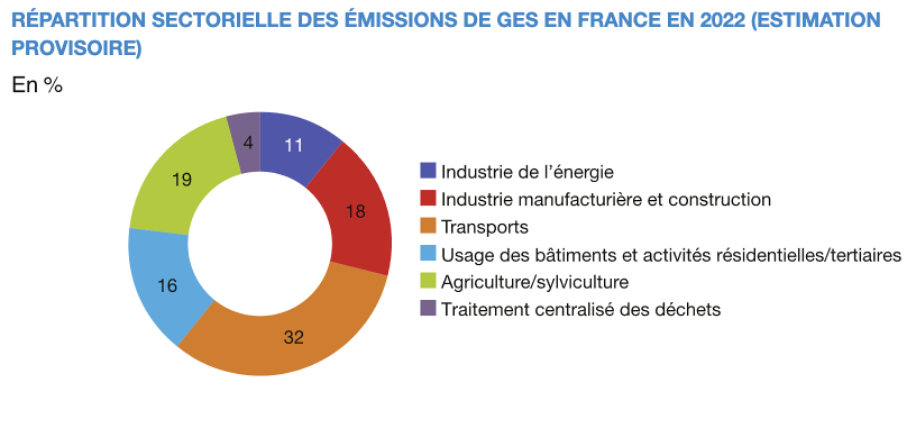
One of the most powerful ways to reduce GHG emissions is to cut energy consumption, a crucial step toward sustainable living. In France, the residential and service sectors—particularly those related to housing and employee activities—account for nearly 45% of final energy consumption.
To address this issue, companies—particularly those in France—can improve the energy efficiency of their buildings by optimizing heating, air conditioning, and insulation.
Solutions such as biomass boilers and heat pumps are proven technologies for improving the efficiency of heating systems, reducing a building’s energy consumption by up to 30 percent. These measures are also part of an effort to mitigate the environmental challenges associated with energy demand.
In addition, renovation initiatives such as the Bpifrance program enable companies to receive support for carrying out renovations that reduce their energy consumption and, as a result, lower their carbon footprint.
Finally, it is essential to take into account the transportation and logistics sectors, which account for a significant portion of energy consumption in France. Encouraging the use of electric vehicles, promoting carpooling for business trips, and fostering low-carbon modes of transportation are fully in line with this strategy for responsible energy management and decarbonization.
⚡ Accelerate the development of renewable energy
The development of renewable energy resources can also help reduce a company’s carbon footprint. France has set a target of 33 percent renewable energy in final energy consumption by 2030.
Companies can take this approach by investing in on-site renewable energy facilities (solar panels, wind turbines) or by purchasing green electricity. For example, L’Oréal uses 100% renewable electricity at all its sites in the Asia-Pacific region, enabling the company to pursue its carbon neutrality goals.
In Paris, public and private buildings are increasinglyadopting solar power systems to reduce their reliance on fossil fuels. This also includes initiatives aimed at improving energy efficiency in residential buildings.
This shift in resources is essential not only for complying with environmental regulations but also for creating long-term value for businesses. A well-thought-out low-carbon strategy helps improve brand image and build customer loyalty, while also contributing to the fight against climate change and reducing operating costs.

Industrial Optimization to Reduce GHG Emissions
🏭 Improving production processes
The industrial sector accounts for approximately 21% of GHG emissions in France. To reduce these emissions, a company can optimize its manufacturing processes by adopting more energy-efficient technologies and investing in higher-performance equipment.
Process improvements and heat recovery are proven ways to reduce the energy intensity of heavy industry.
For example, ArcelorMittal has implemented optimization projects that have enabled the company to set a 35% emissions reduction target through lower-emission manufacturing processes. Smaller companies, such as small and medium-sized enterprises (SMEs), can also take advantage of financing assistance programs offered by Bpifrance to modernize their facilities.
📜 Standards and Certifications: A Guarantee of Performance
The adoption of environmental standards is also a powerful tool for reducing carbon emissions. Certifications such as ISO 14001 and ISO 50001 are widely recognized for environmental performance management and resource efficiency. They not only ensure a more responsible use of resources but also enhance companies’ transparency and credibility in their CSR initiatives.
Furthermore, these standards promote the sustainable management of resources, such as water, by ensuring that its use is optimized across various industrial and service sector processes, as well as in their projects.
Companies that have obtained ISO 50001 certification—such as those in the industrial and service sectors—are able to achieve significant energy savings. Through rigorous implementation of this standard, it is possible to reduce resource consumption by 10% to 30% depending on the infrastructure.
This international standard promotes more efficient energy management by identifying areas for improvement, while ensuring a continuous process of progress. For example, some companies choose to review their transportation-related activities, such as optimizing their vehicle fleet to reduce emissions associated with business travel.
The benefits for businesses include not only lower costs but also improved environmental performance, which is an asset in terms of environmental sustainability and corporate social responsibility (CSR).
Reducing the Carbon Footprint Through Responsible Consumption Practices
Reducing waste is a key focus in the transition to a low-carbon economy, a major environmental challenge. By adopting circular economy practices, companies can rethink their product design and optimize materials management to minimize waste.
In France, nearly 4% of GHG emissionscome from waste management—a sector that requires concrete and rapid action. In Paris, for example, initiatives have been launched to encourage recycling and reduce plastic packaging, in line with city-wide efforts and a growing focus on food-related waste.
Major retailers such as Carrefour have taken significant steps to reduce their plastic waste by 30% between 2019 and 2023. These actions are part of a comprehensive approach to environmental responsibility, with a particular focus on reducing the environmental impacts of freight transportation and optimizing logistics in major cities such as Paris.
In the digital sector, companies are also encouraged to extend the lifespan of electronic equipment and recycle components to limit their environmental impact. ADEME recommends strategies for reusing digital waste to minimize the ecological footprint. This includes not only recycling efforts but also measures to encourage the French public to adopt more responsible digital habits and avoid technological waste.
💻 The Digital Footprint: A Major Issue
The digital sector accounts for approximately 2% of global CO₂e emissions, comparable to those from civil aviation. Data centers and computing devices are the main contributors due to their high energy consumption, particularly as a result of the cooling required for their systems.
Companies such as Atosare committed to cutting their CO₂e emissions in half by 2030 by improving the energy efficiency of their infrastructure and using renewable resources. These initiatives are part of broader European carbon neutrality goals aimed at minimizing environmental impact.
Reducing companies’ carbon footprint is a priority, both for climate protection and to ensure their economic resilience. Implementing energy transition measures and optimizing industrial processes can significantly reduce greenhouse gas emissions while creating added value.
By incorporating environmental impact into every stage of the value chain—from product design to end use—companies can sustainably minimize their carbon footprint. An effective low-carbon strategy goes beyond simply reducing this impact; it also helps improve the company’s image, positioning it as a leader committed to combating climate change.
To learn more, explore carbon offsetting: funding a certified project,the impact of greenhouse gas emissions on the environment, and aviation’s carbon footprint.