









Scope 2 and Scope 3: Understanding Indirect Emissions and Their Impact on Low-Carbon Strategy

Reducing a company’scarbon footprint is no longer limited to direct emissions. Today, indirect emissions—related toenergy (Scope 2) and the value chain (Scope 3)—account for the majority of greenhouse gas (GHG) emissions in a carbon footprint assessment.
The ISO 14064 standard and the Bilan Carbone® methodology provide a framework for this accounting. They are used by major companies such as Google and Amazon, as well as institutions such as BPI France and Bureau Veritas, and in the context of the DPEF (Non-Financial Performance Statement). In Europe, these tools are part of national low-carbon strategies.
Gain a better understanding of these scopes enables concrete action to be taken onthe environmental impact of a product, a company, or a business scope. It also provides powerful tools for implementing a robust and effective corporate social responsibility (CSR) policy.
1.1 Scopes in the Accounting for Greenhouse Gas (GHG) Emissions
1.2 Scope 2 and Scope 3: A Critical Scope for Corporate BEGES
2. Measure and reduce Scope 2 and 3 emissions
2.1 Challenges and Opportunities in Managing Indirect Emissions
2.2 Calculation Tools and Methodologies Used
3 How to Manage Scope 2 and 3 Emissions in a CSR Strategy
3.1 Incorporating Indirect Emissions into Environmental Policy
3.2 Decarbo’Solution®: A Tool for Managing Indirect Emissions
Introduction to Scopes 2 and 3
🧮 Scopes in greenhouse gas (GHG) emissions accounting
A company’s BEGES is based on the classification of greenhouse gas emissions into three scopes, in accordance with the Greenhouse Gas Protocol. This method is now recognized worldwide. It is also incorporated into the ISO 14064 standard, which is widely used in Europe, particularly in the context of CSR initiatives.
These are direct emissions generated by fixed or mobile sources owned or controlled bythe company.
Examples:
-
- On-site fuel combustion (boilers, furnaces, generators),
- Emissions from industrial processes,
- Corporate vehicle fleet.
👉 These emissions are calculated based on internal data: volumes of natural gas or fuel oil consumed, liters of fuel, etc.

This scope covers emissions associated with the production of energy used by the company: electricity, thermal energy, or energy derived from purchased steam.
Examples:
-
- Energy needs in offices or factories,
- District heating,
- Industrial steam purchased from a service provider.
👉 These emissions are calculated based on electricity bills, kWh consumed, and emission factors provided byADEME orISO. Scope 2 emissions depend directly on a country’s energy mix. In France, the use of nuclear power limits the carbon intensity of the energy consumed; this is not the case in all European countries.

Scope 3 includes all other emissions, which are divided into 15 categories according to the standard. These emissions originate from the entire value chain: suppliers, customers, travel, goods, waste, etc.
Examples:
-
- Purchases of goods and services,
- Employees' commutes,
- Upstream and downstream logistics,
- Use and End of Life of Sold Goods.
👉 Scope 3 emissions can account for up to 90% of total emissions. It is therefore a major challenge in any low-carbon strategy.

🗺️ Scope 2 and Scope 3: A Key Scope for Corporate BEGES
▸ Why are they crucial?
Indirect emissions are often overlooked in a company’s day-to-day operations. Yet they account for a significant portion of the overall carbon footprint. That is why many organizations are now including Scopes 2 and 3 in their environmental management plans.
This more comprehensive approach addresses:
-
- In response to the demands of investors and the financial markets,
- As part of the national low-carbon strategy,
- European regulations.
▸ Tools and standards for establishing accounting guidelines
Organizations use several frameworks to structure their measurement:
-
- The ISO 14064-1 standard,
- The Bilan Carbone® method (developed by ADEME),
- The Carbon Database (recognized emission factors),
▸ A key driver of organizations' corporate social responsibility strategy
Including indirect emissions in the strategy makes it possible to:
-
- Identify high-impact activities,
- Prioritize mitigation efforts,
- Engage supply chain partners and customers in a joint effort.
It thus provides a more comprehensive view of the life cycle of goods and the available levers for transformation. The LCA (Life Cycle Assessment) approach is often used in this context.

The 7 Benefits of Conducting a GHG Assessment for Your Company.
Measuring and Reducing Scope 2 and 3 Emissions
⚖️ Challenges and Opportunities in Indirect Emissions Management
▸ A complex but essential data collection process
Indirect Scope 2 emissions (related to energy, heat, or steam consumption) and Scope 3 emissions (related to purchases, travel, goods sold, transportation, etc.) account for a major portion of the BEGES for many organizations.
👉 Gathering information for these areas remains one of the main challenges:
- Scope 2 emissions can generally be derived from energy bills.
- For Scope 3, the information is held by multiple external parties (suppliers, distributors, customers, partners, etc.).
Objective: To gain a comprehensive view ofthe carbon footprint, even if some Scope 3 categories are initially based on estimates. This is a starting point, not an end goal.
▸ A dependency that can become a strategic asset
Scope 3 refers to indirect emissions over which the company does not always have control. This includes:
- To engage partners in the upstream supply chain using collaborative tools,
- To include carbon-related provisions in requests for proposals (see DPEF regulations, national low-carbon strategy, and ESG reporting),
- To work together to build a low-carbon culture at every stage of the value chain.
💡 This challenge becomes an opportunity: improving a product’s carbon performance also means reducing costs, building resilience, and enhancing brand image.
▸ A dynamic field of analysis to monitor over time
The scope of indirect emissions is changing:
- Depending on the local energy mix,
- Depending on changes tothe product offering or logistics processes,
- In accordance with the organization’s corporate social responsibility commitments.
This is why it is importantto regularly update the GHG inventory, incorporate those updates into ESG reports, and manage emissions reductions using tools such as those offered by Decarbo’Solution®.
🛠️ Calculation tools and methodologies used
Reliable benchmarks for a credible carbon footprint assessment
Several recognized methodologies are used to measure and categorize GHG emissions:
- The Bilan Carbone® methodology (ADEME): incorporates Scopes 1, 2, and 3
- GHG Protocol: an internationally recognized standard, particularly favored by large organizations such as Amazon and Google, for structuring their Scope 3 emissions reports.
- ISO 14064-1: an international standard for quantifying greenhouse gases, essential for a certifiable process.
- LCA: used to assess a product's carbon footprint throughout its life cycle (from raw material extraction to recycling).
🔍 These frameworks not only help companies meet regulatory requirements (DPEF, CSRD, SNBC), but also strengthen the company’s strategic alignment with regard to its carbon footprint.
Decarbo’Solution®: Practical Solutions to Take Action
To go beyond simple calculations, Decarbo’Solution® offers a modular approach that is compatible with any existing greenhouse gas inventory . It is based on three operational levers:
🔹Decarbo’Target®: Develop an action plan to reduce emissions across the entire carbon footprint. This module allows you to simulate the impact of each action on the various components of the GHG balance sheet and dynamically adjust the decarbonization trajectory.
🔹 Decarbo’Supply®: Engaging suppliers in the process. This module calculatesthe carbon footprint of goods and services (PCF, ISO 14067 standard) to support a shared LCA and responsible procurement.
🔹 Decarbo’Tender®: Incorporating low-carbon considerations right from the bid request stage. The company prioritizes the most committed suppliers and focuses its choices on solutions with the lowest greenhouse gas emissions.
Incorporating Scopes 2 and 3 into Corporate Social Responsibility Strategies
This approach provides companies with a comprehensive view of their value chain and the areas where they can take action. It enables them to:
- To prioritize,
- To engage internal and external stakeholders,
- To develop a CSR strategy aligned with carbon footprint challenges.
💡 It’s also a practical way to meet the growing expectations of partners, customers, employees, and others—and to turn emissions reduction into a competitive advantage.
How to Manage Scope 2 and 3 Emissions in a CSR Strategy
🧩 Incorporating indirect emissions into environmental policy
Indirect Scope 2 and 3 emissions account for a significant portion of companies’carbon footprints. For an effective CSR strategy, it is essential to include them in the overall carbon footprint assessment.
The national low-carbon strategy encourages organizations to reduce their greenhouse gas (GHG) emissions.
📊 Decarbo’Solution®: A Tool for Managing Indirect Emissions
The Decarbo’Solution® platform offers companies a solution for measuring and reducing their indirect emissions. It enables them to:
- Collect information on energy consumption, product purchases, and downstream transportation.
- Calculate emissions under Scopes 1, 2, and 3, in accordance with ISO standards andADEME recommendations.
- Develop action plans to reducethe carbon footprint, based on life cycle assessment (LCA) analyses.

Gaëtan COUREUL | Amaury Sport Organisation
A.S.O. has chosen Decarbo’Solution® to assess the carbon footprint of its events, starting with the Tour de France.
Benjamin GRIZBEC | French Badminton Federation
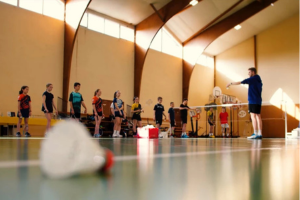
The FFBad has commissioned Decarbo’Solution® to conduct a carbon assessment of its operations and is proceeding with the preparation of GHG inventories for 20 affiliated clubs.

Christophe CHRISTEN | SCHMIDT Group
The Schmidt Group was able to bring 80% of its suppliers on board (in terms of financial volume) and achieve a reduction of 242metric tons of CO2.

Marlène PIVARD | Natural Grass
Natural Grass worked with the carbon experts at Decarbo’Solution® to conduct its first GHG emissions assessment.
🏢 Case Studies: A.S.O. and Schmidt Group
A.S.O : évaluer le BEGES des événements sportifs
Amaury Sport Organisation (A.S.O.), the organizer of the Tour de France, used the Decarbo’Solution® platform to calculate the GHG footprint of its events. This initiative made it possible to:
- Identify the main sources ofemissions, particularly those related toenergy and transportation.
- Implement measures to reduce BEGES by optimizing logistics and raising awareness among participants.
Schmidt Group: Engaging Supply Chain Partners in the Low-Carbon Strategy
The Schmidt Group has incorporated Decarbo’Solution® into its low-carbon strategy. Thanks to this tool, the company has:
- Assessed the emissions from its operations, particularly those related to products and the supply chain.
- Worked with its industry partners to adopt recycled materials, thereby reducing CO₂ emissions by 242 metric tons per year for the new 2024–2026 lineup.

Indirect emissions often account for the majority of a company’s greenhouse gas emissions. They are now an essential component of any ambitious and credible strategy to reduce the environmental impact of a company’s operations.
Measuring these emissions —whether they come fromelectricity, purchased goods, or travel—requires rigorous data collection and the use of appropriate tools, such as Bilan Carbone®, ISO standards, or platforms like Decarbo’Solution®.
Incorporating Scopes 2 and 3 into a company’s corporate social responsibility policy means addressing all of the company’s environmental impacts. It also means meeting the requirements of ESG reporting, the CSRD, and the national low-carbon strategy.
Organizations such as A.S.O. and Schmidt Groupe demonstrate that it is possible to manage both direct and indirect GHG emissions in a systematic and ambitious manner. They are paving the way for a concrete and measurable transition.
💡 Reducing greenhouse gas emissions is now a catalyst for profound change. It is not only an environmental issue but also a strategic choice and a commitment to performance and transparency.
Sources
- https://sustainability.google/operating-sustainably/net-zero-carbon/
- https://ghgprotocol.org/sites/default/files/standards_supporting/Chapter9.pdf
- https://decarbosolution.ai/e-brochures-connaissances/scope/
- https://decarbosolution.ai/bilan-carbone/un-deux-trois-et-les-emissions-de-ges-seront-bien-calculees-et-reduites-zoom-sur-lintegration-des-3-scopes-sur-la-plateforme-gci/
- https://decarbosolution.ai/comment-reduire-les-emissions-de-scope-2/
- https://decarbosolution.ai/bilan-carbone/publication-du-decret-1er-juillet-2022-relatif-aux-bilans-demissions-de-gaz-a-effet-de-serre-enfin-le-scope-3-devient-obligatoire/
- https://decarbosolution.ai/scope-4-emissions-evitees-de-quoi-parle-t-on/