









Scope 1 and 2 in the GHG Inventory: Understanding and Reducing Your Direct and Indirect Energy-Related Emissions

In the face of climate challenges, measuring and reducing their carbon footprint is no longer an option for businesses—it is a necessity. Whether through their products, services, or processes, they must identify the sources of their emissions in order to take concrete action and reduce their impact on the climate. A GHG inventory is a key tool for achieving this, as it highlights an organization’s greenhouse gas (GHG) emissions and identifies priority actions to limit these impacts, particularly within the framework of CSR in France and Europe.
At the heart of this approach, Scopes 1 and 2 play a key role. These categories cover direct emissions from the company’s operations (Scope 1) and indirect emissions related to energy consumption (Scope 2).
Understanding these scopes and taking action on them lays the groundwork for a transition toward more sustainable practices. It also presents an opportunity for companies to strengthen their competitiveness, meet the expectations of their customers and partners, and adapt to increasingly stringent environmental regulations.
1.1. Scope 1: Direct Emissions
1.2. Scope 2: Indirect emissions related to energy
1.3. Key Differences Between Scope 1 and Scope 2
2. Why are Scopes 1 and 2 crucial for businesses?
2.1. What data should be taken into account?
2.2. Complying with Regulations
2.3. Taking Stakeholder Expectations into Account
2.4. Laying the Groundwork for Scope 3 Action
3. Reducing Emissions: Taking Action
3.1. Addressing Direct Emissions (Scope 1)
What are Scopes 1 and 2 in a GHG inventory?
To ensure accurate and effective calculations and a targeted reduction in their greenhouse gas (GHG) emissions, companies rely on reference methodologies such as ISO 14064-1 or the BEGES v5 methodology. This framework categorizes emissions into three distinct scopes: Scopes 1, 2, and 3.
⚡Scope 1: Direct emissions
Scope 1 includes all emissions directly generated by the company’s activities. Under the French regulatory methodology, these emissions are broken down as follows:
5 subcategories of direct emissions
- Stationary combustion sources (heating, etc.);
- Mobile combustion sources (emissions from the use of company vehicles);
- Non-energy-based processes (industrial processes);
- Leaks (refrigerant leaks—air conditioning, refrigerator, or cold storage room);
- Biomass (soil and forests).
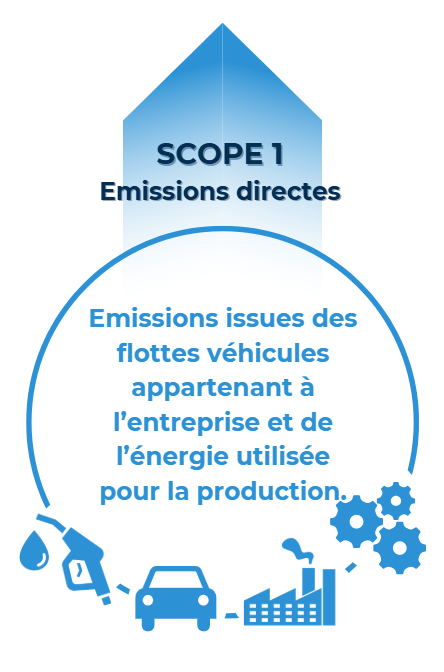
While scope 1 direct emissions are under the company's total control, scope 2 introduces another dimension.
🔥Scope 2: Indirect emissions related to energy
Scope 2 emissions refer to indirect greenhouse gas (GHG) emissions associated with a company’s purchased energy consumption. Although these emissions depend on energy suppliers and the energy mix they use, they remain a key strategic lever for reducing the company’s overall carbon footprint.
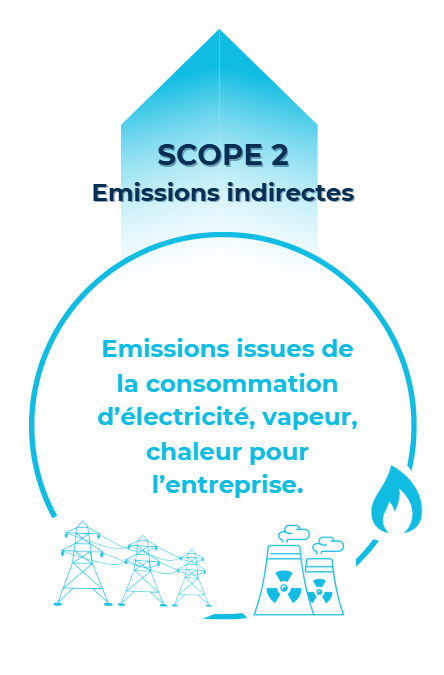
These programs include:
- Indirect emissions related to electricity consumption: emissions produced by stationary combustion sources (industrial furnaces, generators, boilers, turbines, etc.)
- Indirect emissions related to the consumption of steam, heat, or cooling: emissions related to the consumption of heat and cooling (corresponding to the primary energy sources used, such as natural gas, oil, wind power, solar power, etc.).
🆚Key differences between Scopes 1 and 2:
- Control: Scope 1 is under direct control, while Scope 2 depends on the energy supplier and its geographic location.
- Strategy: Reducing Scope 1 emissions involves improving internal equipment, while Scope 2 emissions require informed decisions regarding energy consumption practices—particularly energy conservation—and the selection of energy contracts, such as green energy contracts.
Why are Scopes 1 and 2 crucial for businesses?
📉What data should be taken into account?
For any company, the first step in a strategy to reduce greenhouse gas (GHG) emissions is to accurately identify its main sources of emissions.
- Calculating your Scope 1 emissions means quantifying your consumption of fossil fuels, such as natural gas, gasoline, diesel, or heating oil.
- Calculating Scope 2 emissions involves quantifying an organization’s electricity consumption (in kWh) or its purchases of cooling and heating from utility grids.
⚖️Comply with regulations
New European requirements are forcing organizations to rethink their energy models and publish detailed reports on their carbon footprint. Through GHG reporting, companies are becoming aware of their dependence on fossil fuels—an essential first step toward meeting the transparency requirements imposed by current regulations.
Scope 1 and 2 emissions must be reported in accordance with the various applicable regulatory frameworks, including:
- ISO 14064-1,
- the GHG Protocol,
- France's regulatory GHG inventory.
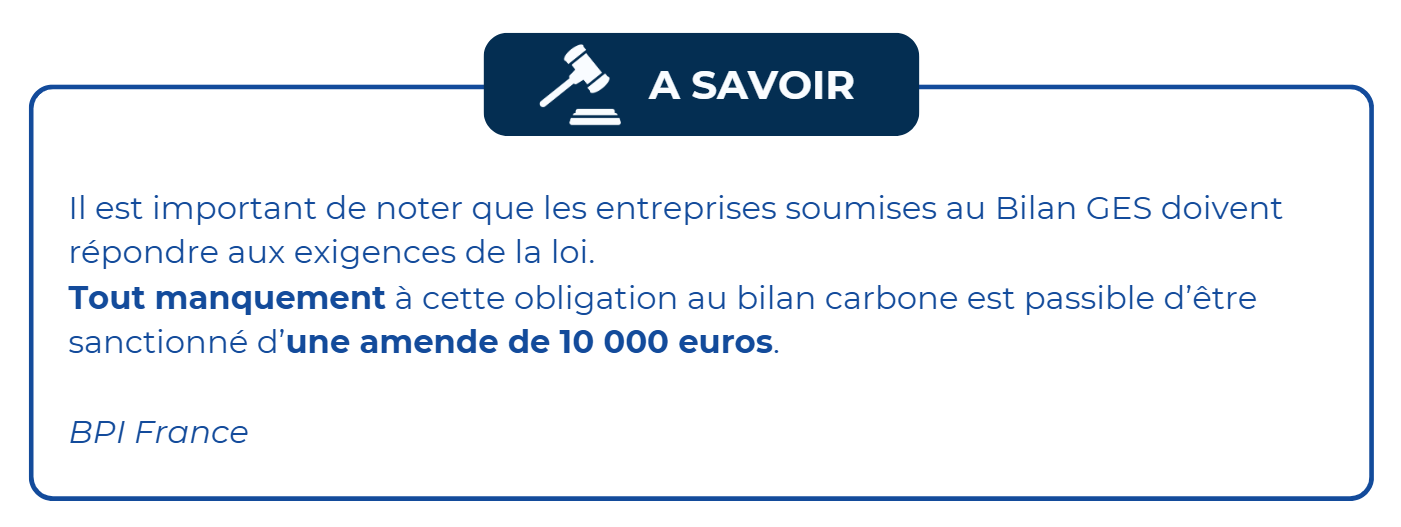
Meeting these regulatory obligations is essential to avoid financial penalties, maintain compliance and anticipate potential legislative changes.
🤝Taking Stakeholder Expectations into Account
Today, consumers, investors, and business partners are demanding greater transparency regarding environmental commitments. By highlighting their efforts to reduce Scope 1 and Scope 2 emissions, companies:
- They are asserting their responsible leadership, positioning themselves as committed and proactive stakeholders in the face of the climate crisis
- They attract investors who prioritize environmental, social, and governance (ESG) criteria, thereby becoming strategic choices in a world where performance goes hand in hand with sustainability.
🔎According to an ESG survey conducted in 2023 by BNP Paribas: “76% of investors believe that climate change and decarbonization are factors important enough to influence their investment strategy.”
According to a 2021 survey conducted by IFOP in France: “More than 8 out of 10 French people believe it is important for large French companies and multinational corporations to make a commitment.”
🚀Laying the Groundwork for Scope 3 Action
Scope 3, which encompasses emissions associated with the entire value chain (suppliers, transportation, product use, etc.), often accounts for the largest portion of an organization’s carbon footprint. However, addressing this challenge without first bringing Scopes 1 and 2 under control would be counterproductive.
Rigorous management of Scope 1 and 2 emissions is not only a strategic prerequisite—it also provides a solid approach to addressing the complex challenges of Scope 3. It further helps establish internal best practices and fosters a company-wide commitment to reducing greenhouse gas emissions.
🔎A company that reduces its energy consumption (Scope 2) inspires its partners to follow suit, triggering a domino effect that helps reduce Scope 3 emissions.
How can we reduce Scope 1 and Scope 2 emissions?
To reduce their carbon footprint and meet growing environmental requirements, companies must take concrete and strategic actions. Reducing Scope 1 and 2 emissions requires specific measures, supported by effective tools.
💡Reducing Direct Emissions (Scope 1)
Direct emissions—those from sources owned or controlled by the company (such as emissions from fossil fuels consumed on-site or fuels used by the vehicle fleet)—can be significantly reduced through several measures:
Transition to Sustainable Transportation
-
- Adopting electric vehicles for corporate fleets.
- Install charging infrastructure at these sites to facilitate this transition.
- Encourage eco-driving through employee training programs.
🔎Note: According to the Ministry of Ecological Transition, over its entire life cycle, an electric vehicle emits 2 to 6 times less CO2 than a conventional internal combustion engine vehicle.
Optimization of Industrial Processes
-
- Identify and reduce process fugitive emissions using advanced detection technologies (e.g., sensors, drones).
- Upgrade equipment to improve its performance and reduce GHG emissions.
Energy Efficiency of Buildings and Infrastructure
-
- Improve thermal insulation to reduce the need for heating and air conditioning during heat waves.
- Perform proactive maintenance on equipment to prevent energy waste.
🔌Optimize energy consumption (Scope 2)
Scope 2 emissions primarily relate to the consumption of purchased energy used to power the company’s operations (electricity, district heating, and cooling). Key metrics include:
- Transition to Renewable Energy
- Opt for energy supply contracts that are 100% green (solar, wind, hydroelectric).
- Invest in clean infrastructure, such as on-site solar panels.
- Reduction in Electricity Consumption
- Install LED lighting and energy-efficient equipment.
- Suivre le signal Ecowatt pour décaler les usages non essentiels lors des pics de consommation.
- Raise employee awareness of eco-friendly habits (e.g., turning off unused devices, reducing elevator use).
📊Implementation of monitoring and reporting tools
Measuring and monitoring emissions are essential for effectively implementing a reduction strategy. Companies must:
- Quantify their GHG emissions and implement measures to reduce them
- By adopting digital tools capable of collecting, analyzing, and visualizing emissions data.
- Perform regular calculations and adjust strategies
- Establish a reporting schedule to assess progress.
- Conduct energy audits to identify sources of waste and adjust action plans.
- Set ambitious yet achievable goals, drawing on recognized standards such as the SBTi (Science-Based Targets initiative).

Controlling Scope 1 and 2 emissions is an essential step toward sustainably reducing an organization’s carbon footprint and laying the groundwork for an ambitious decarbonization strategy. These actions are not limited to environmental imperatives; they also help meet regulatory requirements, reduce operating costs, and enhance the organization’s reputation among stakeholders.
To successfully meet this challenge, specialized support is essential. Decarbo’Solution® offers comprehensive expertise, ranging from precise emissions calculations to detailed analysis and the setting of targets aligned with SBTi pathways. Its innovative platform enables organizations to track their progress and optimize their reduction efforts.
Investing in proactive emissions management is a strategic and responsible decision. Make Decarbo’Solution® your partner to achieve your climate goals and position your organization as a leader in the energy transition.
On a related note, read the article on Scopes 2 and 3 of the carbon footprint.