








What You Need to Know About Environmental Labeling

Environmental labeling is becoming a key tool for guiding consumers toward more responsible choices. It provides information onthe environmental impact of a product or service throughout its life cycle.
Ce dispositif, soutenu par le décret d’application de la loi Climat et Résilience en France, s’inscrit dans une démarche de transition écologique. Il concerne d’abord des secteurs comme le textile (notamment les vêtements), l’alimentaire ou encore les produits de grande consommation. L’objectif : rendre visible le coût environnemental d’un produit, avec un score simple, compréhensible et comparable.
At the European level, the European Commission is also promoting the development of this type of environmental labeling as part of its move toward carbon neutrality. Initiatives such asthe Eco-score, the Planet-score, and tools offered byADEME are based on a rigorous methodology grounded inlife-cycle analysis.
For companies, this presents a new challenge, but also an opportunity: to better understandthe environmental footprint of their products, promote eco-design, and meet the public’s growing expectations.
Contents
Understanding Environmental Labels: What Are We Talking About?
📢 A Response to Environmental Transparency Challenges
Today, consumers want to know what they’re buying. Beyond price or quality, a product’senvironmental impact is becoming a key factor, driving the demand for sustainability. This is whereenvironmental labeling comes into play, supported by tools like Ecobalyse to measure concrete results.
This is a system that provides information on the environmental impact of a product or service through transparent communication. The system is based on data collected throughout the product’s life cycle: raw material extraction, manufacturing, transportation, use, and end of life.
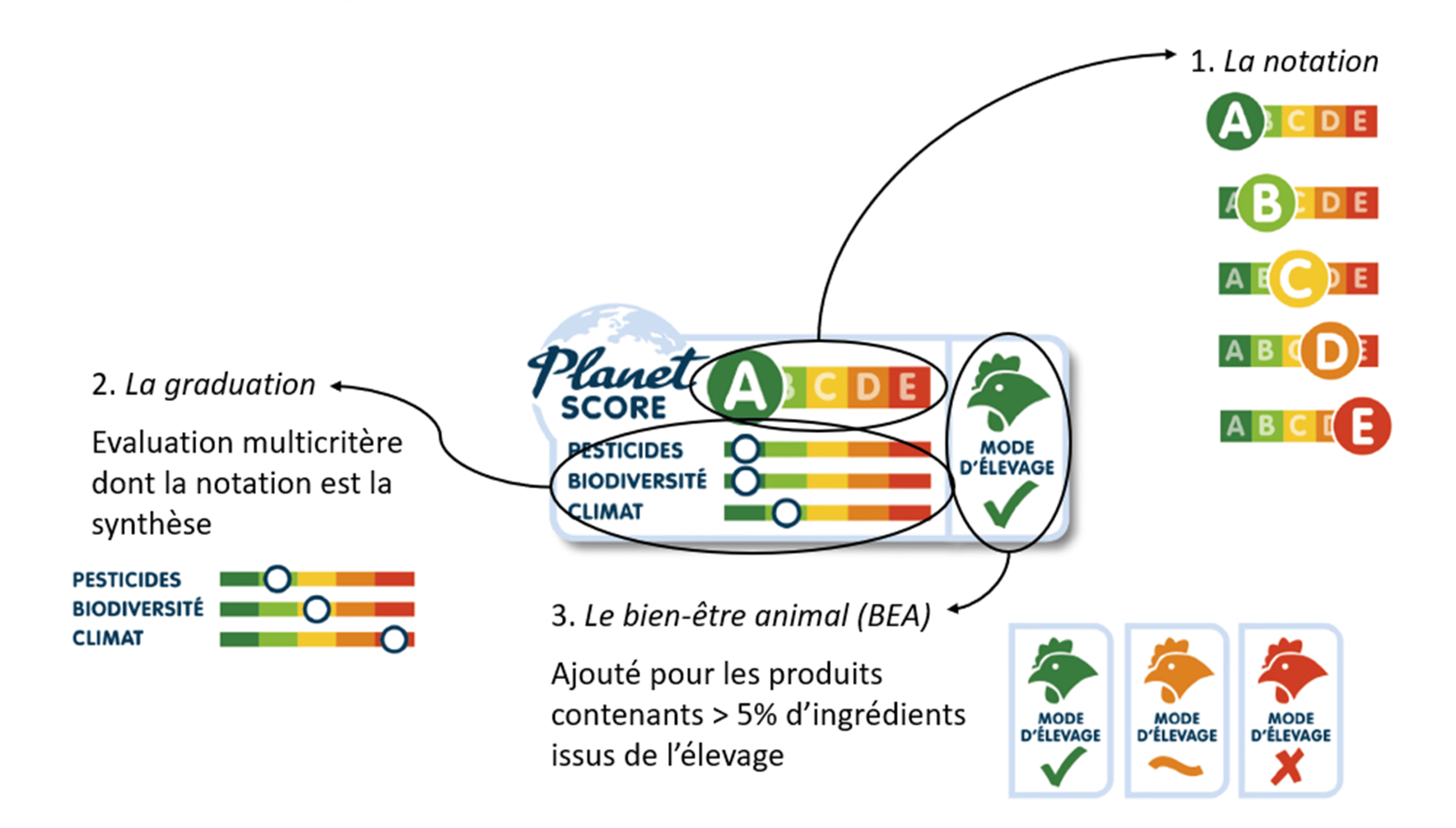
For example, the Planet-score—developed in France with support fromADEME—indicates a food product’s impact on the climate, biodiversity, pesticide use, and animal welfare. It is already being tested by retailers such as Carrefour, Franprix, and Biocoop.
Source: Picard

🏛️ A program supported by U.S. law and the European Union
Environmental labeling is encouraged by the Climate and Resilience Act, which was passed in France in 2021. It is initially being tested in high-impact sectors such as textiles,food, and personal care products.
Since 2022, companies have been able to participate in voluntary pilot programs led by ADEME. The goal is to evaluate calculation methods and prepare for nationwide implementation.
At the same time, the European Commission is working on a common framework called the Product Environmental Footprint (PEF). It aims to harmonizeproduct life cycle assessments (LCAs) across Europe. This will help prevent greenwashing and establish a common language for all sectors.
In the textile industry, for example, several brands—such as Decathlon and Petit Bateau — are already testing environmental labeling on their textile products, primarily clothing.

How to ensure the long-term viability and growth of your business through a successful low-carbon strategy.
How is a product's environmental score calculated?
🔍 Methodology and Key Indicators
Environmental labeling is based on a scientific methodology. The primary method used islife cycle assessment (LCA). This method makes it possible to assess a product’s environmental impacts from its manufacture through its end of life.
Among the criteria considered:
- greenhouse gas emissions (impact on the climate)
- water and energy consumption
- air and soil pollution
- waste generation
- depletion of natural resources
Each product is then assigned a score or rating, sometimes in visual form, such as the Eco-score (from A to E). This score helps consumers quickly compare several similar products.
For example, a French yogurt with recyclable packaging will have a lower environmental impact than an imported yogurt that is overpackaged and made from processed milk.
Other systems, such as Planet-score, include criteria not considered in traditional LCA, such as pesticide use or the impact on biodiversity.
🧩 The Role of Businesses in Data Collection
Pour afficher un score environnemental fiable, il faut des données précises. C’est un véritable défi pour les entreprises. Elles doivent collecter des informations tout au long de la chaîne de valeur : matières premières, transport, emballage, fabrication, fin de vie. En amont, une analyse environnementale de l’entreprise aide à repérer les étapes les plus impactantes.
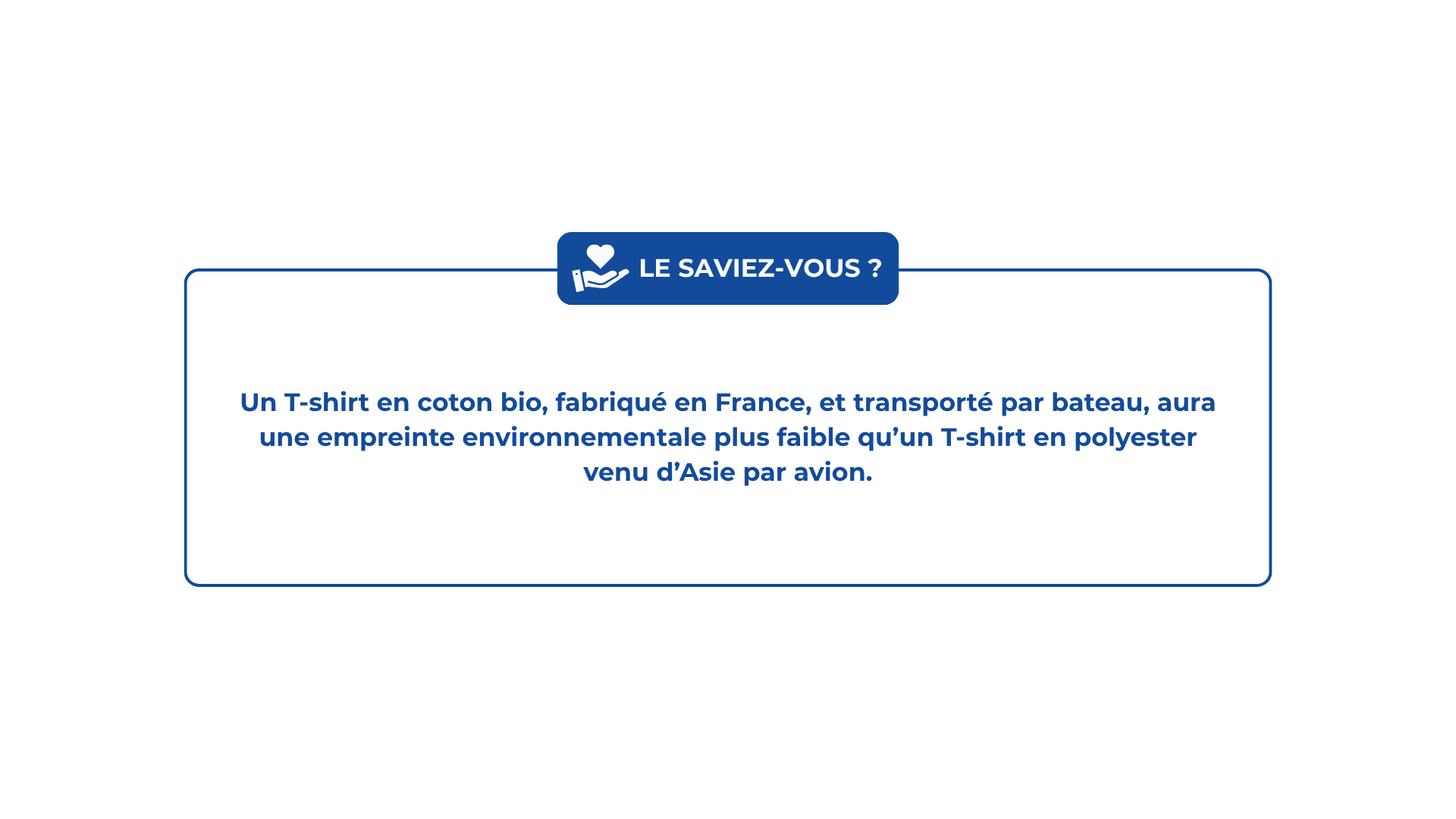
In the textile industry, this may involve tracing the process from cotton cultivation to dyeing, manufacturing, and finally shipping the finished product.
Some companies structure their approach using specialized tools. For example, a climate strategy based on a detailed assessment makes it possible to more accurately measure the greenhouse gas emissions associated with each stage. This is what the Decarbo’Target® method offers—a single-criterion approach focused on CO₂ emissions—which is used by several industrial players to improve the reliability of their life-cycle analysis.
En parallèle, dans des chaînes d’approvisionnement complexes, comme celles du textile ou de l’agroalimentaire, structurer la collecte de données fournisseurs devient essentiel. Des solutions comme Decarbo’Supply® permettent de centraliser ces informations pour assurer un affichage environnemental plus juste.
These steps also facilitate the implementation ofeco-design: rethinking a product to reduce its environmental impact right from the design stage.
What are the challenges for businesses and consumers?
🌱 An opportunity for socially conscious brands to stand out
Environmental disclosure is not a burden. It’s also an opportunity for companies to set themselves apart. Brands that adopteco-design practices, reduce their environmental impact, or communicate transparently inspire trust.
For example, Léa Nature already displays the Eco-score on some of its food products. Decathlon, for its part, lists the carbon footprint of several clothing items on its website. These initiatives show that it is possible to take action, even in complex sectors.
But beware of greenwashing. Misleading or incomplete claims can damage a company’s reputation. That’s why it’s essential to rely on a rigorous methodology and verifiable data.
Some companies are strengthening their strategies with tools such as Decarbo’Target®, which help them set realistic reduction targets and better manage their environmental transition. This ensures consistency between their commitments and the environmental claims they promote.
🛒 A top choice for consumers
Consumers are increasingly mindful of the environmental impacts of their purchases. Clear environmental labeling allows them to make informed, simple, and quick choices.
On the store shelves, they can compare two similar products: a cheese rated B with a low carbon footprint, versus another rated D, made on the other side of the world. The same goes for a pair of jeans produced through a short supply chain, which are less polluting than a pair from the fast fashion industry.
The Eco-Score, the Planet-Score, and environmental labels are becoming useful benchmarks. But they are no substitute for companies’ deep commitment. These tools must be combined with concrete actions on the ground—in factories, supply chains, and transportation.
Some organizations also structure their value chains to better manage these impacts. For example, the Decarbo’Supply® solution helps track the carbon footprint of products and services using data from suppliers. This improves the quality of the information provided to consumers.

For consumers, it serves as a clear benchmark. For organizations, it is a tool for progress. It encourages them to better understandthe environmental footprint of their activities, rethink their methods, and innovate.
But for this system to work, it requires reliable data, a transparent methodology, and a genuine commitment to change. Solutions like Decarbo’Solution® are designed to support companies in this process by combining precision, action, and consistency.
Sources
- https://bigmedia.bpifrance.fr/nos-dossiers/eco-score-et-planet-score-indicateurs-dimpact-environnemental-des-produits
- https://www.actsandfacts.org/actualites/laffichage-environnemental-chez-decathlon
- https://www.quechoisir.org/nos-combats-le-planet-score-pour-un-affichage-environnemental-des-aliments-fiable-et-comprehensible-n109342/
- https://www.ecoconso.be/fr/content/leco-score-pour-identifier-les-aliments-ecologiques
- https://engagements.decathlon.fr/levaluation-environnementale-de-nos-produits