









What You Need to Know About ESRS Standards

As climate, social, and governance issues become increasingly pressing, the issue of non-financial transparency has become a key consideration in organizational strategy.
Economic actors, whether public or private, must be able to communicate about their CSR impacts and practices, going beyond mere financial indicators.
It is against this backdrop that the European Sustainability Reporting Standards (ESRS) were developed— a set of standards designed to provide a framework for the disclosure of sustainability-related information.
These standards aim to enhance the comparability of data disclosed by European companies and make it easier for investors, partners, and regulators to interpret that information.
Les ESRS s’inscrivent dans un mouvement plus large de structuration du reporting extra-financier, amorcé depuis plusieurs années à l’échelle internationale.
Ils ne constituent pas une rupture, mais une tentative d’harmonisation : un cadre commun pour décrire les impacts environnementaux, sociaux et de gouvernance, tout en laissant aux entreprises une certaine flexibilité dans la présentation de leurs résultats
Contents
Understanding ESRS
Origin and Objectives of the Standards
The European Sustainability Reporting Standards (ESRS) were developed to provide a framework for companies to report on their sustainability commitments and performance.
They aim to standardize the presentation of non-financial information to make it easier to read and compare across Europe.
These standards were developed byEFRAG (European Financial Reporting Advisory Group), an advisory body responsible for proposing accounting and non-financial reporting frameworks to the European Commission.
The initial goal was to address a growing need: to enable investors, economic partners, and the general public to access reliable and comparable ESG (environmental, social, and governance) information.
The ESRS are modeled after existing international frameworks such as the GRI (Global Reporting Initiative) and the SASB (Sustainability Accounting Standards Board).
They are not intended to replace these tools, but rather to provide a common foundation tailored to the European context, where sustainability regulations have gradually become more stringent.
A structure designed for clarity and consistency
ESRS are based on a simple principle: to bring together, within a single framework, the various aspects of sustainability that a company may need to measure or describe. Each standard corresponds to a specific topic and defines the information to be published to ensure consistency among economic actors. The general structure consists of two main categories:- Cross-cutting standards, which apply to all companies and address governance, strategy, and the management of sustainability-related risks.
- Thematic standards, which address specific topics: the environment, social issues, human resources, ethics, and societal impact.
A constantly evolving environment
The ESRS were designed as an evolving framework.
Their content is intended to expand and adapt as corporate practices evolve and stakeholder expectations become more clearly defined.
New topics may be added or clarified over time, particularly those related to climate, biodiversity, or resource management.
More broadly, these standards reflect a global trend: that of increased transparency in the disclosure of non-financial information.
Whether the focus is on environmental, social, or ethical impacts, the disclosure of clear and verifiable indicators is gradually becoming a shared requirement.
The goal, therefore, is not to impose a particular method, but to foster a better understanding of the links between economic activities and their effects on society.
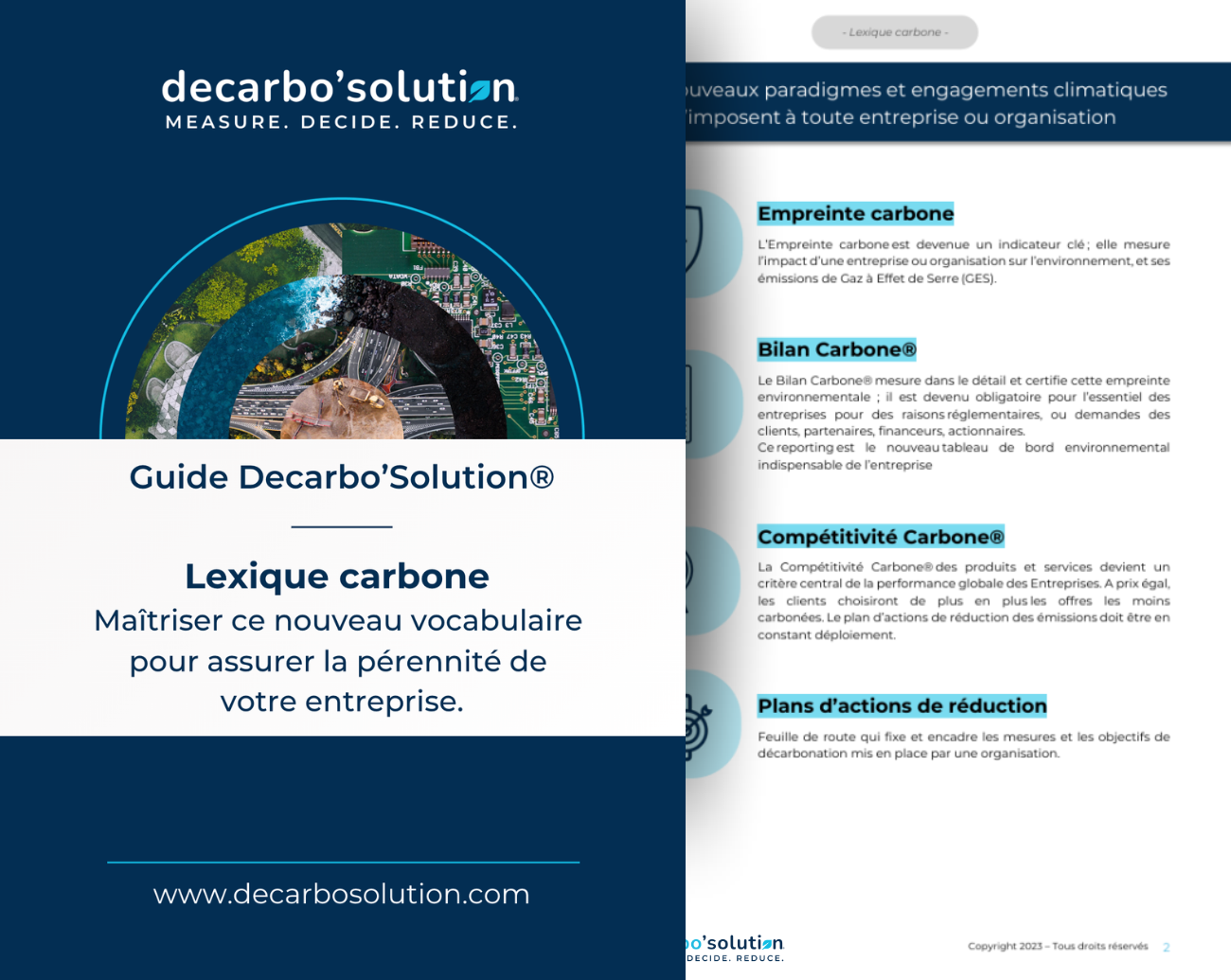
Master new vocabulary to ensure the long-term success of your business.
The Architecture of the ESRS and Their Main Components
A framework derived from the CSRD directive
ESRS are closely linked to the CSRD, which aims to strengthen non-financial transparency within the European Union.
The goal of this framework is to give environmental, social, and governance issues a more prominent role in corporate practices.
In practical terms, the CSRD requires relevant organizations—large companies, publicly traded groups, and, in the long term, certain small and medium-sized enterprises — to publish a report describing their impacts, policies, and results related to sustainable development.
The ESRS define the structure of these reports: they serve as a common framework for presenting this information in a comparable manner.
This approach aims to better link non-financial data to organizations’ overall strategy, in order to provide a more comprehensive view of their operations.
It is not a monitoring tool, but rather a methodological framework for understanding how companies incorporate environmental and social issues into their day-to-day management.
The Main Thematic Areas
ESRS reports are organized around several major sections, each addressing a specific aspect of sustainable development.
These sections allow for a structured approach to environmental, social, and governance issues, based on a materiality assessment: only the topics that are truly material to the company should be detailed in the report.
- Environmental component: This covers the issues of greenhouse gas emissions, natural resource management, and climate risks.
It seeks to better quantify the contribution of human activities to global warming, while identifying potential avenues for reduction. - Social aspect: This encompasses employees, workplace safety, diversity, training, and relationships with external partners.
It aims to better understand the role of people in production and governance models. - Governance component: It focuses on decision-making structures, ethics, anti-corruption efforts, and accountability in the supply chain.
Each company must therefore determine, based on its line of business and size, which topics are most relevant to address.
This approach is based on the principle of dual materiality: it involves assessing both the company’s impact on society and the effects of environmental or social issues on its economic activity.
An Evolving Definition of Sustainability
The ESRS do not rigidly define the concept of sustainability; rather, they define it as a balance between environmental, social, and economic dimensions.
This definition is intentionally broad to allow different sectors to adapt to it.
An industrial company, for example, will not face the same challenges as a service company or a local small business.
Standards will continue to evolve over time to incorporate new aspects, including climate and biodiversity issues, as well as emerging social issues.
The idea is to build a system capable of supporting business development while tracking progress toward the ecological transition.
This is not a moral obligation, but rather a technical guideline aimed at better aligning publication practices among economic actors.
The goal remains the same: to make data comparable, reliable, and accessible, without overly standardizing approaches.
A tool to aid understanding, not a constraint
The ESRS are not intended to impose a single method.
Rather, they provide a framework for organizing companies’ communication on sustainability issues, without dictating their strategy.
Each organization retains the freedom to interpret and present its results according to its specific circumstances.
For many organizations, particularly small and medium-sized enterprises (SMEs), implementing these frameworks represents a first step toward gaining a better understanding of their impacts and risks.
However, the approach is not intended to be one-size-fits-all: it is tailored to each organization’s level of maturity, size, and resources.
Thus, the CSRD and the ESRS are not an end in themselves, but rather a tool for assessing sustainable development at the European level.
They reflect a commitment to placing transparency at the center, without making it an immediate compliance requirement.
Carbon footprint assessments have shown us that the greatest environmental impacts of our events are related to travel by spectators and participants, since we organize “off-stadium” and community-based competitions.
The Challenges and Limitations of Implementing the New Standards
A Approach Based on Measurement and Consistency
One of the main objectives of these new rules is to improve the consistency of the data published by companies regarding their environmental and social activities.
They aim to make disclosures more readable and comparable, without overly standardizing approaches.
This trend is based on a simple idea: enabling businesses to better understand their overall performance.
It is not just a matter of accountability, but also of tracking more precisely the efforts made to reduce emissions or improve the quality of life at work.
The companies concerned are encouraged to collect precise, quantifiable, and verifiable metrics.
This requires better internal organization, particularly among the finance, environmental, and human resources departments.
Data reliability then becomes a key issue: a credible report depends above all on the accuracy of the measured data.
The Question of Materiality
A central concept underlying these obligations is that of the materiality. It involves identifying the most significant issues for a given company. In other words, it involves ranking priorities according to their actual importance to the business, by developing a clear and well-documented materiality matrix. Each organization must therefore identify the areas in which it has the greatest responsibilities or influence: energy, resource management, working conditions, gender equality, relations with partners, etc. This principle avoids imposing a one-size-fits-all model on everyone and allows for adapting the content of the report depending on the size, sector, and nature of the business. For large organizations, the materiality becomes an internal analysis tool. For the SMEs, it is often a first structured approach to non-financial reporting. In both cases, it serves to better link available data to real development issues.Limitations and Challenges of Implementation
While these new requirements provide greater transparency, they also raise several practical challenges.
Some companies are struggling to gather all the necessary data or to present it in the required formats.
Others lack the staff resources to monitor the indicators on a regular basis.
The issue of costs is also a factor.
Setting up a reliable measurement system requires technical resources, time, and sometimes external support.
For SMEs, this requirement may seem burdensome, especially when these obligations are added to other existing regulatory requirements. The Omnibus Regulation of February 26, 2025, postponed their CSRD obligations by a few years, but nothing prevents them from voluntarily addressing these issues right now, particularly by adopting the simplified VSME framework.
Finally, the wide variety of standards used worldwide continues to cause confusion.
Although these rules are moving toward greater uniformity, each country retains its own specific characteristics, and the interpretation of requirements may vary depending on the context.
The Role of Measurement and Support Tools
In this context, collecting reliable data has become essential for all organizations, regardless of their size.
Carbon calculation and environmental performance tracking tools help alleviate this burden by automating part of the process.
With this in mind, Decarbo’Solution® (Decarbo’Solution®) offers the Decarbo’Solution®.
This tool helps organizations prepare their greenhouse gas emissions inventory (GHG inventory), simulate reduction scenarios, and present results that align with the expectations of public authorities. It is based on a clear and verifiable method that facilitates the production of a concise and easy-to-read report.
The goal is not to comply with a directive, but to have an accurate measurement tool to guide environmental efforts over time.
This enables companies to anticipate regulatory changes, improve the quality of their data, and better understand the effects of their actions.
Rather than viewing these obligations as a constraint, they can see them as an opportunity to structure their development around concrete, measurable, and shared indicators.

Standards for non-financial reporting reflect a logical evolution in the business world: a better understanding of the effects of human activities on the environment and society.
Their primary goal is to make corporate reporting clearer, more comparable, and more credible, without standardizing approaches.
This transformation—which is gradual and still a work in progress—highlights the importance of measurement.
Knowing how to quantify emissions, track progress, and share verifiable results is becoming essential to building a more responsible and transparent business model.
With this in mind, Decarbo’Solution® (Decarbo’Solution®) supports organizations through the Decarbo’Solution® method, which helps ensure the reliability of carbon calculations and manage reduction efforts over time.
Beyond any regulatory requirements, it serves as a decision-making tool: a concrete way to move toward a more balanced model, based on rigor, measurement, and collective effectiveness.