









Carbon Tax: What Are the Implications for Businesses, and How Can They Prepare?
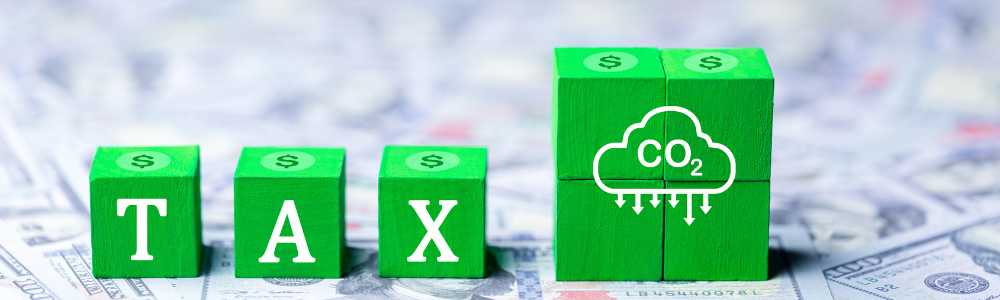
In the face of the climate emergency, governments around the world are seeking solutions to reduce greenhouse gas (GHG) emissions, which are responsible for global warming. Among the various tools available is the carbon tax, an economic mechanism designed to encourage a reduction in the consumption of fossil fuels such as natural gas and gasoline.
In France and across Europe, this tax has become a key tool for achieving the climate goals set by the European Commission. But what exactly is it? How is it calculated? And, most importantly, what impact might this green tax have on businesses and their competitiveness?
The carbon tax is based on a simple principle: placing a price on the carbon emitted when energy is consumed. The more CO₂e an activity emits, the higher the tax. The goal is twofold: to encourage organizations to change their practices to reduce their GHG emissions and to guide consumers toward more sustainable choices, particularly by reducing their dependence on fossil fuels.
However, the implementation of this tax varies from country to country, with specific amounts and regulations. For example, in France, the price per metric ton of CO₂e is constantly changing, directly affecting the cost of energy and essential goods, such as fuel. Countries such as Canada have also implemented similar mechanisms, often accompanied by compensatory measures for households and organizations.
For organizations, this tax represents both a challenge and an opportunity. It may lead to higher manufacturing costs, particularly for those that rely heavily on fossil fuels. But it also offers opportunities to transition to more sustainable business models through the adoptionof renewable energy or the creation of carbon offset mechanisms.
In this article, we’ll break down how the carbon tax works, analyze its economic and environmental impacts, and explore how organizations can prepare for these changes to remain competitive in a world undergoing a major energy transition. Whether you’re a CEO, an environmental manager, or simply curious to understand this green tax, you’ll find the essential information here to better grasp this complex topic—one that’s crucial for the future of our economy and our climate.

The Carbon Tax: Definition, Mechanisms, and Objectives
What is the carbon tax?❓
A carbon tax is an environmental tax designed to reduce GHG emissions by imposing a cost on each metric ton of carbon dioxide (CO₂e) emitted. The goal is simple: to incorporate the environmental cost of carbon into economic decisions.
In other words, this tax is intended to make polluters pay for the damage they cause to the climate, while encouraging economic actors to reduce their consumption of fossil fuels such as oil, coal, and natural gas.
In France, the carbon tax was introduced in 2014 as a component of the Domestic Consumption Tax on Energy Products (TICPE). It applies to fossil fuels such as natural gas and heating oil.
This approach is gradually being adopted in other countries, particularly in Europe, where similar initiatives aim to harmonize carbon pricing. Internationally, the carbon tax is part of a global effort to achieve carbon neutrality by 2050.
How is the carbon tax calculated? 📊
The calculation of the carbon tax is based on the following principle: each metric ton of CO₂e emitted is subject to a specific charge, known as the “carbon price.” This amount varies from country to country depending on local climate policies. In France, in 2024, the price per metric ton of CO₂e is set at approximately 45 euros, but it could rise in the coming years to meet decarbonization targets.
Here's how the tax is applied:
- On fuels 🚗: The carbon tax is factored into the cost ofgasoline, diesel, and natural gas, which directly affects costs for consumers and businesses.
- On fossil fuels used by organizations 🏭: Energy-intensive sectors, such as manufacturing, transportation, and construction, are seeing their production costs rise in proportion to their emission levels.
At the same time, certain sectors benefit from exemptions or emission caps to limit the immediate economic impact. This is particularly true for industries exposed to international competition, such as steel and cement, so as not to undermine their competitiveness in the global market.
In Europe, the European Commission has established an emissions trading system called the EU Emissions Trading System (EU ETS), which operates on a different but complementary principle. Under this system, emission allowances are allocated to organizations, which can trade them through a trading platform. Organizations that exceed their allowances must purchase additional permits, while those that emit less can sell their surplus allowances.
To complement the EU ETS, the European Commission has introduced the Carbon Border Adjustment Mechanism (CBAM) to strengthen the competitiveness of European industries while reducing the risk of “carbon leakage” —that is, the shift of emissions to non-European countries as a result of the implementation of climate policies.
This mechanism adjusts the cost of imported goods based on their carbon footprint, thereby ensuring that goods from third countries bear a cost similar to that of European producers. The revenue generated from the sale of certificates related to these adjustments will support green transition projects within the Union.
CO₂e-intensive sectors, such as steel and cement, are particularly affected. Over time, this mechanism could generate billions of euros in annual transactions, thereby helping to finance climate investments.
This mechanism will gradually supplement the current free allowances, providing a more balanced approach to encourage decarbonization while preserving the competitiveness of local industries.
Environmental and Economic Goals🎯
The adoption of the carbon tax serves several purposes:
- Reducing GHG emissions 🌍: By increasing the cost of carbon-based fuels, the tax encourages organizations and consumers to turn to more sustainable solutions, such as renewable energy (wind, solar, biomass). This helps reduce dependence on polluting fuels and limit negative impacts on the climate. This is a central objective of climate policies, as indicated by European Commission reports and analyses of decarbonization strategies.
- Accelerating the transition to sustainable resources 🔋: By making non-renewable resources more expensive, the tax encourages investment in low-carbon technologies, such as resource-efficient heating systems and electric vehicles.
- Stimulating innovation 💡: The economic pressure created by the tax drives organizations to innovate in order to reduce their carbon footprint and, in turn, lower their costs. This may include improving industrial processes, modernizing infrastructure, or adopting digital solutions to optimize energy consumption.
-
- Funding the green transition 💶: The revenue generated by the carbon tax is often reinvested in green transition projects. In France, for example, a portion of these funds is used to support households and organizations in their efforts to reduce emissions, particularly through financial assistance programs administered byADEME.
In summary, the carbon tax is an essential tool for aligning economic behavior with climate challenges. By gradually changing consumption and production patterns, it helps build a more resilient and sustainable economy that is in line with international environmental standards.

Impacts of the Carbon Tax on Businesses and Consumers
Economic Impact on Businesses 💼
The carbon tax has a direct impact on organizations by increasing their operating costs, particularly in sectors that are heavily dependent on carbon-based fuels, such as manufacturing, transportation, and construction.
Rising Costs Associated with Fossil Fuel Consumption
Companies that use energy sources such as natural gas, fuel oil, or coal are seeing their costs rise due to the carbon component included in fuel prices.
For example:
- Natural gas used for heating or industrial processes is subject to a carbon charge of approximately 14 euros per MWh, which directly affects production costs.
- Fuel prices, such as diesel, are rising by 12 to 14 centimes per liter, which is affecting the transportation and logistics sectors
Adjusting the Tax System to Incorporate the Carbon Tax
Organizations must adjust their tax strategies to account for this new burden. Some solutions include:
⚡ Energy efficiency: Invest in more efficient technologies, such as installing solar panels or replacing oil-fired furnaces with heat pumps.
🌱 Carbon offsetting: Purchasing emission allowances on the European market to offset greenhouse gas emissions, particularly for industries subject to the European Union Emissions Trading System (EU ETS).
🏦 Tax Deductions: Certain organizations may be eligible for tax credits for adopting low-carbon technologies or for reducing their emissions.
Case Study: How Large Companies Are Adapting in France
Companies such as ArcelorMittal and TotalEnergies have already changed their strategies:
- ArcelorMittal, a major player in the steel industry, is investing in hydrogen-based production processes to reduce its dependence on coal.
- TotalEnergies is developing renewable energy infrastructure and diversifying its operations into green electricity to reduce its exposure to the carbon tax.
Impact on Consumers 🛍️
Consumers are also feeling the effects of the carbon tax, mainly throughhigher energy and fuel costs.
The increase in the carbon component of energy prices results in:
-
- Higher heating bills for households that use natural gas or heating oil.
- A rise ingas and diesel prices at the pump, with a direct impact on the cost of daily travel and transportation
Impact on Purchasing Power
Rising energy prices are reducing households’ purchasing power, particularly for low-income households or those living in rural areas, where alternatives to polluting energy sources are limited. In response, the French government is implementing compensatory measures, such as the energy voucher, designed to help the most vulnerable households pay their energy bills.
Raising Awareness and Adopting Sustainable Behaviors
The carbon tax also encourages consumers to adopt more sustainable behaviors, such as:
⚡️ Reduce their energy use by better insulating their homes or by using more energy-efficient appliances.
🚲 Choose less polluting modes of transport such as public transport, bicycles or electric vehicles, which benefit from financial aid for purchase.
International Comparison: France, Europe, Canada 🌎
🇫🇷 France: Carbon Price Frozen
In France, the carbon tax rate has remained frozen at 44.60 euros/tCO₂e since 2018, well belowADEME’s recommendations, which call for a gradual increase to reach 100 euros/tCO₂e by 2030
🇪🇺 Europe: The Carbon Market (EU ETS)
Le SEQE-UE fixe actuellement le montant du carbone à environ 85 euros/tCO₂e, soit presque le double de la taxe française. Ce mécanisme permet aux organisations de vendre ou d’acheter des quotas d’émission en fonction de leurs besoins, incitant à réduire leurs émissions pour éviter des coûts supplémentaires.
🇨🇦 Canada: An Ambitious Carbon Tax
Canada has implemented a progressive carbon tax, which will reach 170 CAD per metric ton of CO₂e by 2030— one of the highest in the world. This tax is accompanied by direct financial relief for households, in the form of tax credits or rebates, to offset rising energy costs.
Role of the European Commission and Border Adjustment Mechanism (CBAM)
The commission is working on the Carbon Border Adjustment Mechanism (CBAM), which will impose a carbon tax on imports of CO₂e-intensive products, such as steel, cement, and aluminum.
This mechanism aims to prevent “carbon leakage” by ensuring that imported products are subject to pricing equivalent to that in effect in the EU. This helps protect domestic industries while encouraging third countries to adopt similar climate policies.
The carbon tax is much more than just a tax on CO₂e emissions. It is an essential tool for encouraging organizations to reduce their dependence on carbon-based resources and adopt more sustainable practices. However, its impact on manufacturing costs, energy prices, and consumer purchasing power requires economic actors to rethink their short- and long-term strategies.
Beyond regulatory compliance, it also paves the way for opportunities for innovation and differentiation. Organizations that are able to embrace these changes now will position themselves as leaders in an industry where expectations regarding social and environmental responsibility are on the rise.
By partnering with Decarbo’Solution®, companies can not only comply with quota regulations but also turn these obligations into opportunities to set themselves apart. Our expertise enables you to reduce costs, strengthen your competitiveness, and become a leader in sustainability, thereby enhancing your reputation among your customers, partners, and investors.
The carbon tax is not just a tax: it is an opportunity for visionary organizations to play an active role in the fight against climate change, while strengthening their resilience and sustainability in an ever-changing market.
Prepare your business today with Decarbo’Solution® and make the transition to sustainable resources a strategic tool for reducing your GHG footprint.