









SNC SEFOR Committed to Climate Action
Objective: To gain a clear understanding of the company’s emissions and turn this challenge into a tool for management and performance improvement.

Number of employees
tCO2e/year
Year Analyzed
%
Goal for 2030
The discussions were constructive and perfectly tailored to the realities of our profession.
Background
To this end, SNC SEFOR has chosen to partner with DecarboSolution® to measure its emissions, identify areas for action, and embark on a low-carbon trajectory tailored to its operational realities.
Company Overview

Why did you decide to commit to a low-carbon transition?
We made this decision because it is part of a process to transform our operations in order to make them even more sustainable, better manage our emissions, better target our purchases, engage our teams, and encourage our customers to adopt sustainable solutions.
What are the key figures from your GHG assessment?
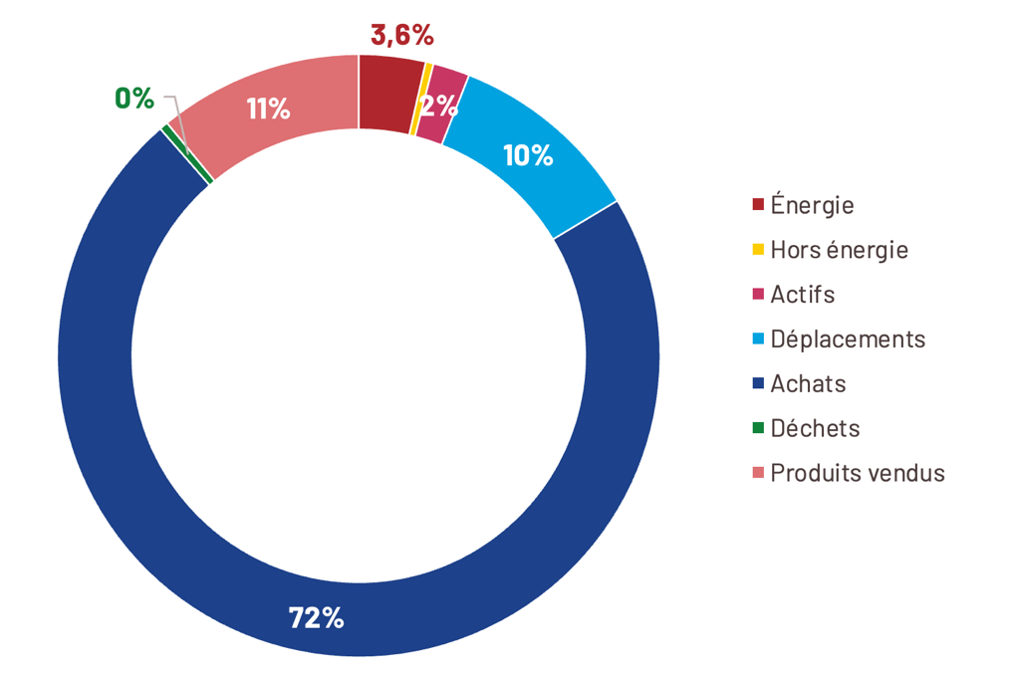
SNC SEFOR’s GHG emissions profile is typical of a retail company: The main challenge lies in the composition of its purchases; in fact, the production of purchased goods is the largest component of the emissions inventory (72%). In addition, the end-of-life phase of the products sold is the second-largest source of emissions (11%). Customer travel to the store is the third-largest source of emissions in the balance sheet (5%), followed by upstream freight transport of goods (5%).
What have been the results of your collaboration with Decarbo’Solution®?
The first and most significant achievement so far is having this approach in place, continuing to follow through on it, and implementing actions and strategies for improvement.
Would you recommend Decarbo’Solution®?
Yes, absolutely, because the discussions were constructive, and the initiative took into account our pace of adaptation as well as our technical and, above all, human resources—which is very important in this type of process, which can seem burdensome to the teams. Furthermore, these discussions help us gain a clear understanding of our work and identify appropriate areas for improvement with “SMART” objectives.
What are your key priorities for 2025–2026?
Supplier Engagement: Rollout of the Decarbo’Supply® program to engage and support partners in reducing their emissions.
Accurate measurement of inputs: determining the specific carbon weight (PCF – kgCO₂e/unit) to better manage product impacts.
Standardization of practices: systematization of requests for emission factors (EFs), PCF, and My-CIF® (formerly FEMPP) from suppliers.
Collaborative eco-design: co-development of product solutions with a smaller carbon footprint.
Transportation Optimization: Identifying solutions for modal shift and automating the collection of data on incoming freight.
Energy transition:
- Gradual transition of the internal-combustion fleet to 100% electric;
- Replacing natural gas with a heat pump;
- Logistical optimization of deliveries using GEDIMAT Sefor trucks and a study on the transition to biofuels.
Extending the lifecycle of assets: maintenance, repair, and optimizing the durability of equipment.
Awareness and Collective Commitment:
- Participation in an event dedicated to sustainable transportation,
- Facilitation of a “Climate Mural” workshop to strengthen the company’s internal environmental culture.