









KELLER is conducting its GHG assessment with the support of Decarbo’Solution®
Number of employees
tCO2e emitted from total operations in 2023
Year Analyzed
Goal for 2030
Decarbo’Solution® provided us with everything we needed to navigate the process and successfully complete our first carbon assessment with complete peace of mind.
Background
The company chose Decarbo’Solution® to benefit from structured, educational, and practical support, enabling it to master the Bilan Carbone® methodology while ensuring the reliability of the analyzed data. This first Bilan Carbone® thus serves as the foundation for an action plan aimed at reducing relative emissions by 25% by 2030.
Company Overview

Why did you decide to commit to a low-carbon transition?
In 2024, we launched our carbon assessment in partnership with Decarbo’Solution® to better understand and reduce our carbon footprint.
This initiative is part of our commitment to:
• Accurately assess our CO₂ emissions
• Train our staff on GHG accounting
• Monitor our environmental impact
• Meet the Keller Group’s carbon neutrality requirements
• Meet our customers’ expectations
• Contribute to the French government’s carbon neutrality plan
What are the key figures from your GHG assessment?
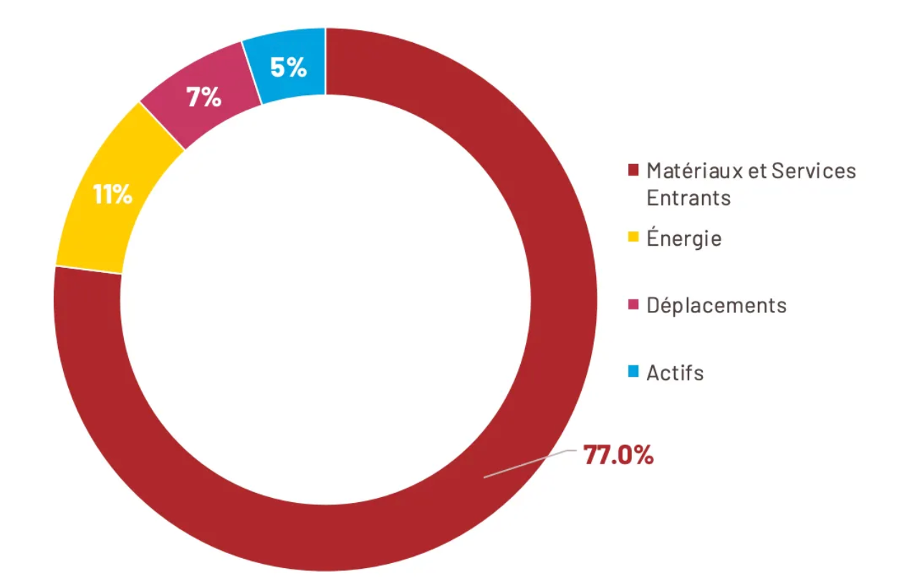
The breakdown of the KELLER Group’s emissions is typical for a company in the construction sector. The main challenge lies in the composition of construction materials: raw materials and external services account for 77% of the product’s carbon footprint, followed by the energy required for construction activities, which accounts for 11%.
How was this initiative presented to and received by your teams? Your management? Your suppliers? Your partners?
The initiative was very well received by all of our stakeholders.
The initiative has garnered strong support within our teams: employees have shown both curiosity and commitment, quickly recognizing the value of structuring our approach to carbon management. Management has also fully supported the project, recognizing its strategic importance in anticipating regulatory changes and strengthening our environmental responsibility.
Our suppliers and partners have also responded very positively to this initiative. Many have seen it as an opportunity to better understand their own emissions and to work together toward more sustainable practices. Overall, this initiative has created a constructive, shared momentum around the low-carbon transition.
What have been the results of your collaboration with Decarbo’Solution®?
Our collaboration with Decarbo’Solution® has been a real success. Their team provided us with professional and informative guidance throughout the entire process of conducting our carbon assessment. Thanks to their structured approach and the clarity of their explanations, we were able to easily understand the challenges, methodologies, and every step of the process.
Decarbo’Solution® provided us with everything we needed to navigate the process and successfully complete our first carbon assessment with complete peace of mind. This collaboration was both rewarding and effective, and it now allows us to move forward with confidence in our strategy to reduce our emissions.
Would you recommend Decarbo’Solution®?
Keller Fondations Spéciales highly recommends Decarbo’Solution® for assistance in conducting a carbon assessment and developing a climate strategy. Their expertise, their ability to explain concepts clearly, and the quality of their support were key to the success of our initiative.
What are your key priorities for 2025–2026?
- Reduce the carbon footprint of materials by limiting the amount of concrete used, incorporating more low-carbon cement, and prioritizing carbon-free steel.
- Modernize and optimize our construction equipment and facilities, while requiring our suppliers to provide greater transparency regarding emissions associated with manufacturing.
- Improve the management of business and construction site travel, reduce vehicle fuel consumption, and gradually transition to an all-electric fleet for company vehicles.
- Rethink our logistics by creating a staging depot to reduce the number of trips and courier deliveries, and optimize the weight of shipments.
- Reduce our consumption of internal resources, particularly paper, and encourage repairs to limit the breakage rate.
- Raise awareness and provide training for our employees to strengthen their commitment to the low-carbon transition.