









Evaluating Suppliers on CSR: Pitfalls to Avoid

In a climate where companies are increasingly held accountable for their social and environmental commitments, assessing their suppliers’ social responsibility is no longer an option but a necessity. Procurement accounts for a major portion of an organization’s environmental impact, particularly through indirect emissions (Scope 3), and can account for up to 80% of an organization’s carbon footprint. Assessing partners based on clear criteria not only helps mitigate risks related to non-compliance or service reliability but also enhances the group’s overall performance.
All too often, service providers’ assessments are limited to a simple form, hastily checked off, that does not reflect actual practices. Yet a truly accountable system must go further: it must incorporate relevant benchmarks, measure data, track deadlines, and formalize concrete commitments in contracts. The goal is not merely to verify compliance with standards, but to establish a robust process that creates value for all parties.
It is in this context that solutions such as those offered by Decarbo’Solution®, Decarbo’Supply®, Decarbo’Commit®, and Decarbo’Asset® take on their full significance: they enable procurement executives, investors, and corporations to transform non-financial assessment into a strategic lever. Through improved information management, the integration of decarbonization into contracts, and structured monitoring of relationships with each supplier, it becomes possible to place social responsibility at the heart of growth and competitiveness.
Contents
Pitfall #1: Relying Solely on Statements
When a company seeks to assess its suppliers in terms of CSR, the first step is often to ask them to sign a code of ethics or complete a questionnaire. This practice has become common in procurement processes because it establishes a minimum framework and reinforces the expected standards regarding compliance, labor practices, and environmental protection.
However, relying solely on these statements is like applying a thin veneer without truly verifying the reliability or value of the practices. A supplier may respond favorably without actually implementing meaningful actions on the ground . As a result , the assessment loses all credibility, and the company runs the risk of basing its purchasing decisions on incomplete or misleading information.
Why Isn't a Simple Statement Enough?
- Because it does not guarantee that the services are genuine or that internal rules are being followed.
- Because it does not allow for the measurement of reliable metrics such as energy consumption, waste management, or carbon footprint.
- Because it exposes procurement managers to reputational or non-compliance risks in the event of external audits.
In reality, a company cannot rely solely on a score based on self-reported data: it is essential to obtain concrete, verifiable evidence that can be compared over time. This is where audits, evidence collection, and tracking of rates and timelines become crucial.
The Role of Carbon Data in Assessment
One of the most critical aspects of CSR involves measuring a company’s carbon footprint. However, indirect emissions linked to suppliers (Scope 3) can sometimes account for up to 80% of a company’s total emissions. Without reliable tools, it is difficult to properly assess these impacts, identify the materials or products with the highest emissions, and implement a responsible procurement strategy—which is essential for a sustainable supply chain.
The Decarbo’Solution® platform addresses this need by offering Decarbo’Supply®, a data collection and analysis tool capable of transforming vague reports into precise measurements. By gradually onboarding each supplier and incorporating their results into Scope 3 calculations, companies gain a powerful tool to ensure the reliability of their practices, reduce uncertainties, and build a robust approach.
In short, societal assessment should not be limited to signing a document or checking a box on a questionnaire: it must be based on tangible evidence, verified information, and regular monitoring.
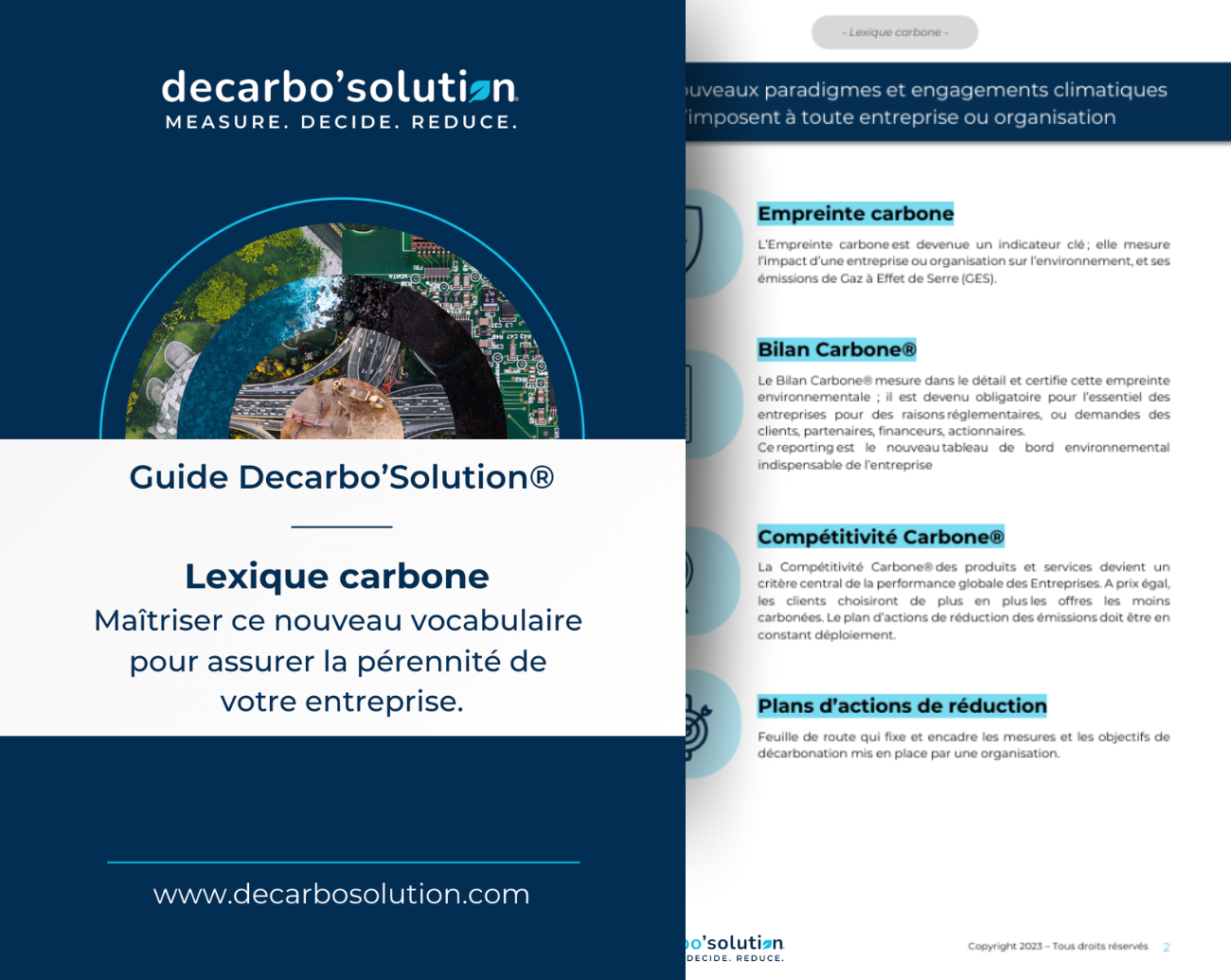
Master new vocabulary to ensure the long-term success of your business.
Pitfall #2: Forgetting the criteria specific to your industry
Another common pitfall in the non-financial assessment of suppliers is the use of a standardized framework that is identical for all companies and all markets. While this method has the advantage of simplicity, it has a major flaw: it ignores the diversity of sector-specific challenges.
Each sector has its own vulnerabilities, parameters, and specific impacts. For example:
- Dans l’agroalimentaire, la gestion de l’eau et l’origine des matières premières sont essentielles.
- In the textile industry, working conditions and adherence to social standards are central to compliance.
- In the manufacturing industry, energy consumption, equipment reliability, and waste management are priorities.
- In the service sector, service traceability and the implementation of controls can be critical.
By overlooking this aspect, a company risks obtaining misleading scores that do not reflect the reality of its suppliers’ practices. This can lead to poor purchasing decisions, weaken contracts, and slow down the path to sustainable growth.
Why tailor your criteria to the industry?
- Because the objectives must be aligned with the sector's actual challenges.
- Because a generic process does not highlight the key aspects of environmental and social performance.
- Because the relevance of the analyses determines the strength of partnerships with suppliers and the credibility of the CSR strategy.
The Sector-Based Approach of Decarbo’Solution®
To overcome these limitations, the Decarbo’Solution® platform offers a sector-specific data entry model that allows assessment requirements to be tailored to each supplier’s profile. This nuanced approach facilitates a better understanding of the benchmarks and makes it possible to identify improvement actions that are truly tailored to each supplier’s needs.
In practical terms, this means that a procurement manager can compare two suppliers in the same industry based on objective and relevant criteria, rather than using a generic evaluation grid. This industry-specific methodology helps companies establish balanced partnerships, strengthen contractual compliance, and implement a more robust approach.
In other words, a sound CSR assessment is not based on a universal checklist, but on tailored criteria that are incorporated into contracts and capable of reflecting actual practices.
Carbon footprint assessments have shown us that the greatest environmental impacts of our events are related to travel by spectators and participants, since we organize “off-stadium” and community-based competitions.
Pitfall No. 3: Failing to integrate CSR assessment into an overall strategy
Many companies implement evaluation grids or forms for their suppliers, but without always defining the strategic framework within which this information will be used. The exercise therefore remains superficial: a score is assigned, information is compiled, but no real momentum for progress is created.
However, a responsible approach cannot be limited to a one-time audit. It must be part of a structured strategy aligned with the company’s priorities regarding climate, decent work, and compliance with standards. Without a comprehensive vision, the assessment mechanism becomes an isolated tool, incapable of generating tangible results.
Why is integration essential?
- Because it makes it possible to link the analyses to contracts and concrete actions to reduce emission rates.
- Because it turns the review into a tool for steering markets and partnerships.
- Because it ensures consistency with international standards and the group's climate strategy.
From Assessment to Decarbonization: The Role of Decarbo’Solution®
The mechanism is most effective when integrated into a low-carbon pathway. That is exactly what Decarbo’Solution® offers— the suite of tools developed by Decarbo’Solution®.
- With Decarbo’Supply®, the company identifies and engages each supplier in an effort to reduce emissions by collecting reliable data on Scope 3 emissions.
- Thanks to Decarbo’Tender®, it can incorporate carbon benchmarks directly into its tenders and select the most environmentally responsible services, thereby enhancing the value and sustainability of its contracts
- Decarbo’Commit® tomanage suppliers’ low-carbon maturity: Monitoring key indicators— BEGES, carbon footprint, CSRD, Ecovadis, charter, etc.— with a consolidated rating to highlight the most committed partners
- Decarbo’Asset® formanaging the decarbonization of investment portfolios: Designed for finance departments, investment funds, asset management firms, and banks, this module applies the same collaborative and analytical approach as Decarbo’Commit®, but to the financial sector:
- Automated measurement of the carbon intensity of portfolio companies (direct emissions + financed indirect emissions);
- Dynamic monitoring of the decarbonization trajectories of portfolio companies;
- PCAF/SFDR-compliant reporting, including the consolidation of financial and non-financial indicators;
- A comparative and predictive analysis that enables investors to base their decisions on the actual carbon performance of assets.
- Decarbo’Tender® forincorporating carbon performance into procurement: A decision-support tool that allows you to compare suppliers based on their actual carbon data and to incorporate an objective environmental criterion into requests for proposals.
These five complementary modules create a framework in which CSR assessment becomes a driver for action: it supports the group’s climate strategy, improves its competitiveness, and builds trust through strong partnerships with suppliers.
Evaluation as a Driver of Transformation
Reviewing responsible practices is therefore not an end in itself. It is a tool for transformation, one that enables companies to engage their suppliers in a process of continuous improvement. Rather than imposing penalties, the goal is to create an incentive-based framework where partnerships are built around shared objectives that are measured and tracked over time.
By incorporating this approach into a comprehensive strategy, procurement leaders are transforming their supply chain into a true driver of growth and performance.

Assessing suppliers for corporate social responsibility is not simply a matter of filling out a form or checking a few standard criteria. As we have seen, three pitfalls threaten the credibility of this process: relying solely on self-reported information, ignoring sector-specific characteristics, and failing to integrate the analysis into an overall strategy.
To turn this practice into a true driver of performance and growth, companies must go a step further: collect reliable evidence, incorporate measurable metrics into contracts, and engage their suppliers in a process of continuous improvement. By placing a high priority on verification, transparency, and collaboration, procurement managers strengthen the reliability of their partnerships with each supplier and reduce risks throughout the supply chain.
In this context, solutions such as Decarbo’Solution® from Decarbo’Solution® offer practical tools to structure the process, ensure the reliability of analyses, and steer an ambitious low-carbon trajectory. By integrating modules such as Decarbo’Supply®, Decarbo’Tender®, and Decarbo’Target®, every purchase becomes an opportunity to enhance value, strengthen competitiveness, and build more responsible markets.
Ultimately, CSR assessment is not an administrative burden, but a catalyst for change. When conducted effectively, it fosters a culture of sustainable cooperation between the group and its suppliers, where every action contributes to a common goal: building more ethical markets and accelerating the transition toward a truly sustainable future.