








Ecology and Construction: How Can We Balance Environmental Stewardship and Profitability in the Construction Industry?
Le monde du BTP traverse une transformation sans précédent. Face à l’urgence du réchauffement et au durcissement des normes, l’écologie dans le bâtiment s’impose désormais comme un impératif pour tous les professionnels de la filière. Que vous soyez directeur de projet, responsable RSE ou dirigeant, comprendre cette mutation est devenu indispensable pour rester compétitif et conforme aux attentes actuelles.
In France, buildings account for 44% of the country’s final energy consumption and nearly 25% of greenhouse gas emissions, according to ADEME. These figures place the sector at the heart of the national decarbonization strategy. But far from being an obstacle, this trend also represents a significant opportunity for industry players who are able to adapt.
In this article, we break down practical steps to make your operations more sustainable, the regulations you need to know, and strategies that will help you balance controlled impact with profitability.
Contents
What does a “responsible approach” mean in the construction industry?
🟢 Definition
Sustainable building refers to the range of practices, materials, and design methods aimed at reducing a building’s environmental impact—from the extraction of raw materials through demolition, including the construction site, operation, and retrofitting.
This approach is based on several fundamental pillars that are transforming the way professionals design, construct, and operate buildings. It requires a comprehensive and systemic vision that integrates technical, economic, and human aspects.
The choice of components is a key factor. Opting for products with a low carbon footprint, those that are recyclable, or those sourced from reuse channels can significantly reduce a project’s environmental impact. Bio-based materials—such as wood, hemp, straw, and cellulose wadding—offer remarkable thermal performance while storing carbon throughout their lifespan.
Water management, which is often overlooked, is also a key area for improvement. Rainwater harvesting, the installation of water-saving devices, and the design of graywater treatment systems help reduce a building’s potable water consumption by 30 to 50 percent.
Incorporating biodiversity into construction projects—green roofs, ecological corridors, permeable surfaces—also contributes to the resilience of regions in the face of the effects of climate change.
🟣 Did you know?
This concept goes far beyond energy efficiency alone. It incorporates a full life-cycle assessment (LCA) of the building, including “gray carbon”—that is, emissions associated with the manufacturing and transportation of materials—which can account for up to 60 percent of a new building’s total carbon footprint over a 50-year period.
Why is the construction industry at the heart of the challenges posed by global warming?
An industry with far-reaching consequences for the planet
The construction sector is one of the world’s largest consumers of natural resources. In France, it generates more than 230 million metric tons of waste each year, accounting for nearly 70 percent of the total waste produced in the country. Globally, cement production alone accounts for 8 percent of CO₂ emissions.
Au-delà des émissions directes, le BTP contribue à l’artificialisation des sols, à la fragmentation des habitats naturels et à la pollution des eaux et des sols. Chaque année, environ 20 000 à 30 000 hectares de terres sont artificialisés en France, un rythme que la loi Climat et Résilience vise à diviser par deux d’ici 2031.
The Urgency of Taking Action on Global Warming
The goals of the National Low-Carbon Strategy (SNBC) require the building sector to reduce its emissions by 49% by 2030 compared to 2015. To achieve this, every link in the chain—project owners, architects, construction companies, and manufacturers—must rethink its practices. Professionals who anticipate this transformation will have a decisive competitive advantage.
⚠️ Important Note
The French housing stock includes approximately 5 million energy-inefficient homes (energy efficiency ratings F and G). Upgrading these homes is a colossal but essential challenge: without it, France’s goals will remain out of reach. Professionals with expertise in this area will have a significant competitive advantage in the years to come.
A public health issue
The impact of buildings is not limited to the environment. Indoor air quality, exposure to pollutants from building materials, and thermal comfort directly affect the health of occupants. Eco-designed buildings provide a healthier living environment, reducing the risk of respiratory diseases, allergies, and heat-stress-related disorders.
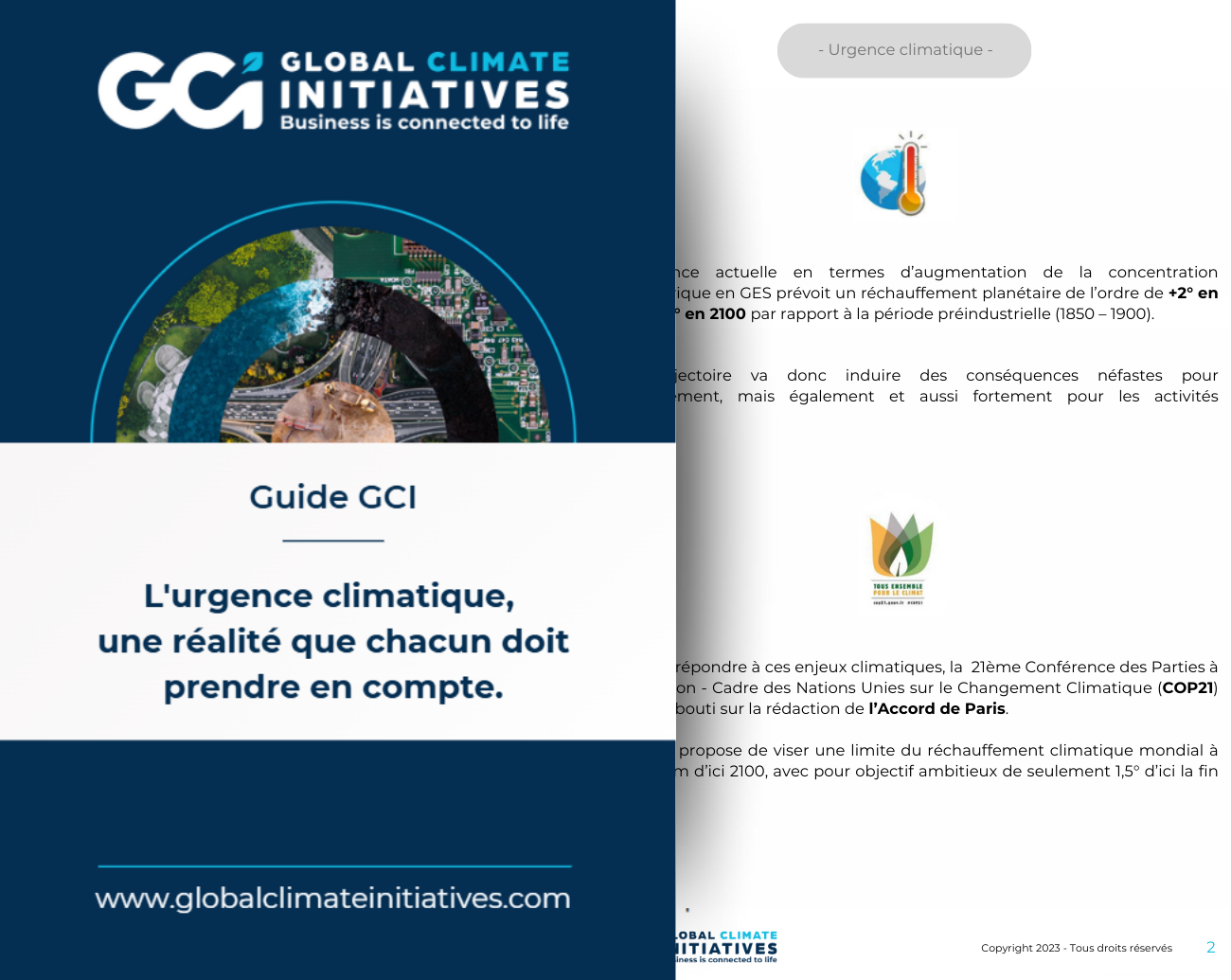
The climate emergency is a reality that everyone must take into account.
What steps can be taken to make a building more environmentally friendly?
Making a building more environmentally friendly involves more than just installing solar panels or choosing “green” paint. It is a comprehensive process that encompasses every phase of the project, from planning to end of life. Tools like Decarbo’Solution® enable professionals to manage this transition in a structured and measurable way.
Bioclimatic Design
La conception bioclimatique vise à tirer le meilleur parti des conditions naturelles du site pour minimiser les besoins énergétiques du bâtiment. Elle repose sur plusieurs principes fondamentaux :
• Orientation: Maximize solar gain in the winter and provide shade in the summer using appropriate architectural features (sun canopies, sunshades, deciduous vegetation).
• Natural ventilation: Design spaces to promote air circulation and limit the use of air conditioning, which accounts for a growing share of a building’s energy consumption.
• Integration into the landscape: working with the topography, existing vegetation, and local microclimates to create buildings that blend harmoniously into their surroundings.
• Water management: Incorporate rainwater harvesting systems and measures to limit soil sealing from the design phase onward.
The Use of Sustainable Materials
The choice of materials is a key driver of decarbonization. The FDES (Environmental and Health Declaration Sheets) and the INIES database enable professionals to objectively compare the environmental footprints of different products.
Bio-based materials—wood, hemp, straw, cellulose wadding, and cork—are experiencing remarkable growth. Construction wood, for example, stores about 1 metric ton of CO₂ per cubic meter, making it a valuable ally in the fight against global warming. In contrast, the production of one metric ton of cement emits about 600 kg of CO₂.
The implementation of the European Union’s Carbon Border Adjustment Mechanism (CBAM) will gradually increase the cost of imported materials with a high carbon footprint, thereby enhancing the economic appeal of local, low-carbon supply chains. Platforms such as Decarbo’Supply® make it easier to identify and select suppliers committed to reducing their emissions.
Energy Efficiency and Building Envelope Insulation
Insulating the building envelope remains the first step in reducing a building’s energy consumption. Techniques are evolving rapidly: exterior thermal insulation (ETI), triple-pane windows, thermal bridge treatment, and meticulous installation to ensure airtightness.
RE2020 introduces the Bbio indicator (bioclimatic demand), which measures the efficiency of the building envelope independently of energy systems. This indicator encourages designers to optimize the building’s structure first before sizing the equipment—a virtuous approach that prioritizes energy efficiency.
The Circular Economy on Construction Sites
The circular economy as applied to the construction industry aims to transform waste into resources and extend the lifespan of materials. Reuse, recycling, and the recovery of construction waste can significantly reduce the construction industry’s environmental footprint.
La loi AGEC (Anti-Gaspillage pour une Économie Circulaire) impose depuis 2022 un diagnostic « Produits, Matériaux et Déchets » (PMD) avant toute démolition ou rénovation significative. Ce diagnostic identifie les éléments pouvant être réemployés ou recyclés, favorisant ainsi une gestion plus responsable des ressources.
How do regulations govern this transition?
RE2020: A Major Turning Point
Effective January 1, 2022, the 2020 Environmental Regulations (RE2020) mark a paradigm shift for new construction in France. For the first time, regulations impose thresholds on the carbon footprint of buildings, in addition to energy performance requirements.
RE2020 introduces three major pillars: energy efficiency (strengthening the Bbio standard), the use of carbon-free energy sources (phased-out use of natural gas), and the reduction of the carbon footprint across the entire life cycle. Carbon thresholds will gradually become stricter through 2031, requiring professionals to plan ahead now. Decarbo’Solution® allows you to simulate and optimize your projects’ compliance with these increasing requirements.
The Complete Regulatory Framework
Beyond RE2020, a set of regulations governs the environmental transition in the construction industry: the Tertiary Sector Decree (requiring a 40% reduction in energy consumption by 2030 for commercial buildings larger than 1,000 m²), the strengthened Energy Performance Certificate (EPC), the Climate and Resilience Act (ZAN objective—Zero Net Land Take—by 2050), and non-financial reporting requirements (CSRD) for companies with more than 250 employees.
This layered regulatory framework may seem complex, but it points to a clear path forward: the construction of tomorrow will be energy-efficient, carbon-free, and circular. Professionals who embrace this vision today will turn this challenge into a competitive advantage.
What practical solutions should you implement for your construction projects?
To help you organize your approach, here is a summary table of the actions to be taken at each stage of the building's life cycle:
| Phase | Responsible Approaches |
|---|---|
| Programming | Set quantifiable goals at the program level. Incorporate LCA as a decision-making tool. Conduct a site assessment. |
| Design | Adopt a bioclimatic approach. Prioritize bio-based products and local supply chains. Design for reversibility and disassembly. |
| Construction Site | Implement a waste management plan. Minimize nuisances (noise, dust, pollution). Train workers in eco-friendly practices. |
| Operation | Install monitoring systems. Optimize preventive maintenance. Raise occupants' awareness of energy conservation. |
| Renovation / End of Life | Conduct a resource assessment before construction begins. Maximize reuse. Sort and recycle demolition waste. |
The Central Role of Data and Management
The construction industry’s environmental transition cannot happen without a rigorous, data-driven approach. Measure to take action; manage to make progress—that is the key to a credible and effective strategy.
Le bilan carbone constitue le point de départ indispensable de toute stratégie de décarbonation. Il permet d’identifier les postes d’émissions les plus significatifs et de prioriser les actions. À l’échelle d’un projet, c’est tout l’enjeu du bilan carbone chantier BTP. Decarbo’Target® offre aux entreprises du BTP un outil de pilotage pour définir leur trajectoire de réduction et suivre leurs progrès en temps réel.
Analyzing data from digital models (BIM), IoT sensors, and building management systems (BMS) enables the continuous optimization of energy and environmental performance. This data-driven approach is now essential for meeting the objectives set by regulations.
How can you measure and manage the performance of your buildings?
Key Metrics to Track
To effectively manage the environmental performance of your projects, several key indicators are essential: the carbon footprint (kgCO₂eq/m²), primary energy consumption (kWhep/m²/year), the construction waste recycling rate, the proportion of bio-based or reused materials, and the occupant comfort index.
These indicators must be monitored throughout the project’s lifecycle, from design through operation. Digital tools now make it possible to automate much of this monitoring and generate dashboards that can be used to support decision-making.
Certifications and Labels
There are several certifications and labels that highlight the environmental performance of your projects: HQE (High Environmental Quality), BREEAM, LEED, the E+C- label, the BBCA (Low-Carbon Building) label, and the Bio-based label. These standards serve as reliable benchmarks for project owners and investors and enhance the asset value of certified buildings.
How can you support your teams' professional development?
The environmental transition in the construction industry requires new skills at all levels of the company. Executives must understand the strategic and regulatory challenges, project managers must be proficient in carbon management tools, and skilled tradespeople must be trained in new construction techniques.
Training programs are on the rise: RGE (Reconnu Garant de l’Environnement) certifications, training on bio-based materials, modules on the circular economy, and awareness-raising on eco-design. Decarbo’Commit® helps companies structure their training plans and engage their employees in the decarbonization process.
Beyond technical training, a genuine cultural shift must take place. The most forward-thinking companies integrate environmental issues into their governance, business strategy, and communications, thereby creating a virtuous cycle between environmental performance and economic performance.
🟢 Key Takeaways
Investing in your teams’ professional development isn’t just an expense—it’s an investment that leads to higher-quality work, fewer defects, and a stronger market position among clients who value these factors.
Conclusion: Take Action Now for More Sustainable Construction
Sustainability in construction is no longer an option—it is an economic, regulatory, and societal necessity. Construction professionals who are fully committed to this path do more than simply meet requirements—they create value, strengthen their competitiveness, and contribute to a more sustainable future.
There are many accessible avenues for action: bioclimatic design, sustainable materials, the circular economy, data-driven management, and workforce development. Every project is an opportunity to make progress and demonstrate that it is possible to balance environmental performance with profitability.
Are you looking to structure your decarbonization strategy in the construction industry? From conducting your carbon assessment (BEGES, ISO 14064) to developing your reduction roadmap—including engaging your suppliers and ensuring regulatory compliance— Decarbo’Solution® supports you every step of the way. Request a demo →