









Building a Sustainable Supply Chain: Where Should an SME Start?

For a company, building a sustainable supply chain is no longer just an advantage—it has become a necessity. In an environment marked by growing pressure from customers, consumers, and investors, companies must demonstrate their ability to incorporate responsible practices into their procurement and production processes.
Sustainable management of eco-responsible suppliers, partners, raw materials, and logistics is not limited to reducing the carbon footprint: it also involves controlling expenses, ensuring resilience in the face of unforeseen events, and the ability to meet new market expectations. Having reliable data is therefore an essential prerequisite for steering such an initiative.
Fortunately, there are now tools and methods available to guide small and medium-sized businesses through this transition. This is precisely the goal of Decarbo’Solution® with its Decarbo’Solution® approach —a winning three-pronged strategy that helps organizations transform their supply chains into drivers of performance and sustainability.
Contents
Understanding the Impact of Your Supply Chain
The Impact of Scope 3 Upstream Emissions
Lorsqu’une entreprise s’intéresse à son empreinte carbone, elle pense souvent à la consommation interne d’énergie ou aux déplacements de ses collaborateurs. Pourtant, la majorité des impacts se trouvent ailleurs : dans les achats, les services et la logistique. On parle du scope 3 amont, qui peut représenter plus de 80 % de l’empreinte totale. Ne pas en tenir compte, c’est négliger l’essentiel de son impact environnemental. Côté transport, une démarche de logistique bas carbone commence par une mesure fiable des flux.
Mapping Partners and Flows
Understanding your supply chain requires a detailed analysis of the flows and the parties involved. Who are your strategic partners? Where are they located—in France or elsewhere in the world? What types of products or services do they provide you, and using what resources or materials?
Having reliable data not only makes it possible to measure the carbon footprint, but also to anticipate changes in production and logistics. This approach provides a clear view of the supply chain and makes it easier to set priorities.
Putting Information at the Heart of Management
An effective strategy relies on solid information. Too many small and medium-sized businesses lack specific metrics to track their environmental footprint. However, without data, it’s impossible to properly assess room for improvement.
We recommend implementing a simple tracking system: partner locations, volumes transported, distances traveled, energy consumption, and amounts of waste generated. These elements can be integrated into your existing tools or into new traceability technologies.
Equipping and Training Teams
Raising awareness and providing training for buyers and logistics managers is essential. Understanding the concept of a carbon footprint, knowing how to interpret metrics, and engaging with partners on climate issues all enhance the effectiveness of the initiative. Teams can then propose concrete solutions: optimizing supply chains, reducing travel distances, improving inventory management, or exploring new, more sustainable manufacturing methods.
In English-language literature (value chains), this type of approach is described as a gradual evolution that helps organizations better manage their vulnerabilities and structure their transition toward greater sustainability.
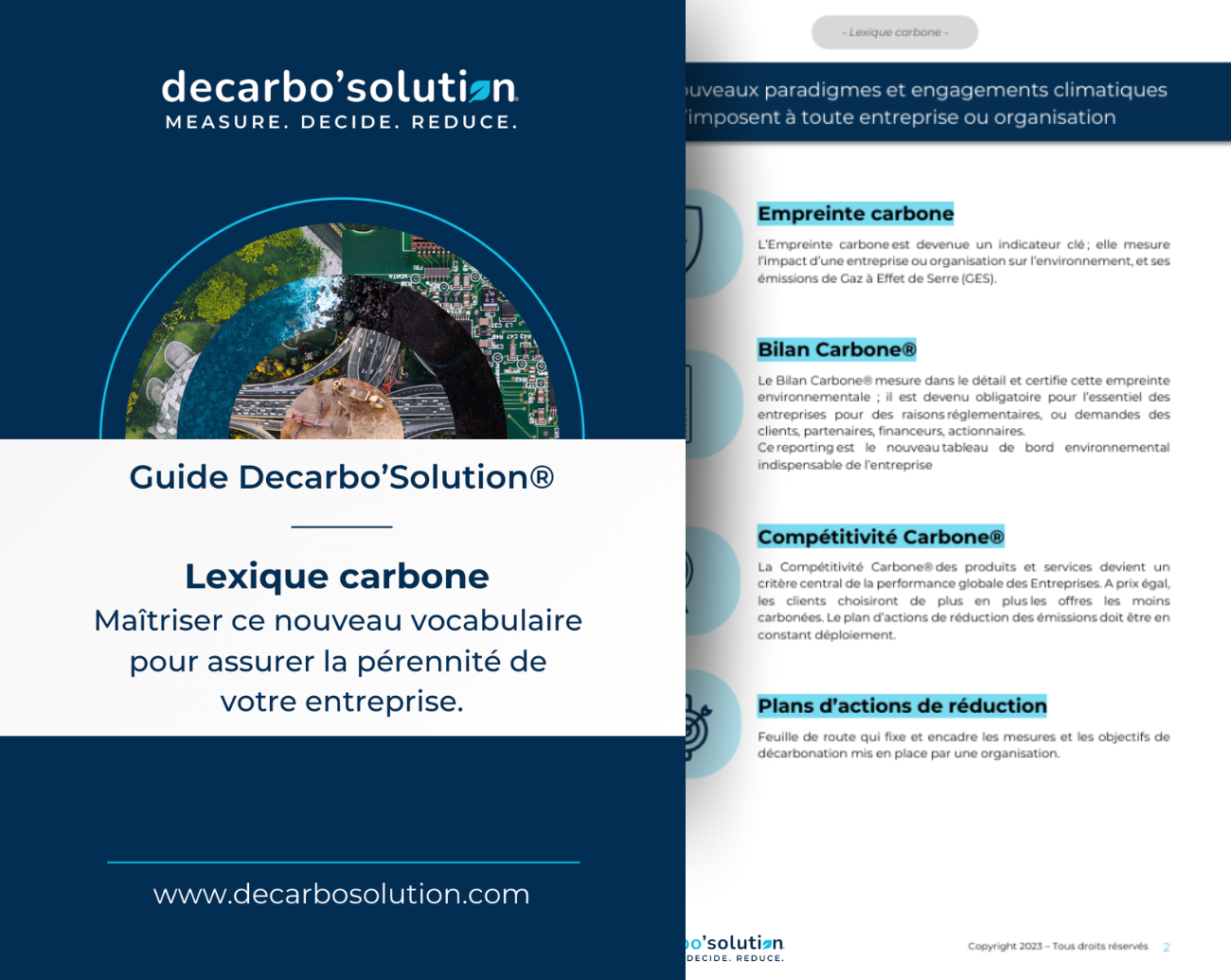
Master new vocabulary to ensure the long-term success of your business.
Incorporating CSR and carbon criteria into supplier relationships
Looking Beyond Price: Responsible Purchasing
In a company, the selection of partners is often based on traditional criteria: price, lead times, and product quality . However, building a sustainable supply chain requires incorporating other factors related to the environment and ethics.
Taking these factors into account allows for:
- to reduce the carbon footprint by promoting local or low-impact resources,
- to mitigate financial and reputational risks,
- to meet the growing expectations of consumers and customers.
Many small and medium-sized businesses are thus discovering that this approach also drives sustainable development and economic performance.
The methodology for awarding the label
In a company, the selection of partners is often based on traditional criteria: price, lead times, and product quality . However, building a sustainable supply chain requires incorporating other factors related to the environment and ethics.
Taking these factors into account allows for:
- to reduce the carbon footprint by promoting local or low-impact resources,
- to mitigate financial and reputational risks,
- to meet the growing expectations of consumers and customers.
Many small and medium-sized businesses are thus discovering that this approach also drives sustainable development and economic performance.
Establish a clear and objective structure
Implementing a responsible procurement policy requires establishing an appropriate structure. This may include:- traceability of materials and manufacturing processes,
- the environmental footprint associated with logistics,
- compliance with recognized environmental management standards (ISO 14001, etc.),
- the existence of social or ethical initiatives.
A Balanced Relationship
Incorporating CSR criteria into relationships with partners is not only aimed at reducing costs or carbon emissions. It also helps strengthen the supply chain’s resilience, embed more sustainable practices, and build trust.
Companies that commit to this approach pave the way for a circular economy capable of combining competitiveness with responsibility.
First, the use of GCI has led to a significant reduction in the uncertainty of the GHG inventory—particularly for Scope 3—from 50% to 5%. The group therefore has data that is 95% accurate.
Using supplier data collected and analyzed by the GCI tool, in-depth analyses were conducted internally on the impact of 35,000 products, grouping suppliers into 170 categories. This represents more than 80% of purchases by volume and value.
Prioritizing and Engaging Your Suppliers: A Step-by-Step Approach
Identify key stakeholders
A company cannot transform its entire procurement chain all at once. The most effective approach is to focus on the most strategic partners or those that contribute the most to its carbon footprint.
Several companies are demonstrating that it is possible to build a more sustainable supply chain by gradually bringing their partners on board. The key is to foster a climate of trust and show that every stakeholder has a concrete role to play in this transition.
Focusing on Cooperation
Introducing sustainability requirements can be met with resistance if there is no dialogue. It is therefore essential to involve your partners in the process. The most effective methods are based on:
- sharing CSR goals,
- transparency regarding carbon footprint indicators,
- regular discussions to adjust manufacturing methods and shipping arrangements.
Some organizations choose to support their partners through training workshops or by providing digital tools. This cooperation fosters trust and helps establish more sustainable approaches.
Moving Forward in Steps
The transition to a sustainable supply chain should be viewed as a gradual process. Rather than overhauling everything at once, it is better to proceed in stages:
- Analyze waste associated with logistics flows and the materials used,
- Define a priority action plan (e.g., packaging,energy consumption, inventory tracking),
- Encourage the adoption of solutions based on the circular economy,
- Consolidate results using new monitoring tools.
Each step yields concrete results that boost the partners' motivation and lend credibility to the initiative.
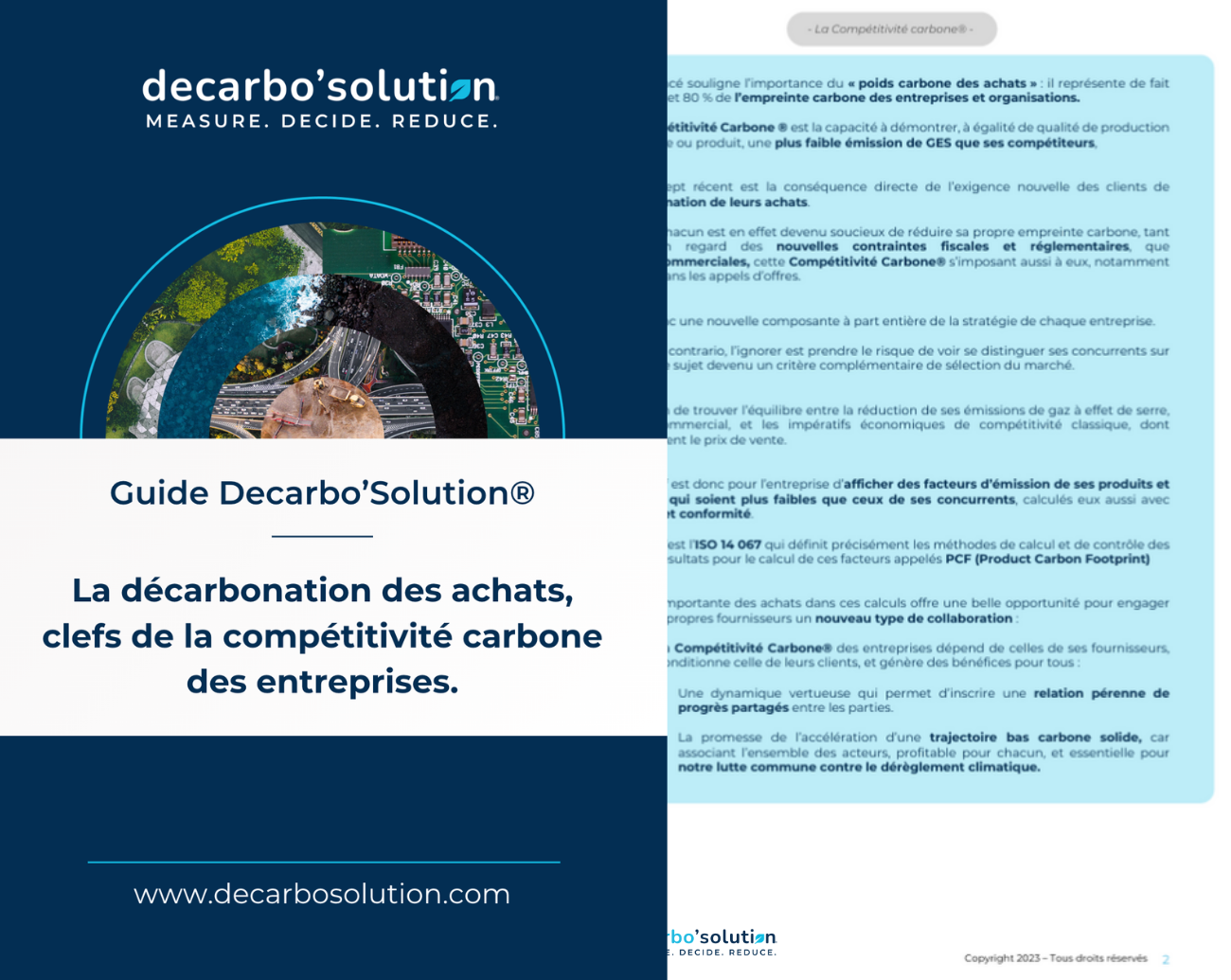
Decarbonizing procurement: the key to companies' carbon competitiveness.
Prioritizing and Engaging Your Suppliers: A Step-by-Step Approach
Optimize spending and improve performance
Building a sustainable supply chain is not just about meeting a regulatory requirement. It is also a way for a company to streamline its operations and better manage its resources. By focusing on material efficiency, logistics efficiency, andenergy consumption, it is possible to significantly reduce expenses.
These savings translate into:
- better inventory management,
- reducing production-related losses,
- waste recovery within a circular economy framework,
- Optimizing deliveries and routing.
These adjustments not only improve margins; they also strengthen competitiveness and contribute to sustainable performance.
Secure the supply chain and reduce vulnerabilities
In a global context marked by uncertainty, a robust supply chain becomes a strategic asset. Diversifying partners, incorporating ethical criteria, and relying on reliable data helps limit vulnerabilities related to dependence or disruptions.
This approach also reduces exposure to geopolitical and climate risks, while preparing the organization for regulatory changes.
For consumers, this approach builds trust: they prefer products that are sustainable, traceable, and meet high-quality standards.
Strengthen our brand image and meet market expectations
Companies that adopt responsible practices enhance their appeal. They send a positive message to customers, investors, and business partners. They demonstrate that they are capable of combining profitability, innovation, and respect forthe environment.
Furthermore, by aligning this approach with a sustainable development strategy, they position themselves to compete for contracts where CSR criteria are becoming increasingly critical. Implementing such measures is therefore not a constraint but a strategic advantage.
The Key Role of Decarbo’Solution® and Decarbo’Supply®
To successfully navigate this transition, structured support is essential. This is precisely what Decarbo’Solution®, developed by Decarbo’Solution®, offers. Its three-part approach— Decarbo’Tender®, Decarbo’Target®, and Decarbo’Supply® —provides a step-by-step methodology tailored to small and medium-sized businesses.
- Decarbo’Tender®: helps integrate carbon and CSR criteria into the procurement process starting from the initial consultation with partners.
- Decarbo’Target®: helps set quantifiable and realistic goals for reducing carbon emissions.
- Decarbo’Supply®: specifically supports supply chain transformation. It provides companies with the tools to map their supply flows, ensure data reliability, measure the carbon footprint of their procurement systems, and identify areas for improvement.
With Decarbo’Supply®, an SME can, for example:
- compare the impact of several logistics scenarios,
- identify the most vulnerable or most expensive positions,
- engage its partners in a shared effort,
- demonstrate to its clients and investors its ability to take concrete action on sustainability.

For a company, committing its supply chain to a sustainable approach is no longer an option—it is essential for competitiveness. This gradual transition relies on better use of data, close cooperation with partners, and the adoption of responsible practices.
Companies that choose to adapt their production methods and logistics systems demonstrate that it is possible to combine economic performance withenvironmental responsibility. This shift not only helps reduce the carbon footprint but also strengthens the trust of customers and consumers.
The examples of Schmidt Groupe and ASO show that a successful transition is achievable, even for an SME, as long as the goals are shared with partners.
Finally, tools such as Decarbo’Solution® from Decarbo’Solution® facilitate this transition. Through its three-pronged approach— Decarbo’Tender®, Decarbo’Target®, and Decarbo’Supply® —it helps companies ensure the reliability of their data and implement a clear strategy. As a result, the supply chain becomes a true driver of sustainability and competitiveness.