









Understanding the Carbon Footprint of the Agri-Food Industry: From Field to Plate
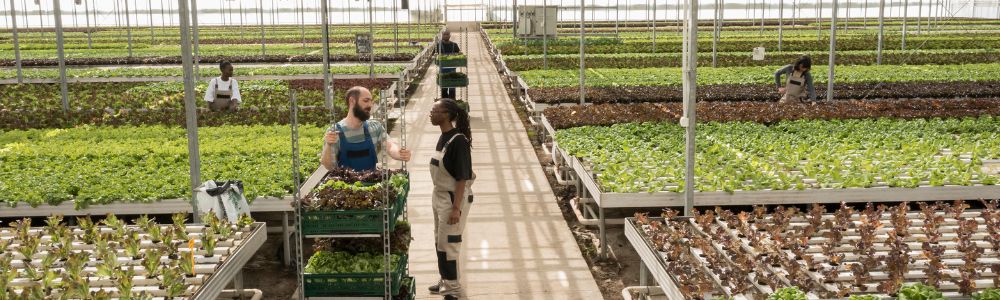
According to government data, food accounts for 20% of greenhouse gas (GHG) emissions in France, making it the third-largest emitting sector, after transportation and housing.
In the agri-food sector (primary sector), every decision, every process, and every partnership has a significant impact on the environment. Companies operating in this sector—from ingredient suppliers to foodservice providers—are both major players and responsible stakeholders in the food production chain.
However, measuring this footprint—from the field through distribution to consumption—is no easy task. It is imperative that agri-food companies turn this complexity into an opportunity.
Discover how companies in this sector can not only contribute to a more sustainable future, but also strengthen their market position by proactively responding to the changing expectations of customers and stakeholders.
1. The Carbon Footprint in the Agri-Food Industry
1.1. The Main Greenhouse Gases
1.2. Specific sources of emissions in each phase of the supply chain.
2. From Farm to Table: Reducing the Carbon Footprint at Every Step
2.2. Food Processing and Distribution
3. A Unified Supply Chain for a Greener Agri-Food Industry
3.1. The importance of collaboration among all stakeholders in the supply chain.

The Carbon Footprint in the Agri-Food Industry
A carbon footprint is a measure of the greenhouse gas (GHG) emissions associated with an activity, product, or process. It quantifies the contribution of a particular activity to global warming.
In the agri-food sector, the carbon footprint represents all GHG emissions generated from the production of raw materials through their processing, transportation, distribution, preparation, and consumption. It covers the entire food chain, from farm to table.
A 2018 study by Joseph Poore on the environmental impact of global food production found that it accounts for approximately 26 percent of global emissions.
☁️The main greenhouse gases emitted
There are three main greenhouse gas emissions of particular concern in the food industry: carbon dioxide (CO2), methane (CH4), and nitrous oxide (N2O).
CO2 is emitted primarily through the combustion of fossil fuels for transportation, heating, and electricity, but also through deforestation for agricultural expansion.
CH4 is generated by enteric fermentation in animals, agricultural waste management, and flooded rice production.
N2O comes primarily from the use of nitrogen fertilizers and agricultural practices.
🔗Specific sources of emissions in each phase of the supply chain
Each stage of the agri-food supply chain has its own specific sources of emissions. Here is an overview of the main sources of emissions in each phase:
🪓 Agriculturalproduction : Use of fertilizers and pesticides, enteric emissions from livestock, and deforestation to expand farmland.
🍟 Foodprocessing : Energy consumption for cooking, cooling, freezing, packaging, transportation, and industrial processes.
🚚 Distribution : Transporting food to retail locations, refrigeration, and warehousing.
🍽️ Consumption : Food preparation, household refrigeration, food waste.
To conduct a comprehensive carbon footprint assessment tailored to the agri-food sector, it is essential to use a platform that fully understands the unique characteristics of this industry. That’s where Decarbo’Solution® comes in—a platform designed to adapt to each industry sector. When you create your account on Decarbo’Solution®, you can choose a customized questionnaire specifically designed for the agri-food sector.
Decarbo’Solution® allows you to generate a greenhouse gas emissions inventory across the entire value chain, covering Scopes 1, 2, and 3.
Furthermore, one of Decarbo’Solution®’s strengths lies in its ability to involve your suppliers in calculating your carbon footprint. The platform provides a collaborative environment that fosters communication between customers and suppliers. This enables you to achieve your procurement decarbonization goals.
By using your suppliers’ actual carbon performance data, you can refine your analyses and make more informed purchasing decisions. This approach to positive carbon differentiation strengthens your company’s competitiveness and best prepares it for the future.

From Farm to Table: Reducing the Carbon Footprint at Every Step
🧑🌾Conventional agriculture
⚠️ Conventional agriculture , characterized by the intensive use of chemical fertilizers and pesticides, has a significant carbon footprint. Greenhouse gas emissions stem primarily from the production and use of nitrogen fertilizers, the energy required to power farm machinery, and deforestation to expand farmland.
🌿 Sustainable agricultural practices, such as organic farming, reducing the use of chemical fertilizers, effective management of agricultural waste, and planting trees for carbon sequestration, help reduce agriculture’s carbon footprint. These approaches promote a more responsible use of natural resources, reduce GHG emissions, and improve soil health.
On this topic, learn about a farm’s carbon footprint.
🍟Food Processing and Distribution
⚠️ Food processing, packaging, refrigeration, and transportation are key stages in the agri-food supply chain. They generate CO2 emissions linked to energy consumption and emissions resulting from transportation.
In particular, refrigeration and air conditioning systems account for a significant portion of greenhouse gas emissions, notably hydrofluorocarbons (HFCs), which have a high global warming potential.
Energy efficiency and waste reduction in these processes are essential for minimizing the carbon footprint.
🌿 Short supply chains—such as local markets and direct sales—as well as the use of local products, reduce the distance food travels from the farm to the consumer’s plate. This helps minimize transportation-related emissions, support local farmers, and promote more sustainable eating habits.
🍽️ Consumers' Food Choices
⚠️ Consumers’ food choices have a significant impact on the food industry’s carbon footprint. Red meat consumption, for example, is associated with significant methane emissions, while a preference for local and seasonal foods can reduce the overall carbon impact.
🌿 Raising consumer awareness of sustainability issues in the food sector and educating them about responsible eating habits are essential ways to reduce the overall carbon footprint. Awareness campaigns, sustainability labels, and access to transparent information about the origin and production methods of food are all tools for encouraging more sustainable choices.
A Unified Supply Chain for a Greener Agri-Food Sector

🤝The Importance of Collaboration Among All Supply Chain Stakeholders
Reducing the food carbon footprint cannot rest solely on the shoulders of producers, processors, or distributors. It is a shared responsibility that requires collaboration among all stakeholders in the supply chain, from farmers to consumers.
Building sustainable partnerships and implementing best environmental practices throughout the supply chain are essential to achieving carbon emission reduction goals.
Companies in the agri-food sector have a major role to play in facilitating this collaboration. They can encourage their suppliers to adopt more environmentally friendly practices, promote sustainable development initiatives, and help educate consumers about the importance of sustainable food choices.
🛒Decarbonizing Purchasing: Engaging Suppliers.
Procurement decarbonization, also known as “low-carbon procurement,” represents a commitment to practices aimed at reducing GHG emissions generated during a company’s procurement process.
This means that organizations must calculate the carbon footprint of their products and services, taking into account the entire life cycle—including production, transportation, and disposal. The challenge is to minimize this impact by prioritizing products and suppliers that are more environmentally sustainable.
As such, decarbonizing procurement is proving to be an essential strategy for the food industry. Indeed, it helps address the challenges of reducing GHG emissions and promotes more sustainable practices throughout the supply chain.
🌍 Decarbo’Solution® offers a comprehensive tool for sending invitations and requesting/sharing emission factors. This allows you to invite your suppliers to the Decarbo’Solution® platform so they can calculate the carbon footprint of all their products. In addition, you can share your own emission factors with your customers, enabling them to accurately measure their carbon impact.
The product carbon footprint calculator is available free of charge to everyone. Your suppliers will then be able to calculate the emissions factor for each product in their catalog.
If they wish to undertake a more comprehensive process to calculate their company’s carbon footprint, they can also do so on the Decarbo’Solution® platform for a starting price of €450.
Related: Check out the energy sector's carbon footprint.