









How can a company decarbonize its operations in light of its industry?
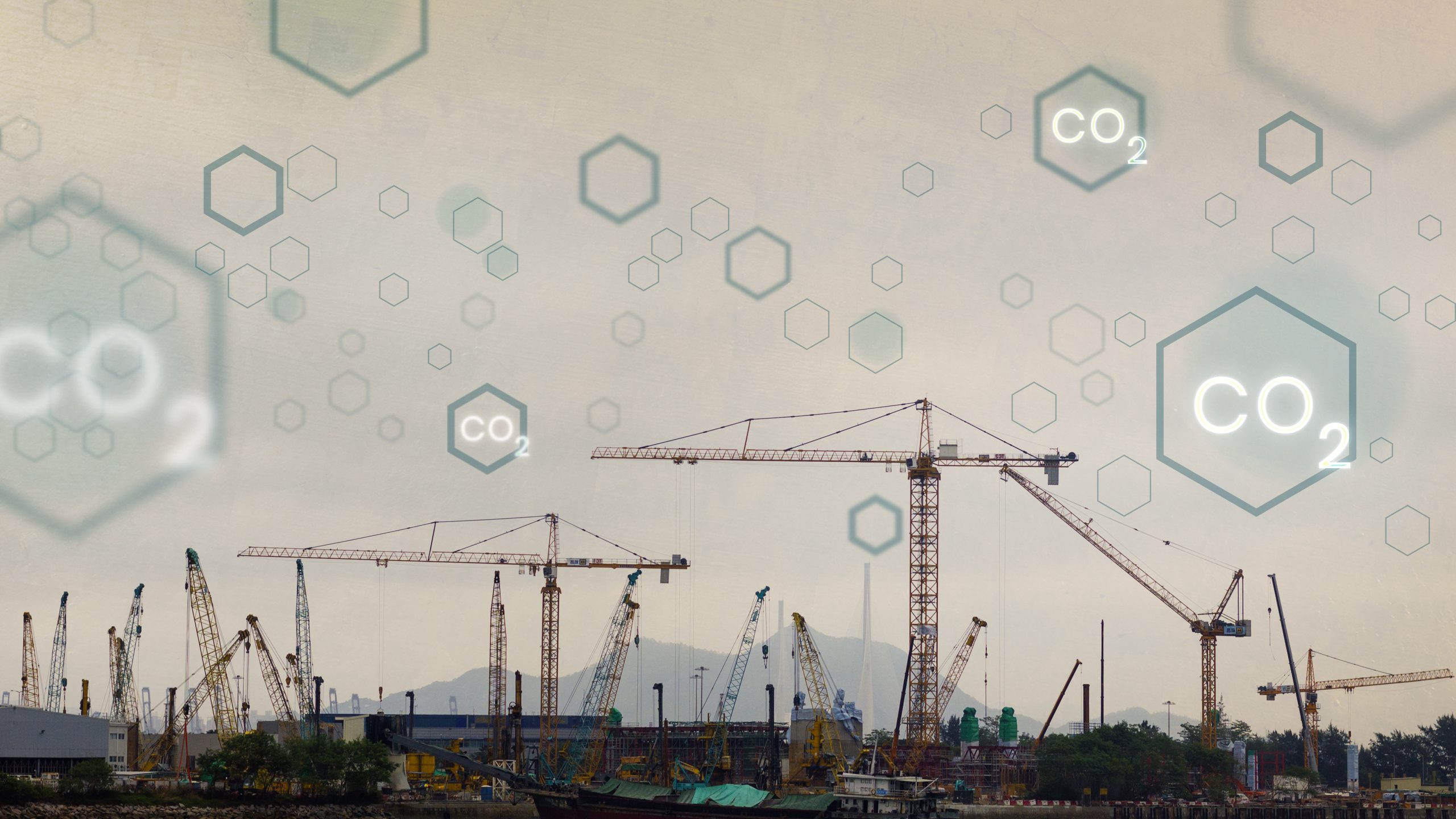
Businesses have a vital role to play in the transition to a low-carbon economy, and each industry faces specific challenges and unique opportunities when it comes to decarbonization.
By examining the specific characteristics of each one, it will be possible to identify the main sources of greenhouse gas emissions and, consequently, the most effective courses of action.
Every company is, in fact, able to implement a decarbonization policy tailored to its business.
This publication highlights the specific characteristics of each sector; it aims to provide practical information and recommendations to best guide companies in their decarbonization efforts.
1.2 Why Decarbonize? What Are the Challenges?
2. Implementation of a decarbonization strategy by sector
2.1 Decarbonizing the Construction Industry
2.3 Decarbonizing Transportation
2.4 Decarbonizing the Digital Sector
3. Decarbonize Your Business, No Matter What Industry You’re In, with Decarbo’Solution®

What is decarbonization?
📝 Definition
Decarbonization refers to any measure aimed at reducing GHG emissions from an organization, a sector, a community, etc. This approach is essential for the transition to a more environmentally friendly economy and for mitigating the effects of climate change.

🌿 Why decarbonize? What are the challenges?
Decarbonization is an essential step in a context where environmental issues are becoming a major concern for citizens and consumers and are increasingly being incorporated into national and international regulations. These issues can be divided into three categories:
💯 Consumer and Investor Expectations
Environmental criteria are now an integral part of the factors that influence consumer choices. An eco-friendly product is preferred over one from a company that shows no commitment to the environment and thus contributes significantly to climate change. This trend is also evident among investors, for whom a company’s sustainable growth is increasingly linked to its commitment to a low-carbon path.
⚡ Energy Security
To ensure their long-term viability, all companies should strive to break free from their dependence on fossil fuels. Diversifying energy sources is crucial to addressing risks related to price volatility, geopolitical tensions, and the growing scarcity of fossil fuels. It is imperative that companies increase their use of renewable energy sources—such as solar and wind power—starting now to anticipate these risks and remain competitive in the long term.
🌎 🇫🇷 Climate Policy Commitments in France and Around the World
Climate issues are widely highlighted and emphasized on a global scale, whether through international agreements such as the Paris Agreement, the various Conferences of the Parties (COP), or the Kyoto Protocol.
At the national level, regulations such as the National Low-Carbon Strategy (SNBC), the Grenelle Act, and the Climate and Resilience Act—to name just a few—have been implemented to address the environmental challenges we face and to establish a framework for reducing greenhouse gas (GHG) emissions.
These regulations are expected to become stricter and more numerous in the future: any industry that emits CO2 must immediately begin a decarbonization process in order to comply with current laws and avoid penalties for noncompliance.

Implementation of a decarbonization strategy by sector
It is essential to understand that not every sector can adopt the same decarbonization strategy. Indeed, not every sector contributes equally to climate change, and their activities have different carbon footprints.
It is therefore necessary to conduct a specific carbon assessment for each sector and implement targeted actions tailored to their specific characteristics. This tailored approach is a key step toward achieving significant results in decarbonization.
🏗️ Decarbonizing the Construction Industry
The secondary sector generates significant CO2 emissions. For example, the construction industry plays a major role at the national level, accounting for 43% of annual energy consumption in France and contributing 23% of the country’s greenhouse gas (GHG) emissions. This makes the construction industry one of the sectors with the highest GHG emissions in France.
What measures can be taken to limit the environmental impact of the construction industry?
To help the business sector and companies achieve carbon neutrality, the National Low-Carbon Strategy (SNBC) proposes four key measures:
🧱Renovation: through a large-scale renovation of the housing stock to achieve an average low-energy renovation performance (BBC renovation) of 100% by 2050
💡The energy mix: the electrification of uses other than heating, the gradual phase-out of fossil fuels such as heating oil, and improvements in the energy efficiency of all equipment are measures that will significantly reducethe carbon footprint of the construction industry.
🌿 Energy efficiency: The widespread adoption of technologies that reduce energy demand, bioclimatic building design that promotes optimal use of resources, and the adoption of environmentally responsible individual behaviors—such as lowering the heating temperature—are also key measures to implement.
🏢 New Construction: The RE2020 environmental regulations for new construction now require the mandatory integration of carbon criteria throughout the building’s entire life cycle, from design to demolition. These regulations aim to promote the design and construction of low-carbon buildings by encouraging the use of sustainable materials, optimizing energy efficiency, and accounting for greenhouse gas emissions throughout the building’s life cycle. By complying with these regulations, new construction projects can make a significant contribution to reducing carbon emissions and advancing the transition toward a more sustainable building industry.
How can a company implement decarbonization?
There are many steps you can take to implement various strategies within your company. Here are a few of them:
✅ Conduct a thorough assessment of your company’s carbon footprint by performing a comprehensive Bilan Carbone® assessment,
✅ If possible, invest in renewable energy systems, such as solar panels for electricity generation, geothermal systems for heating and cooling, or wind power,
✅ Promote the use of sustainable, low-carbon building materials, such as certified wood, recycled materials, and eco-friendly finishes,
✅ Establish partnerships with suppliers of sustainable materials and services.
🌽 Decarbonizing Agriculture
CO2 emissions from the primary sector should not be overlooked either. In fact, in 2019, agriculture accounted for 19% of France’s greenhouse gas (GHG) emissions. The various components of this sector’s carbon footprint break down as follows:
🐮 Methane (CH4) emissions are primarily caused by livestock farming, particularly through enteric fermentation (the animals’ digestive process) and animal manure.
🌱 Nitrous oxide (N₂O) emissions come mainly from crops and result from the addition of nitrogen to cultivated soils, particularly through the application of mineral and animal-based fertilizers.
🚜Carbon dioxide (CO2) emissions result from the use of fossil fuels in the agricultural sector, whether by farm machinery or farm buildings.
How Can We Reduce the Environmental Impact of Agriculture?
The SNBC proposes six strategies for decarbonizing the agricultural sector:
➡️ Priority A1: Reduce direct and indirect emissions of N2O and CH4 by leveraging agroecology and precision agriculture
➡️ Priority A2: Reduce CO2 emissions from fossil fuel consumption and expand the use of renewable energy
➡️ Priority Area A3: Expand carbon-free energy production and the bioeconomy to help reduce French CO2 emissions and boost the agricultural sector’s value added
➡️ A4 Objective: Halt the current loss of carbon from agricultural soils and reverse the trend, in conjunction with the “4p1000: Soils for Food Security and Climate” initiative
➡️ Priority Area A5: Influencing demand and consumption in the agri-food sectors in line with the National Food and Nutrition Program (PNAN)
➡️ Priority A6: Improve inventory and monitoring methodologies
The transition to sustainable, environmentally friendly agriculture that eliminates waste and minimizes the use of pesticides is crucial to successfully decarbonizing the agricultural sector.
By adopting sustainable agricultural practices—such as agroecology, for example—it is possible to reduce greenhouse gas emissions, preserve biodiversity, and improve soil health. Furthermore, optimizing water use and repurposing byproducts help prevent waste and promote the efficient use of resources. This transition not only reduces the carbon footprint but also makes agriculture more resilient to climate change and future challenges.
🚚 Decarbonizing Transportation
Reducing the Bilan Carbone® of service sector companies is essential. In fact, the transportation sector accounted for 31% of France’s GHG emissions in 2019 and is the country’s largest emitter.The carbon footprint of the transportation sector broke down as follows in 2018:
🚗 Passenger vehicles 53%
🚗 Commercial vehicles 19.1%
🚗 Heavy Trucks 21%
🚗 Two-wheeled vehicles 1.3%
🚗 Off-road: 5.6%
To decarbonize this sector, the SNBC proposes the following guidelines:
➡️ Priority 1: Provide the sector with price incentives
➡️ Phase 2: Set clear objectives that are consistent with the goals for the energy transition of the wind farms
➡️ Focus Area 3: Supporting fleet modernization across all modes of transportation
➡️ Priority Area 4: Supporting local governments and businesses in implementing innovative, responsible initiatives
➡️ Priority Area T5: Encourage a shift in transportation modes by supporting active transportation and mass transit (freight and passengers) and by developing intermodal transportation
➡️ Priority Area T6: Managing the Rise in Transportation Demand
Companies can implement various measures to comply with these guidelines, including:
✅ Develop a mobility plan: This involves helping employees prioritize public transportation and carpooling, and limiting the use of personal vehicles. By encouraging more sustainable modes of transportation, companies can reduce the carbon footprint associated with business travel.
✅ Adopt low-carbon vehicles: Companies can prioritize the use of electric, hybrid, or low-carbon-emission vehicles. This transition to a cleaner vehicle fleet helps reduce greenhouse gas emissions.
✅ Conduct a tailored carbon assessment: It is essential for transportation companies to conduct a carbon assessment specific to their operations. This allows them to evaluate the main sources of greenhouse gas emissions and identify potential areas for improvement. By understanding their carbon footprint, companies can implement strategies to reduce their emissions and optimize their environmental performance.
🖥️ Decarbonizing the Digital Sector
The digital sector accounts for 2.5% of greenhouse gas emissions in France. However, if no action is taken, it is estimated that its environmental impact could rise to as much as 7% by 2040. Therefore, it is imperative to take immediate steps to reduce carbon-intensive activities related to the digital sector to prevent this projection from becoming a reality. But how can this be done?
The Anti-Waste and Circular Economy Act (AGEC)
The AGEC was enacted to address these challenges and establishes provisions for:
➡️ Better inform and protect consumers;
➡️ Extend the lifespan of digital products;
➡️ Require the government, local authorities, and their associations to incorporate these issues into their procurement policies.
What are the implications for digital companies?
The law is a first step toward ensuring that companies in the digital sector commit to an environmentally responsible path. It requires them to:
👉 Display a repairability index for certain electronic and electrical products,
👉 Extend the lifespan of their digital products by requiring manufacturers to provide replacement parts for at least 5 years,
👉 Promote the circular economy,
👉 Etc.
To begin transitioning to a low-carbon future right away, companies in the digital sector have various options available to them:
✅ Implement recycling and repurposing programs: by developing recycling initiatives for their electronic waste, as well as programs designed to encourage the reuse of end-of-life products.
✅ Combat planned obsolescence by offering durable products: by providing high-quality, durable products to reduce the need for frequent replacement.
✅ Incorporate eco-design principles into the manufacturing of their products: by using recyclable materials, reducing energy consumption, minimizing waste, and considering the environmental impact throughout the product’s life cycle.
✅Raise consumer awareness about the carbon footprint of their products: through communication campaigns, energy labeling, information on product energy efficiency, and by providing guidance on responsible use.
Decarbonize Your Business, No Matter What Industry You’re In, with Decarbo’Solution®
The Decarbo’Solution® is designed to be adaptable to all industries, making it a versatile and relevant solution for all businesses. Check out our webinar on decarbonizationand our guide to decarbonizing a company’s procurement.
By offering a variety of scenarios tailored to each type of business—such as manufacturing, services, the service sector, events, logistics, real estate, agri-food, and many others— Decarbo’Solution® covers all industries.
This flexibility allows users to customize the solution to meet their specific needs, taking into account the unique characteristics of their industry, and also makes it easier for them to navigate the challenging process of collecting data and calculating the company’s decarbonization.
The Decarbo’Solution® network of Certified Experts also covers a very wide range of “industry-specific” areas of expertise. This means that no matter what field your company operates in, you can benefit from advice and support from qualified experts who understand the specific challenges facing your industry.
The Decarbo’Solution® calculator strictly complies with the GHG Protocol, ISO 14064-1, and the Bilan Carbone method. It uses emission factors from several reference databases, such as
✅ ADEME’s EMPREINTE database,
✅ BEIS (formerly UK DEFRA)
✅ EcoInvent and Inies (optional)
✅ The FECs of the company's suppliers (PCF in accordance with ISO 14 067)
Its user-friendly interface and educational methodology enable users—even those without specific knowledge of carbon accounting—to gain a deep understanding of the subject.
Anyone can conduct a GHG assessment in full compliance with current international norms, guidelines, and standards, measure their carbon footprint, and reduce it to ensure the long-term sustainability of their business.