









How Do You Calculate an Event’s Carbon Footprint? An Overview and Tips for Improving Sustainability

The service sector —and the events industry in particular—plays a central role in environmental concerns. Indeed, awareness of the environmental impact of events has—at last!—grown significantly.
As a result, calculating a carbon footprint has become an essential step in reinforcing an eco-responsible approach. Every event, regardless of its scale, generates greenhouse gas (GHG) emissions. That is why it is now essential to accurately measure its carbon footprint.
Below, you will learn about the challenges facing this sector, as well as potential improvements and actions that can be taken to make it more environmentally friendly.
1. Understanding an Event’s Carbon Footprint
1.1 Definition of an Event’s Carbon Footprint
1.2 The various factors contributing to the carbon footprint
2. How do you calculate an event’s carbon footprint?
2.1 Decarbo’Solution® simplifies the calculation of your Bilan Carbone®
Understanding an Event's Carbon Footprint
The carbon impact of an event can vary considerably depending on its type, scale, and the activities that take place there. Some events will have a relatively small carbon footprint, while others may have a much greater environmental impact. Here are a few examples to illustrate this variation:
🖥️ Small online meetings or conferences: Small-scale virtual events, where participants meet online, have a relatively low carbon footprint. Emissions come mainly from the energy consumption associated with the electronic devices used.
🎉 Music festivals or outdoor concerts: Major music festivals and outdoor concerts result in a high carbon footprint when they involve large numbers of attendees, stages, sound systems, and temporary infrastructure. Attendees’ travel, energy use for lighting and equipment, and the management of waste generated by the event all contribute to this footprint.
🌏 International conferences: International conferences that bring together participants from around the world typically result in a significant carbon footprint due to long-distance air travel. The logistical and energy requirements involved in hosting a large number of participants and providing additional equipment and services also play a role.
🏓 Sporting events: The carbon footprint of sporting events—such as marathons, competitions, or tournaments—can vary depending on their size and duration. Travel by participants and spectators, energy consumption for lighting and temporary sports facilities, and waste management all contribute to the carbon footprint.
💼 Trade shows: Trade shows can have a significant carbon footprint when they are large-scale events with many exhibitors and visitors. This is due to participants’ travel, energy consumption for booths and lighting, and the materials used for promotional materials.
Thus, each type of event has characteristics that directly influence its carbon footprint. It is therefore essential to analyze these specific factors to identify the best environmental improvement strategies for each type of event and thereby reduce its impact on the climate.
📝 Definition of an Event’s Carbon Footprint
An event’s carbon footprint refers to the total amount of greenhouse gases (primarily carbon dioxide—CO2) emitted directly or indirectly throughout the course of the event. This carbon impact results from various event-related activities, such as energy consumption, travel by participants and speakers, waste management, and other factors associated with the resources used.
🌿 The various factors contributing to a carbon footprint
The carbon footprint of an event is influenced by several factors that contribute to greenhouse gas emissions. Here are the main factors that play a role in the amount of GHGs emitted during the planning and execution of an event:
💡Energy consumption: The use of electricity, heating, air conditioning, and other energy sources to power the event generates CO2 emissions, particularly if the electricity comes from non-renewable sources.
🚘Transportation: Travel by participants, speakers, organizers, and vendors contributes significantly to the event’s carbon footprint. This includes travel by plane, car, train, or any other mode of transportation.
🚚 Suppliers and logistics: The environmental impact of suppliers delivering goods and services for the event is also taken into account. This includes emissions associated with the transportation of equipment, materials, and food.
♻️ Waste management: The waste generated during the event and its disposal contribute to CO2 emissions, particularly if the waste is incinerated or landfilled.
🍔Food: The type of food provided to participants also affects the carbon footprint—less so if the food is locally sourced, organic, and sustainable.
🏘️ Lodging: Accommodations for participants and speakers during the event result in additional emissions depending on the lodging options chosen.
🚧 Temporary facilities and structures: The construction and dismantling of temporary facilities, such as stages, booths, and restroom facilities, also have an impact.
🖨️Paper and printing: The use of paper and other materials for communication and promotional materials contributes to carbon emissions, especially if they do not come from sustainable sources.
It is therefore essential to take all these factors into account when calculating an event’s carbon footprint in order to implement strategies to reduce its overall environmental impact. By identifying the main sources of emissions, mitigation measures can be implemented to make the event more environmentally friendly.
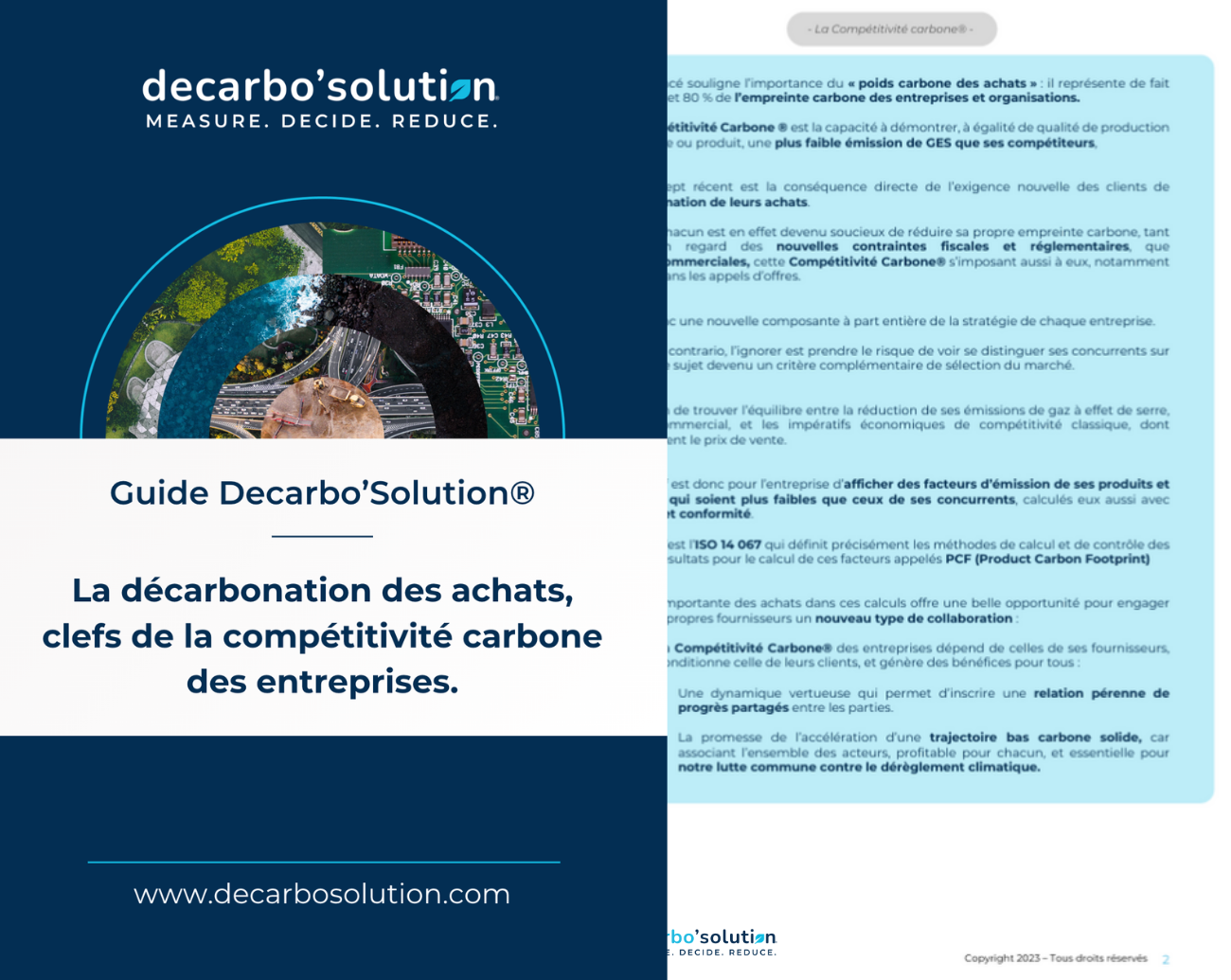
Decarbonizing procurement: the key to companies' carbon competitiveness.
How do you calculate an event’s carbon footprint?
Calculating an event’s GHG footprint can be a complex task due to the many factors that must be considered to ensure its reliability. Below, we’ve broken down the key steps you need to take to obtain an accurate carbon footprint 👇
1. Data collection 📂:
Allows you to gather all relevant information related to the event, such as energy consumption, travel by participants and speakers, vendors involved, waste management, etc.
Data accuracy is of the utmost importance to ensure reliable calculations.
2. Data analysis 🔎:
Allows you to examine the collected data in detail to assess the environmental impact of every aspect of the event. This involves quantifying the CO2 emissions associated with each activity.
3. Identifying the main sources of CO2 emissions and their impact 🎯:
Helps you identify the emission sources that contribute most to your carbon footprint. These may include energy consumption during the event, CO2 emissions from transportation, or waste generated.
4. Calculating the total carbon footprint 📊:
Allows you to aggregate CO2 emissions from all identified sources to calculate the event's total carbon footprint.
5. Interpreting the Results 📝:
This allows you to analyze the results and understand the specific environmental impacts of the event. You will then be able to implement targeted actions to decarbonize sustainably and effectively.
🌐 Decarbo’Solution® makes it easy to calculate your carbon footprint
Collecting activity data is the most time-consuming step in calculating an event’s carbon footprint. However, thanks to Decarbo’Solution®’s event-specific questionnaire, once you’ve entered the activity data, the tool automatically performs a complete and detailed calculation:
Greenhouse Gas (GHG) Emissions = Activity Data × Corresponding Emission Factor
Once the Decarbo’Solution® event form/questionnaire has been imported into your user account, you can report your event’s carbon footprint by simply following the instructions provided. To make data entry easier and more accurate, you can send sections of the form to your partners and suppliers as Excel files for each emissions category in the questionnaire.
These files can be duplicated directly for each of your partners and suppliers, then reimported for overall consolidation in your user account. The associated GHG emissions are then automatically calculated by the Decarbo’Solution® tool. This enables a more efficient calculation process and helps you quickly and accurately obtain your event’s carbon footprint.
Decarbo’Solution® is an all-in-one digital platform, carefully designed to make carbon footprint assessments accessible to as many people as possible, making it the ideal tool to help you organize more eco-friendly events. With Decarbo’Solution®, you can easily assess the environmental impact of your events and implement action plans and strategies to make them more environmentally friendly.
Ways to Improve for a More Sustainable Event
Once you have completed your Bilan Carbone® assessment, you will be able to implement improvement measures designed to effectively and sustainably reduce your carbon footprint. Here are a few ideas to consider as you work toward your reduction goals:
✅ Choose green energy
👉 Explore renewable energy options for electricity and heating.
👉 Promote sustainable transportation.
👉 Promote carpooling, public transportation, and electric vehicles.
✅ Choose responsible waste management
👉 Set up an effective recycling system.
👉 Choose compostable and reusable products.
✅ Choose a responsible diet
👉 Offer meals made with local, organic, and seasonal ingredients.
👉 Include vegetarian and vegan options on the event menu.
👉 Avoid food waste by adjusting portion sizes.
✅ Choose eco-friendly partners
👉 Work with suppliers and service providers who are committed to sustainable and environmentally friendly practices.
✅ Raise awareness and engage participants
👉Inform participants about the event’s carbon footprint and the importance of individual commitment.
👉 Encourage eco-friendly behavior during the event.
Carbon footprint assessments have shown us that the greatest environmental impacts of our events are related to travel by spectators and participants, since we organize “off-stadium” and community-based competitions.