









Automating the Bilan Carbone®: A Tool for Efficiency That Supports Human Expertise

In the face of the climate emergency and climate change, companies are now required to accurately measure their environmental impact in order to steer their transition. Managing a credible decarbonization pathway has become a central pillar of CSR strategies, driven by increasingly strict compliance requirements for non-financial reporting. In this context,the automation of Bilan Carbone® is emerging as a key technological solution for ensuring the reliability of an organization’s overall carbonfootprint calculation. However, while environmental accounting software can accelerate the processing of massive amounts of data, human expertise remains essential to guarantee the rigor of the methodology and the effectiveness of the reduction measures implemented.
The goal of this digital transformation is not to replace experts with machines, but to free up time forthe strategicanalysis of emissions. By automating data collection through a dedicated platform,the company transforms its greenhouse gas (GHG) inventory from a mere legal requirement into a true management tool. For Decarbo’Solution®, this combination of the power of a digital system and a consultant’s critical eye is the only way to ensure the accuracy of greenhouse gas (GHG) emissions data. This hybrid approach makes it possible to move from a static assessment to a genuine operational transition plan.
Contents
The Challenges of Automatic Data Collection and Processing
Balance sheetautomation relies primarily on a software program ’s ability to centralize data from multiple sources. Traditionally, companies used Excel files to track theirenergy consumption or warehouse inventory flows. This time-consuming and error-prone process has now been replaced by systems that collect data directly through ERP connectors or APIs.
Improving the Reliability of Carbon Accounting
By integrating carbon accounting directly into thecompany’s management workflows, we ensure better compliance with standards such as the GHG Protocol. The software instantly converts business activities into GHG emissions using an up-to-date database ofemission factors. This unique platform serves as the central repository forthe organization’senvironmental impact, facilitating reporting andanalysis ofthe carbon footprint by function:
- Logistics flows and warehouse management.
- Energy consumption at production sites.
- Assess the impact of products through simplified analyses.
From Calculation to Reduction Strategy
The shift to digital technology makes it possible to expand the scope of calculations without increasing the workload. Once the data is structured,the tool can generate segmented GHG inventories, providing a clear picture of the levers for decarbonization. But be careful: while the software handles the calculations, it is people who validate the consistency of the input data. Incorrect data in an automated system will produce a false result, which is why support is crucial to ensuring the reliability of each action plan.
Methodologies and Standards: From ADEME to the GHG Protocol
For a Bilan Carbone® assessment to be recognized and auditable, it cannot rely solely on approximations.Automation must be based on robust, standardized methodological foundations. In France, the method developed byADEME serves as the benchmark, requiring a rigorous breakdown ofemission categories. Internationally, most companies rely on the GHG Protocol (Greenhouse Gas Protocol) to structure their reporting and ensure that their GHG inventories are comparable with those of their global peers.
The Importance of the Scope and Emission Factors
One of the key benefits of expert software is its ability to manage the complexity of the organizational and operational scope. A high-performanceautomation platform allows accounting data to be cross-referenced with certifiedemission factor databases (such as ADEME’s Empreinte database, EcoInvent, etc.). This precision is vital, as an error in selecting a factor can skewthe overallcarbon footprint by several metric tons of CO2.
Integrating LCA and ESG criteria into the software
Beyond simply tracking greenhouse gas (GHG) emissions, companies must now meet increasingly detailed ESG criteria. Automation makes it possible to integrate Life Cycle Assessment (LCA) modules to assess the specific impact of certain products or services. Using a centralized management platform offers several methodological advantages:- Standardization: All subsidiaries and warehouses use the same calculation method.
- Traceability: Every figure in the report is linked to a verifiable data source, facilitating compliance during external audits.
- Interoperability: The transition from the French Bilan Carbone® to the international GHG Protocol is seamless, thanks to an automated mapping system.
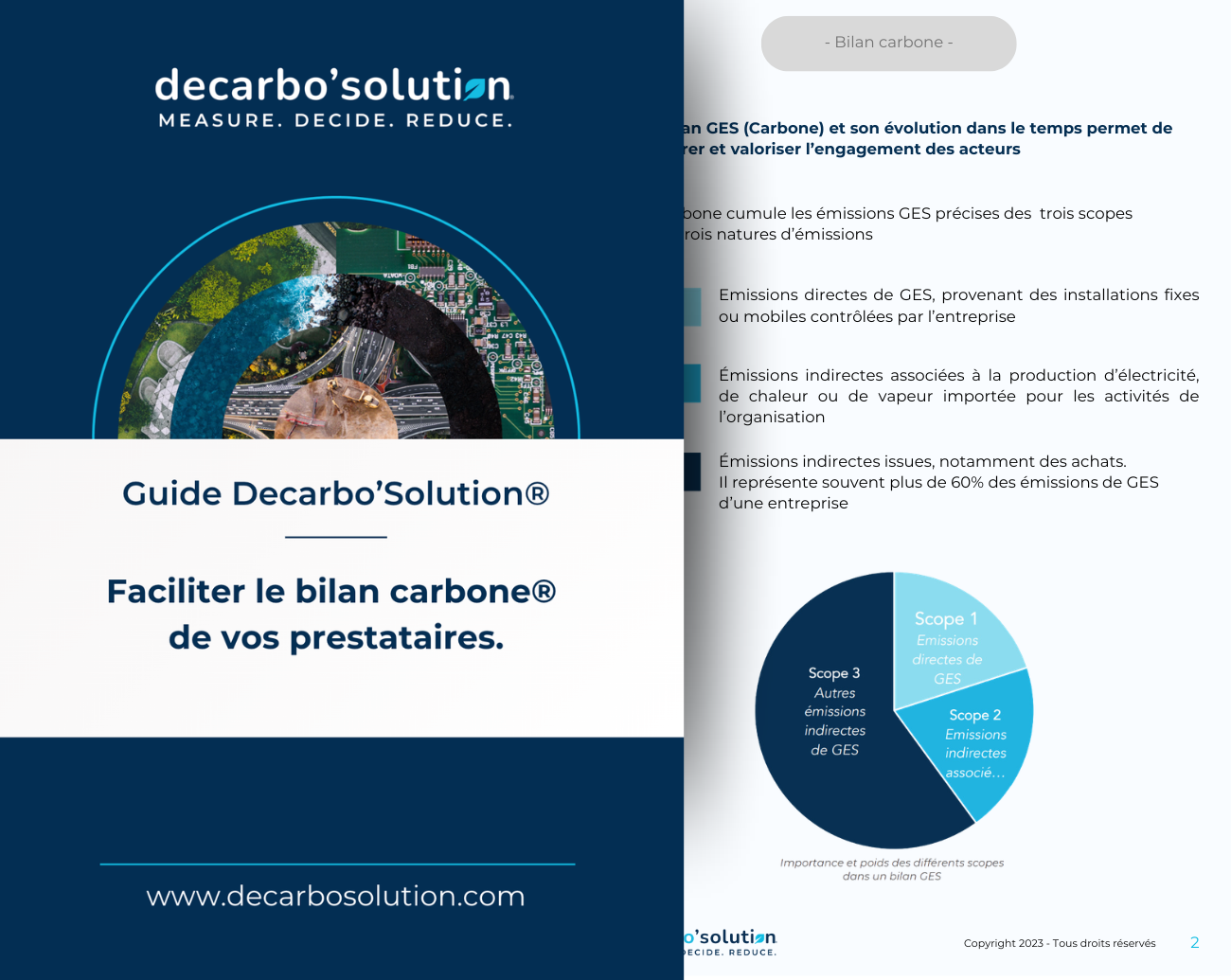
Simplify the GHG assessment for your service providers
Why Human Expertise Remains the Cornerstone of Corporate Carbon Strategies
Automation is a technological catalyst and a valuable decision-making tool, but it lacks the discernment needed to interpret a GHG inventory in detail. An algorithm can correlate an expense with an emission, but only an expert can determine whether this data is being properly applied in light of each company’s operational reality. Human judgment is essential for transforming a technical inventory into a genuine decarbonization strategy and a climate action plan.
Critical Auditing and Data Accuracy
Working with a specialized consultant helps clear up any doubts about the less transparent aspects of calculating thecarbon footprint:
- Source Validation: Ensure that automated data collection does not omit major indirect data streams relevant tothe business, particularly in warehouses, product manufacturing facilities, or the extended supply chain.
- Managing Uncertainties: Verify that each emission factor used is properly referenced and aligned withthe actualimpact to ensure accurate carbon accounting.
- Contextual Analysis: Understanding why a site’s emissions are increasing despite the reduction efforts undertaken within the scope defined by the companies.
From Data to Corporate Engagement
The Decarbo’Solution® goes beyond simply automating reporting or calculating carbon footprints. It provides decision-support tools that help experts develop realistic decarbonization plans for companies, in line with CSR commitments and ESG criteria. The system identifies “hot spots,” but it is the human who defines the reduction trajectory, wins over management, and mobilizes teams to take climate action. The tool provides visibility into the data, but the consultant leads the carbon transition.

In conclusion,automating the Bilan Carbone® is an essential productivity tool for companies that want to manage their emissions with agility and precision. By centralizing data collection on an online management platform, each company can finally eliminate manual errors and ensure the accuracy of its greenhouse gas reporting. This increase in efficiency allows companies to allocate more resources to developing an ambitious decarbonization plan and implementing concrete reduction measures across their entire operational scope.
However, the success of such a climate strategy for businesses depends on the synergy between the power of these new tools and the expert’s nuanced data analysis. A digital solution offers valuable assistance with carbon footprint assessments to meet ESG criteria, strengthen CSR policies, and ensure regulatory compliance, but only an expert can interpret the results to transform raw data into a true driver of transition. By keeping your Carbon Footprint® assessment costsunder control through the use of software where every factor is accounted for, you can reinvest your budget in high-quality support to evaluate your carbon footprint with surgical precision. Ultimately, the goal remains the same for all companies: to reduce their overall impact on the climate by relying on reliable measurement systems and a rigorous methodology provided by Decarbo’Solution®.