









Analysis of CO2 Emissions in the Energy Sector: Challenges and Prospects
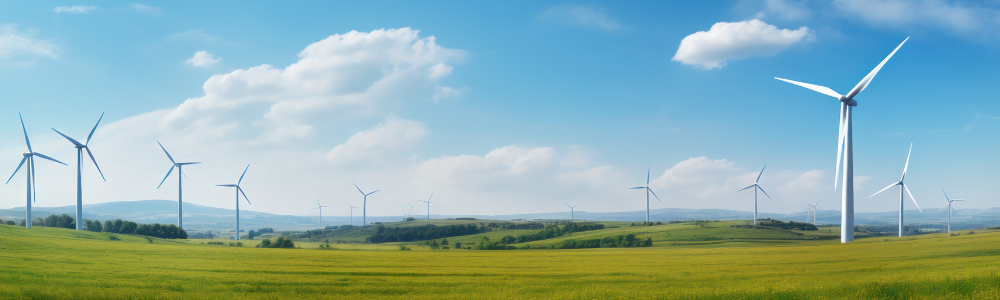
To address current and future global energy challenges, it is crucial to reduce greenhouse gas emissions, ensure energy security, and promote clean and sustainable energy sources. What are the sources of GHG emissions in the energy industry? How can CO2 emissions be reduced in this sector?
This article addresses these issues and outlines the policies and initiatives implemented to reduce CO2 emissions, as well as the future prospects for a more sustainable energy sector.
1. Description of the Energy Industry Sector
1.1 Definition and Challenges of the Energy Industry
1.2 Greenhouse Gas (GHG) Emissions in the Energy Sector
2. Trends in CO2 Emissions in the Energy Sector
2.1 The Causes of the Increase in CO2 Emissions
2.2. Policies and measures implemented to reduce CO2 emissions
2.3. Future Prospects for Reducing CO2 Emissions in the Energy Sector

Description of the Energy Industry Sector
⚡ Definition and Challenges in the Energy Industry
The energy industry refers to all activities related to the production, conversion, transmission, and distribution of energy in all its forms. This industry is a pillar of the global economy, as it meets the growing energy needs of people and businesses. Companies involved in this sector include:
- Manufacturers of equipment used in energy conversion;
Energy plant integrators (project developers, builders, installers) - Energy producers or operators of these power plants; energy transporters and distributors through various networks (electricity, natural gas, oil, heating, cooling, and steam, as well as distribution infrastructure)
- Support services (raw material suppliers, construction companies, maintenance, consulting, engineering, waste management, etc.).
It should be noted that the energy sources produced by these companies can be classified into three main categories
🛢️ Fossil fuels, such as oil, natural gas, and coal, are nonrenewable energy sources that formed millions of years ago from organic matter buried underground. They are currently the primary sources of energy used worldwide, but their use has harmful effects on the environment and the climate due to the greenhouse gas emissions they generate.
🌿Renewable energy sources, such as solar, wind, hydro, geothermal, and biomass, are clean and inexhaustible sources of energy derived from natural phenomena. They have significant potential to meet global energy needs in a sustainable and environmentally friendly way.
☢️Nuclear energy is a source of energy derived from the fission of atomic nuclei. It is used to generate electricity and has the advantage of not emitting greenhouse gases. However, it poses risks to human safety and health, as well as to the environment, due to the radioactive waste it produces.
There are many current and future global energy challenges. First and foremost, it is necessary to meet the growing demand for energy, particularly in developing countries. Global demand for primary energy has increased by 50% since 1990. By 2035, energy demand will likely be much higher than it is today. The world will need more energy, and we must be aware of this.
No industry has a greater impact on the world than the oil and gas industry. It provides us with light, transportation, and heat, and it makes our lives better—it allows us to travel, study at night, use smartphones and computers, and so on. And all of this is part of the energy industry. This makes the primary sector the world’s leading source of CO2 emissions, accounting for 41% of total emissions from energy combustion. This is where the biggest challenge lies in achieving carbon neutrality by 2050, in accordance with the Paris Agreement.
Therefore, it is imperative to reduce greenhouse gas emissions to combat global warming.
Finally, it is important to ensure energy security—that is,to guarantee a stable and reliable energy supply for all countries. To meet these challenges, it is essential to develop clean and sustainable energy sources, promote energy efficiency, and implement ambitious energy policies.
🌍 Greenhouse gas (GHG) emissions in the energy sector
There are many sources of GHG emissions in the energy sector, which are distributed among energy production, transmission, and consumption.
First, power plants and heat-generating facilities produce energy by burning fossil fuels such as coal, oil, and natural gas, which results in significant GHG emissions.
Second, energy transportation—which is necessary to move energy from production sites to consumption sites—is also a significant source of GHG emissions. Trucks, trains, and pipelines used to transport energy emit GHGs depending on the mode of transportation used and the distance traveled.
Finally, energy consumption—whether in buildings, transportation, or industry—contributes to GHG emissions due to the combustion of fossil fuels . GHG emissions associated with energy consumption depend on the type of energy used and the energy efficiency of equipment and buildings.
The substances emitted and estimated in this sector are as follows:
• Greenhouse gases: CO2, CH4, N2O,
• Fluorinated gases: HFCs and SF6 (only for electricity generation),
• Acidification, eutrophication, and photochemical pollution: SO2, NOx, NH3, NMVOCs,
• Heavy metals: As, Cd, Cr, Cu, Hg, Ni, Pb, Se, Zn,
• Persistent organic pollutants: PCDD-F, PAHs, PCBs, HCB,
• Particulate matter: TSP, PM10, PM2.5, PM1.0, BC.

Trends in CO2 Emissions in the Energy Sector
🔎 The Causes of Rising CO2 Emissions
Since the beginning of the Industrial Revolution, CO2 emissions have grown exponentially due to the increasing use of fossil fuels for energy production. We have gone from 280 parts per million (ppm) in the atmosphere in 1850 to more than 410 ppm in 2021. According to the Intergovernmental Panel on Climate Change (IPCC), CO2 emissions increased by 40% between 1990 and 2019, reaching a record high of 36.7 gigatons in 2019.
The leading CO2 emitters in the energy sector are China, the United States, India, and the European Union. In 2019, China was the world’s largest emitter of CO2, accounting for approximately 27% of global emissions, followed by the United States (11%), India (7%), and the European Union (8%).
Rapid economic growth and urbanization are key factors driving the increase in CO2 emissions in these countries. In China, for example, energy consumption rose by an average of 4.3% per year between 2000 and 2018, due to rapid economic growth and urbanization.
This increase in CO2 emissions is primarily due to the burning of fossil fuels for electricity and heat generation, as well as to fuel consumption in transportation. Rapid urbanization, industrialization, and population growth have also contributed to the rise in energy demand and, consequently, to the increase in CO2 emissions.
In addition, deforestation and land-use changes have also contributed to CO2 emissions. Deforestation accounts for about 10 percent of global CO2 emissions, because trees absorb CO2 from the atmosphere, and their destruction releases this gas into the atmosphere.
In short, the increase in CO2 emissions in the energy sector is due to the burning of fossil fuels for energy production, fuel consumption in transportation, urbanization, industrialization, population growth, and deforestation.
Policies and measures implemented to reduce CO2 emissions
For many years now, the international community has recognized the importance of reducing greenhouse gas (GHG) emissions to combat climate change. In 2015, 195 countries signed the Paris Agreement, which aims to achieve carbon neutrality by 2050. This agreement calls for national commitments to reduce GHG emissions, as well as international cooperation to finance and implement emission-reduction measures. This commitment requires addressing numerous challenges, including developing a new energy system, ensuring energy supply, and maintaining competitiveness.
In this context, France has implemented several policies and initiatives to reduce its energy dependence and combat climate change. First, the Energy Transition for Green Growth Act was passed in 2015, setting targets such as a 50% reduction in energy consumption by 2050.
To achieve these goals, France has implemented management and planning tools to ensure the success of the energy transition and societal transformation. In April 2020, it adopted the Multi-Year Energy Plan (PPE), which sets out a ten-year vision for French energy policy. The PPE is based on two main pillars: reducing energy consumption and phasing out the use of fossil fuels. It is supported by various programs, plans, and strategies.
Among these tools are the regional plans addressing climate, air quality, and energy (SRCAE and SRADDET), which serve as a reference document for renewable energy development goals and the climate change mitigation and adaptation strategy for the 11 metropolitan regions.
At the European level, France has committed to collectively achieving climate neutrality by 2050 and to accelerating the reduction of its greenhouse gas emissions by 2030. Among the measures taken are the creation of a carbon border adjustment mechanism, raising the European 2030 target for renewable energy in final energy consumption from 32% to 40%, and increasing the current 2030 energy efficiency target from at least 32.5% to 36% of final energy consumption.
Finally, the war in Ukraine has prompted France to move even more quickly to overcome its energy dependence. France currently imports nearly all of its oil and gas, mainly from Russia. To reduce this dependence, France plans to develop biofuels and biogas, as well as to diversify its energy supply sources.
In short, France has implemented several policies and initiatives to reduce its energy dependence and combat climate change, including reducing energy consumption, phasing out the use of fossil fuels, developing low-carbon energy sources, and diversifying its energy supply sources. These measures are part of the national low-carbon strategy and the multi-year energy plan, as well as European climate and energy targets.
Future Prospects for Reducing CO2 Emissions in the Energy Sector
To reduce CO2 emissions in the energy sector, several scenarios are possible. First, increased use of renewable energy sources such as wind, solar, and hydroelectric power can help reduce CO2 emissions. Renewable energy is expected to overtake coal as the world’s leading source of electricity generation by 2025, according to the International Energy Agency (IEA). It is projected to account for 33% of total electricity generation by that time, up from 27% in 2019.
Another scenario involves improving energy efficiency, which can reduce energy demand and, consequently, CO2 emissions. This can be achieved through more efficient technologies in the energy production, transportation, and consumption sectors. According to the IEA, improving energy efficiency could reduce global CO2 emissions by 12% by 2040.
However, there are significant challenges to overcoming in order to meet CO2 emission reduction targets. First, investment in renewable energy and energy efficiency must be increased. According to the IEA, investment in clean energy is expected to reach $5 trillion per year by 2030 in order to meet the goals of the Paris Agreement.
Furthermore, the transition to a low-carbon world requires greater international collaboration and coordination. Countries must work together to develop clean technologies and share best practices. Governments must also implement incentive policies to encourage players in the energy industry to invest in clean energy.
Finally, the transition to a low-carbon world offers opportunities for players in the energy industry. Companies that invest in renewable energy and energy efficiency can benefit from long-term growth and an improved reputation. Governments can also create jobs in the clean energy and energy efficiency sectors.
For more information:
- Toward Low-Carbon Agriculture: Challenges and Opportunities
- Understanding the Carbon Footprint of the Agri-Food Industry: From Field to Plate